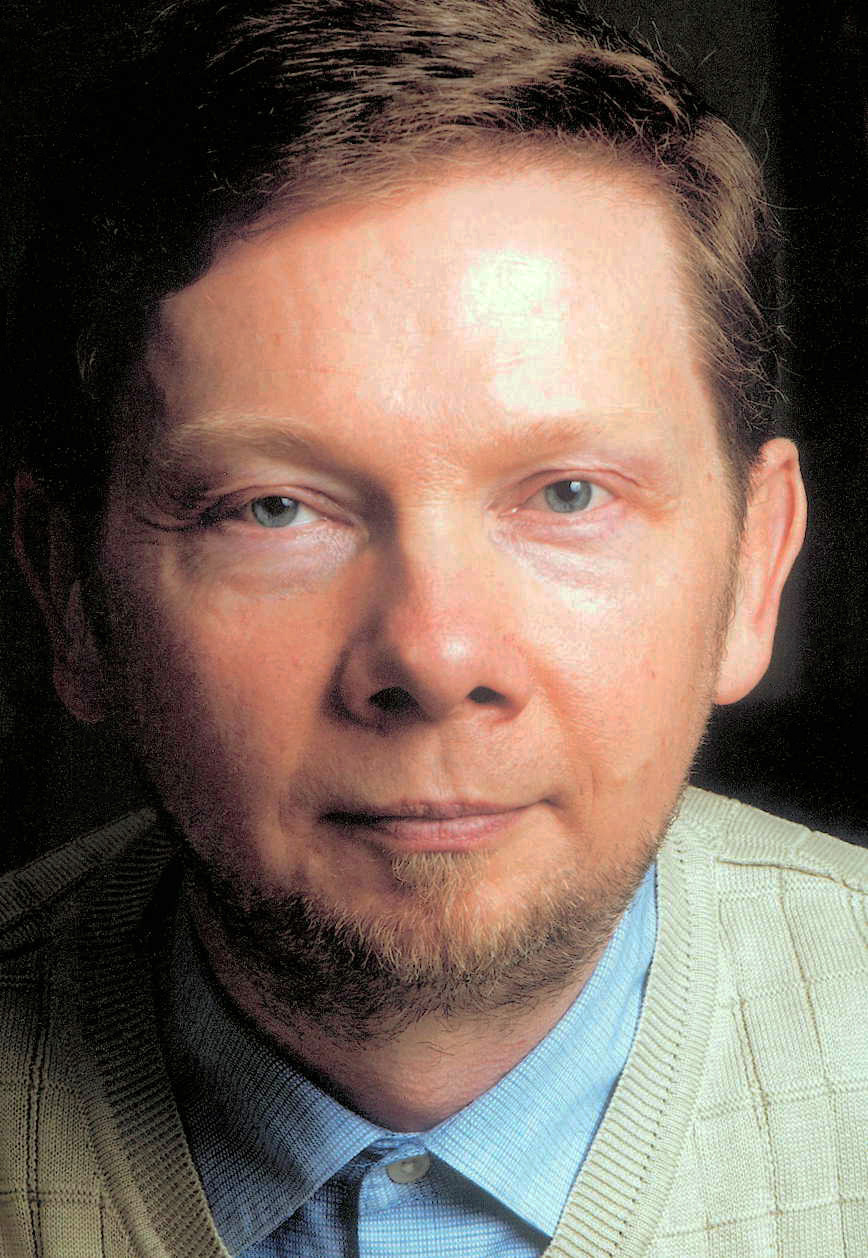
If you can sit quietly in a room for even a few minutes and actually be there—aware of the sounds around you, the light, the feel of the chair beneath you, and that subtle spaciousness underneath it all—you are already further along than most people. That might sound like small praise, but in a world where most people become uncomfortable almost immediately in silence, it's actually a significant marker. This is the opening insight Eckhart Tolle brings to the perennial spiritual frustration: the gap between the peace we touch in quiet moments and the fragmentation we experience when life demands our attention.
The incentive for awakening, Tolle explains, is rooted in two powerful forces: suffering and the awareness of impermanence. For many people, impermanence remains abstract—something they hear about in the news but never truly feel. That changes when mortality becomes personal. Someone close to you dies, suddenly and unexpectedly, and the concept becomes a lived reality. "There are people who don't even have any idea of impermanence. They're so identified with their mind," Tolle notes. "It's a shock for them when somebody close to them suddenly dies."
But here's the teaching that reframes modern life: you don't have to wait for tragedy to wake up. Whatever life gives you in this moment—the quiet or the chaos—is your material. It's your potential opening, your potential portal.
The objection is real and rarely unspoken: "My life is so busy. I have so many things I need to attend to that I just can't be present. I'm continuously being drawn into dealing with stuff that arises." In this framing, the modern world becomes a massive obstacle to awakening. Email, notifications, obligations, other people's crises—they all seem designed to keep consciousness fragmented and reactive.
Tolle takes this complaint seriously rather than dismissing it as lack of discipline. The world does place continuous demands on attention. That's not a personal failing. But his answer redraws the map entirely: the obstacle itself is the path. When you're being challenged by the things of the world, when you're pulled away from quiet presence into the messy demands of living, that interruption is not a detour from your awakening. It's the actual material of your awakening.
This distinction matters because it means presence doesn't require a retreat to a mountaintop or even a locked room. It means presence can meet you in the middle of Tuesday, in the middle of a difficult conversation, in the middle of a crisis you didn't choose.
If you've had the experience of being present in a quiet room or alone in nature—truly perceiving and feeling the aliveness around you, not lost in thought—Tolle wants you to recognize what that reveals. In those moments, there's often a sense of transcendence, where you step outside the identity of "the person you usually are" and become the perceiving consciousness itself. Light, sound, the texture of air—these aren't thoughts about experience; they're direct perception. And underneath it, there's stillness, a spaciousness.
"That means yes, you are awakening," Tolle says. Most people cannot access this at all, or only in fragments so brief they dismiss them. The fact that you can sit and be present, even occasionally, means you've already touched something real. You have capacities most people don't think are available to them. That's not false comfort; that's recognition of genuine spiritual development.
The tougher question comes next: when you leave that quiet room or that beautiful forest and re-enter everyday life, what happens? The challenges are real. They're manifold. They're overpowering. There's a natural tendency to collapse back into unconsciousness, to become wholly identified with the problem, to lose the thread of presence entirely. That gap—between the spaciousness you touched in stillness and the reactivity you fall back into when life gets demanding—isn't failure. It's the work.
This is where Tolle's teaching pivots from description to practice. You can't control whether life interrupts your peace. But you can recognize each interruption as a fresh choice point, a place where consciousness can meet circumstance directly rather than through the filter of conditioned reaction. The person who can be present in a quiet room has proven that presence is possible. Now the work is bringing that quality of awareness into the very situations that make it hardest.
That doesn't mean sustaining constant bliss or eliminating all unconscious reactions. It means that when you're challenged—stuck in traffic, facing criticism, navigating loss—there's a part of you that's already woken up enough to notice. You might still react. But there's awareness present, watching the reaction. That watching, that awareness itself, is the awakening happening now.
The invitation Tolle extends is both gentler and more radical than it sounds. You're not starting from zero. The capacity to be present is already in you—you've already proven it in quiet moments. What remains is to stop treating those moments as exceptions and the chaos as the rule. Instead, begin to recognize that whatever arises—silence or noise, stillness or motion, comfort or challenge—is the actual place where awakening happens. Not someday when conditions are perfect. Now, with what you have, in the middle of your actual life.


