In the architecture of spiritual music, there exists a particular power in the question posed as invitation. "Find Your Way" arrives not as instruction but as mirror—a moment of collective listening where the seeker recognizes something already present within themselves. Released in July 2026 as part of Ajeet's album Return, the track represents a convergence of contemporary devotional music and the timeless practice of kirtan, where voice becomes the instrument of self-discovery.
The song emerges from a specific lineage of kirtan and contemplative music that has roots in both ancient spiritual traditions and the North American conscious music movement. Kirtan—the Sanskrit term for praise singing or call-and-response chanting—has experienced a significant resurgence in Western spiritual communities over the past two decades. Rather than treating the practice as a historical artifact, contemporary artists like Ajeet and collaborator Aliya Pakravan are weaving it into arrangements that speak to modern seekers navigating contemporary life. The collaboration on "Find Your Way" bridges classical Indian instruments and sensibilities with Western production techniques, creating a sonic space where East and West engage in genuine dialogue rather than appropriation.
How Does Kirtan Function as a Navigational Practice?
At its core, kirtan operates on a principle that may seem paradoxical: by singing devotional phrases repeatedly, often in call-and-response format between a leader and group, participants access a state of mental clarity. This is not mystical obfuscation but a practical neuroscience finding—when the thinking mind is engaged in rhythm, melody, and group participation, the obsessive thought-loops that keep us circling the same emotional territory naturally dissolve. What emerges in that space is not new information but clearer access to the intuition that was already present.
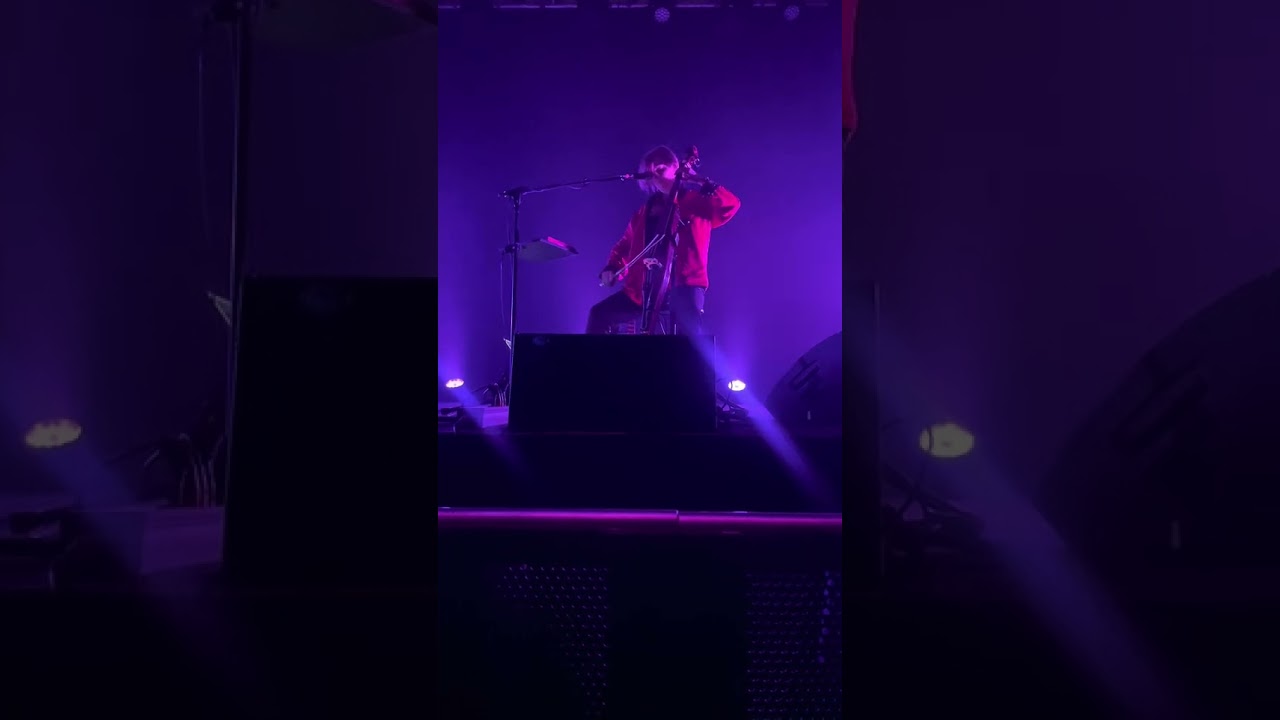
The title "Find Your Way" encodes this understanding. It is not "I will show you the way" but rather an invocation that your own way is findable—that within you exists a compass. Kirtan practice, particularly when performed with the instrumental sophistication evident in this track, creates a sonic container for that internal navigation system to function. The cello and violin arrangements by Shannon Hayden provide harmonic texture that feels both grounding and expansive, creating emotional permission for listeners to turn inward.
What Makes This Recording Production Significant?
The craftsmanship on "Find Your Way" deserves particular attention. Lead vocalist Aliya Pakravan brings both technical vocal sophistication and emotional authenticity to the performance—kirtan singing demands both precision and spontaneity, the ability to honor a melodic line while simultaneously remaining responsive to the energy of the moment. Siobhan Moore's role as producer, mixing engineer, and multi-instrumentalist (vocals, piano, percussion) reflects a modern approach to kirtan where the traditional role of a single guru-lead is expanded into a collaborative creative process. This democratization of the form, while contemporary, actually honors one of kirtan's fundamental principles: that truth and wisdom reside not in a single authority but within community.
The instrumental arrangement—featuring Andy Yelen on acoustic guitar, Samuel Killeen on electric guitar, and Shannon Hayden on cello and violin—demonstrates how contemporary devotional music can employ the full palette of Western instruments without losing the practice's spiritual integrity. When a string arrangement supports rather than dominates a kirtan melody, the effect is to amplify rather than dilute. The electric guitar presence in particular signals that spiritual seeking is not a backward-looking practice but one that meets practitioners exactly where they are, in their contemporary moment.
Where Does "Find Your Way" Sit in the Larger Consciousness Music Movement?
Released under Spirit Voyage Records—a label that has been central to bringing kirtan and conscious music to Western audiences—"Find Your Way" participates in an ongoing conversation about what spiritual music is for. The album title Return suggests not novelty but arrival; the implication is that finding one's way is, paradoxically, a return to something known. This echoes a teaching present in multiple spiritual traditions: that awakening is not acquiring something new but removing obscurations to what is already present.
The modest view count (328 as of publication) tells a particular story about how spiritual music circulates in 2026. These are not tracks designed for viral reach or algorithmic amplification. Instead, they move through networks of practitioners—people actively engaged in yoga studios, meditation groups, personal spiritual practice. This is music made for specific conditions of listening: morning sadhana (spiritual practice), community kirtan gatherings, or solitary meditation. The accessibility of the recording through YouTube and streaming platforms means the practice is no longer geographically bounded—a person in rural Montana or suburban London can access it with the same ease as someone in Los Angeles or New York, where American kirtan culture has historically concentrated.
What Is the Relationship Between Devotion and Practical Navigation?
A potential misconception about devotional music is that it exists in a realm separate from practical life—that it offers escape rather than orientation. "Find Your Way" suggests something different: that singing devotional phrases with full attention and open heart actually makes one more capable of navigating real-world complexity. When the nervous system is soothed through rhythmic participation and melodic focus, the prefrontal cortex—the part of the brain involved in decision-making, planning, and intuitive knowing—becomes more accessible. In physiological terms, this is why people who practice kirtan or similar devotional disciplines often report greater clarity about life decisions.
The specific invitation of "Find Your Way" matters here. It is not an instruction to transcend the practical world but to meet it with greater alignment to one's actual values and intuition. In a cultural moment of overwhelming choice, constant digital noise, and fragmented attention, the act of singing a simple devotional phrase becomes a radical act of focus. It is a way of saying: this matters; I will give my full attention to this; in this attention, I find myself.
Who Are the Lineage Keepers Here?
Ajeet's work, and specifically this track, sits within a lineage of Western kirtan artists who have dedicated themselves to learning and transmitting this practice with integrity. The collaboration with Pakravan—whose role as composer and lyricist gives her substantial creative authority—reflects a shift in how Western spiritual music is being created: not by a single charismatic figure but through collaborative skill-sharing. This actually mirrors how kirtan functions in traditional settings, where the practice is communal, responsive, and emerges from collective participation rather than top-down transmission.
The album Return, released in July 2026 through Spirit Voyage Records, arrives at a moment when kirtan and bhakti (devotional) music are being claimed not as exotic otherness but as a legitimate answer to contemporary spiritual hunger. This is not cultural tourism but genuine practice adoption, undertaken with study, respect, and creative evolution.
Where to go from here
If "Find Your Way" resonates, the natural next step is participation rather than passive listening. Kirtan is most fully itself as a lived practice—seeking out live kirtan events in your area, learning the melodies and phrases, and experiencing the collective energy of group singing. Many yoga studios and conscious community spaces offer regular kirtan gatherings. Additionally, deeper study of the Sanskrit terms and spiritual context enriches the experience significantly. Exploring other work by Ajeet and collaborators like Aliya Pakravan and Siobhan Moore provides both musical satisfaction and a window into how contemporary artists are honoring traditional practices while pushing them toward evolution. The album Return as a complete work likely contains further explorations of these themes and sonic territories. Finally, examining Spirit Voyage Records' catalog reveals the broader landscape of contemporary kirtan and conscious music currently being created.