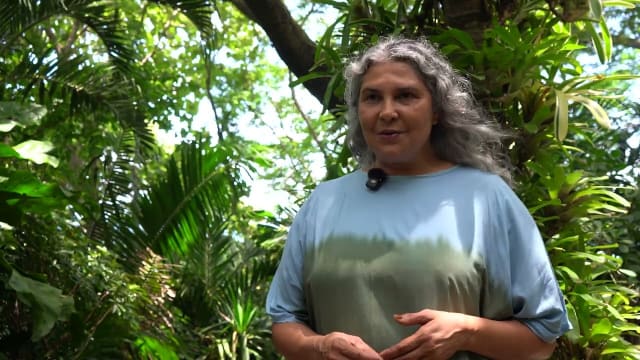
Lying on a mat with a pillow under the knees, the room quiet enough to hear distant sounds you are asked to notice, a player begins the guided yoga nidra that Ayla Nova released on her channel, Ayla Nova | Yoga Nidra & Beyond, in early November 2026. The description lists the session at 26 minutes and frames it around a single premise stated before the first instruction: that rest is not the opposite of performance but part of it. The practice moves through a slow body scan, a breath exercise that pairs effort with ease, a visualization of a familiar field where years of preparation are held in the body, and a closing intention, or sankalpa, meant to travel back onto the training ground. For a sport built on collisions, sudden changes of direction and pressure in the final minutes, it is an unusually specific piece of recovery work, and it rewards a reader who wants to understand how each stage is built, not just to hear it played.
Nova opens by reading a line attributed to Jonny Wilkinson, the England Rugby World Cup champion. The video description credits the words to an interview with David Lloyd Clubs:
"Letting go and relaxing is the secret to revealing more of my performance, my joy and my potential."
It is a well-chosen hook, because it takes the athlete's most natural instinct, to push harder, and reframes it. Nova's own bridge comes right after, at the 0:31 mark: "As an athlete, you know the power of dedication and discipline, but peak performance requires rest." The practice is therefore not positioned as a luxury for the end of a long week. It is positioned as a training variable, something that sits alongside the work in the gym and on the pitch rather than after it.
Whatdoesayoganidrabodyscandoforanathlete?
The first phase is about arrival. Nova asks the listener to feel the weight of the body being received by the floor, moving attention through the back of the head, shoulders, spine, pelvis and legs. "There is no need to hold yourself up. You are supported." From there the practice asks you to sense the body from within, noticing warmth, coldness, heaviness and lightness, and to find "places of tension, places that are asking for your attention" without trying to change them.
The more distinctive part is the rotation that follows. Nova moves attention through the right hand, finger by finger, then up the arm, across the chest, down the hip, thigh, knee, shin, ankle and each toe. The left side follows the same route. Then the back of the body is taken in sequence, from both heels and calves through the hamstrings, glutes, spine and shoulder blades, up to the crown of the head, the forehead, the eyes, the jaw and the throat, and finally down the front of the torso to the lower abdomen. The repetition of phrases such as "the whole right side of your body" is deliberate. The mind is given a fixed route, so there is nothing to decide. Nova makes the fallback explicit: "If you lose your place, return again to the sound of my voice."
For an athlete this matters. Much of what a body carries after contact or a hard session is held somewhere the player is not looking, in a hip, a jaw, a forearm. A scan that moves methodically from one side to the other turns that vague sense of being sore into a set of places that can be noticed, and then released by simply being observed.
Howdoestheeffortandeasebreathwork?
The middle of the practice moves into what Nova calls pranamaya kosha, which she describes as "connection to your energy," and to the natural rhythm of the breath. The instruction is simple to state and harder to keep: do not change the breath, only witness it. "Sense the quality of effort without judgment. And as you exhale, sense the quality of ease." The pattern is repeated, effort on the inhale and ease on the exhale, and the listener is asked to let the two qualities coexist.
The description names this directly as an exploration of "the balance between effort and ease." It is worth noticing why that pairing suits a rugby player. A contact sport asks the body to commit on the inhale, to brace, to drive, to take the hit. The recovery the body needs happens on the exhale, when the grip releases. Nova's practice gives the nervous system a slow, repeatable model of that exact sequence, without any demand to perform it. The effort is named, the ease is named, and neither is judged.
Whatisbeingrehearsedinthefieldvisualization?
Around the 18-minute point, the voice shifts from sensation to imagery. The listener is asked to "imagine yourself somewhere familiar. A place where you feel connected to your strength. Perhaps a field." From that place the practice invites you to sense "the countless hours of preparation, the discipline and dedication, all of that held into every cell of your being." Then comes the element that gives the visualization its purpose. The listener sees themselves moving forward "naturally, instinctively, responding to the moments as they unfold."
The description promises a mental rehearsal of "responding to pressure and unexpected challenges," and the script delivers it through the language of change: "in any moment of uncertainty, change in direction, that capacity to respond begins to expand." One detail stands out. The practice asks the athlete to have "no anticipation" and to be "not worried about what comes next." Most sport coaching trains anticipation, reading the next play and getting ready for it. Nova is asking for something quieter: meeting each moment as it arrives, with the trust that the preparation is already there. Whether a player finds that useful is a question for the player, but the logic is clear, and it reflects the teacher's broader claim that presence and readiness are not in conflict.
Whatisasankalpa,andwhysetonebeforeamatch?
A sankalpa, in Nova's definition, is "a heart-led intention that reflects the quality you wish to embody, to remember." She offers a set of starting points for listeners who do not yet have one: "I am capable. I am resilient. I am ready. Or simply, I am." The listener chooses the words that resonate, repeats them silently three times, and then lets them go. The sankalpa, she says, will return at the close of the practice, or it may reveal its truer form "during the practice or exactly when it is meant to."
The structure matters. The intention is set at the centre of the chest, which the teacher returns to several times, and it is repeated again at the end "with the same or more conviction as you did at the beginning." An athlete who has one short sentence rehearsed in a calm state, and who has returned to it in the same posture of rest, has a phrase that can be recalled quickly in a pressured moment. That is the practical logic of the sankalpa here. It is less a slogan than a memory cue, anchored in the same body that just practised being at ease.
The closing words draw the threads together. Nova tells the listener to "remember that your capacity for rest is not separate from your capacity to perform. Each support each other." Just before that, she asks the listener to notice "the strength that is already carried within you, the awareness that helps you recognize when to act and when to rest." That final phrase is the heart of the practice. It does not ask the athlete to rest instead of training. It asks for the discernment to know which moment calls for which.
This is where Wilkinson's line earns its place at the top. The idea that letting go reveals performance is not a call to soften. It is a claim about how capacity is built and accessed. A body that can release a grip can also grip when it needs to. The practice is an attempt to make that double capacity something you can feel in your own body, lying still, before you ask it to do anything at speed.
Howshouldyouapproachthispractice?
The instructions are practical. Lie down, arms resting at the sides or on the heart or belly, legs apart, with a pillow under the head or knees as needed. Three long sighing breaths open the session, and the closing asks you to move the fingers and toes slowly before returning. Nothing is required beyond staying with the voice. If the mind wanders, which Nova says is "the nature of the mind," the instruction is to notice without judgment and come back.
The reader who has not watched the video should know the transcript used for this article covers the opening, the body scan, the breath, the visualization and the closing, so the sequence described here is faithful to the recording. Listening through the full session, with the sounds, the field and the sankalpa intact, is the only way to feel how the stages build on one another.
Wheretogofromhere
Start by listening to the full recording on the Ayla Nova | Yoga Nidra & Beyond channel, ideally lying down with no screen in view and no plan for the next hour. Afterward, notice which area of the body the scan lingered on, and which phrase of the sankalpa felt true, because those are the details worth carrying into training. For a rugby player, the most useful habit may be the simplest one the practice offers: the breath that asks for effort on the way in and ease on the way out. Rest and performance, as the closing line puts it, support each other.
Comments
Loading the conversation…
Transcript
[0:14] Jonny Wilkinson, an iconic figure in
[0:17] English rugby history once said,
[0:20] letting go and relaxing is the secret to
[0:23] revealing more of my performance,
[0:26] my joy, and my potential.
[0:31] As an athlete, you know the power of
[0:34] dedication and discipline,
[0:37] but peak performance requires rest.
[0:41] Through this Yoga Nidra practice,
[0:44] you'll be invited to release tension
[0:47] as it supports your recovery,
[0:50] sharpens your focus,
[0:52] and cultivates the confidence to trust
[0:55] your abilities when it matters most.
[0:59] Thank you for being here.
[1:01] My name is Aila Nova and it is an honor
[1:04] to guide you through this Yoga Nidra
[1:06] practice for peak
[1:08] performance.
[1:12] Allow yourself to find a comfortable
[1:14] position lying down.
[1:17] You can rest your arms naturally by your
[1:20] sides
[1:22] or onto your heart or belly.
[1:25] Let your legs rest comfortably apart
[1:30] and make any adjustments that
[1:32] you may need to support your comfort.
[1:36] Pillow under the head or under the
[1:38] knees.
[1:40] And for the next 20 minutes,
[1:43] there's nothing that you need to
[1:44] achieve,
[1:46] to prove.
[1:49] Your body has already given you so much.
[1:53] Take a deep breath in
[1:57] and exhale sighing letting out through
[2:00] the mouth.
[2:05] Another time deep breath in
[2:12] and an exhale sighing out through the
[2:15] mouth.
[2:18] Another time inhale.
[2:23] Keep breathing in
[2:27] and exhale out through the mouth letting
[2:29] it all go.
[2:35] Make any final adjustments.
[2:40] This is the practice of Yoga Nidra
[2:42] begins now.
[2:49] Allow your body to become still.
[2:54] Notice the surface beneath you.
[3:00] Feel the weight of your body being
[3:02] received.
[3:05] The back of your head,
[3:09] your shoulders,
[3:11] your back,
[3:15] your pelvis, your legs.
[3:20] Notice the places where your body makes
[3:22] contact with the ground.
[3:27] There is no need to hold yourself up.
[3:32] You are supported.
[3:38] Begin to sense the body
[3:41] from within
[3:45] noticing the areas of warmth,
[3:50] coldness,
[3:54] heaviness,
[4:00] lightness.
[4:08] And as you observe your body,
[4:11] you can notice where there are places of
[4:13] tension,
[4:18] places that are asking for your
[4:20] attention.
[4:27] Allow whatever sensations arise to be
[4:30] present.
[4:35] You do not need to change them.
[4:41] You are now inviting your body into
[4:43] stillness,
[4:45] into rest.
[4:57] Notice how different this feels,
[5:05] the absence
[5:07] of demand and expectations.
[5:14] Become aware of the sounds around you,
[5:21] ones that are in the distance,
[5:26] ones closer to your body.
[5:34] Know that it is the nature of the mind
[5:35] to wander.
[5:40] And observe whatever arises without any
[5:43] judgment.
[5:47] Letting go of the narrative.
[5:52] There's nothing you need to solve here.
[5:57] You are simply here.
[6:06] Rest in this awareness.
[6:13] And allow for it to land at the center
[6:15] of your chest.
[6:21] You may notice the presence of your
[6:23] heart.
[6:28] And study your rhythm of life moving
[6:31] within you.
[6:38] And from this space,
[6:41] invite your sankalpa.
[6:46] This is a heart-led intention
[6:50] that reflects the quality you wish to
[6:54] embody,
[6:56] to remember.
[6:59] If you are not already working with a
[7:01] sankalpa,
[7:04] you may consider one of the following
[7:06] until
[7:07] your truest sankalpa reveals itself
[7:12] during the practice or exactly when it
[7:14] is meant to.
[7:22] You may consider,
[7:25] I am capable.
[7:30] I am resilient.
[7:35] I am ready.
[7:41] Or simply, I am.
[7:47] Choose the words that resonate with you
[7:48] most deeply.
[7:52] And repeat it
[7:55] silently within the mind three times.
[8:26] >> Feel the words resonate throughout your
[8:28] body.
[8:32] Allow them to settle within awareness.
[8:38] You can release your sankalpa and trust
[8:41] that it will return to you at the
[8:42] closing of your practice.
[8:46] You are now entering into the rotation
[8:49] of consciousness
[8:52] as you swiftly move your attention from
[8:54] one part of the body to the next.
[9:00] You are invited to witness
[9:03] each aspect of yourself.
[9:06] If you lose your place,
[9:10] return again to the sound of my voice.
[9:15] Begin now to bring awareness to the
[9:17] right hand.
[9:19] The right hand thumb.
[9:23] Index finger.
[9:27] Middle finger.
[9:30] Ring finger.
[9:34] Little finger.
[9:38] Palm of the hand.
[9:42] Back of the hand.
[9:46] Wrist.
[9:50] Forearm.
[9:53] Elbow.
[9:57] Upper arm.
[10:01] Shoulder.
[10:05] Right side of the chest.
[10:09] Right side of the chest,
[10:13] right side of the chest,
[10:19] right side of the abdomen,
[10:23] right hip,
[10:27] right thigh,
[10:31] knee,
[10:34] shin,
[10:37] calf,
[10:41] ankle,
[10:44] heel,
[10:47] sole of the foot,
[10:51] top of the foot,
[10:54] the right big toe,
[10:57] second toe,
[11:01] third toe,
[11:04] fourth toe,
[11:07] middle toe.
[11:11] Sense the entire right side of your
[11:13] body,
[11:17] the whole right side of your body,
[11:23] the whole right side of your body.
[11:33] Rotate your consciousness now to the
[11:35] left hand.
[11:39] Left hand thumb,
[11:43] index finger,
[11:47] middle finger,
[11:50] ring finger,
[11:54] middle finger,
[11:57] palm of the hand,
[12:01] back of the hand,
[12:05] wrist,
[12:08] forearm,
[12:12] elbow,
[12:16] upper arm
[12:21] shoulder
[12:26] left side of the chest
[12:30] left side of the chest
[12:34] left side of the chest
[12:38] left side of the abdomen
[12:43] left hip
[12:46] thigh
[12:49] knee
[12:53] shin
[12:56] calf
[12:59] ankle
[13:02] heel
[13:05] sole of the foot
[13:09] top of the foot
[13:13] left big toe
[13:17] second toe
[13:21] third toe
[13:25] fourth toe
[13:29] little toe
[13:33] Sense the entire left side of your body.
[13:41] Now bring awareness to the back of your
[13:43] body.
[13:47] Both heels
[13:50] both calves
[13:54] the back of the knees
[13:58] hamstrings
[14:02] glutes
[14:05] lower back
[14:08] mid back
[14:13] upper back
[14:17] shoulder blade
[14:20] shoulder blades,
[14:24] shoulder blades,
[14:28] back of the neck,
[14:32] back of the head,
[14:35] crown of the head,
[14:40] forehead,
[14:43] space between the brows,
[14:48] both eyes,
[14:52] cheeks,
[14:55] jaw,
[14:58] throat,
[15:01] center of the chest,
[15:06] upper abdomen,
[15:10] navel,
[15:13] lower abdomen.
[15:18] Sense the whole body,
[15:21] both arms,
[15:24] both legs,
[15:27] aware of the front body,
[15:31] aware of the back body,
[15:35] aware of the entire body,
[15:41] the capacity for your whole body to rest
[15:44] expanding.
[15:49] Let yourself be held in the awareness
[15:56] as you move now into Pranamaya Kosha,
[16:01] connection to your energy,
[16:08] bringing awareness to the natural rhythm
[16:11] of your breath.
[16:15] Notice the subtle movement of the body
[16:17] as you inhale
[16:21] and the natural release as you exhale.
[16:26] You are not changing your breath in any
[16:28] way, simply observing the breath.
[16:34] Becoming a witness as you inhale.
[16:38] Sense the quality of effort without
[16:40] judgment.
[16:44] And as you exhale, sense the quality of
[16:47] ease.
[16:52] Inhale effort.
[16:56] Exhale ease.
[17:00] Inhale effort.
[17:04] Exhale ease.
[17:10] Effort as you inhale
[17:13] and ease as you exhale.
[17:19] And continue to watch your breath as you
[17:21] observe these sensations moving back and
[17:25] forth.
[17:39] Allow these qualities to coexist.
[17:55] Aware of the effort as you inhale
[17:59] the ease as you exhale, letting go.
[18:12] Allow yourself to rest in the quiet
[18:14] inner space,
[18:16] letting go of the observation.
[18:25] >> Now begin to imagine yourself somewhere
Ayla Nova is the founder of Nova Nidra and a Yoga Nidra educator who guides people into deep rest and nervous system healing, drawing on her own experience of surviving a rare leuk…
Yoga nidra is a guided practice of lying still while attention moves through the body, the breath and imagery. In this session, Ayla Nova uses it to help athletes release physical and mental tension, recover, and mentally rehearse responding to pressure. The practice is positioned as a training variable alongside physical work, not as an afterthought.
Nova defines a sankalpa as a heart-led intention that reflects the quality you wish to embody or remember. Listeners choose a short phrase such as "I am capable," "I am resilient," "I am ready," or "I am," repeat it silently three times, and return to it at the close of the practice.
The listener is asked not to change the breath, only to observe it. On each inhale, they sense the quality of effort, and on each exhale, the quality of ease, letting the two coexist without judgment. The description frames this as exploring the balance between effort and ease.
The practice rotates attention through the right side, the left side, and then the back and front of the body in a set sequence. Giving the mind a fixed route means it does not have to decide where to go, and Nova instructs listeners to return to her voice if they lose their place.
The description says the practice invites athletes to mentally rehearse responding to pressure and unexpected challenges. The visualization of a familiar field asks the listener to meet changes in direction with trust and presence rather than anticipation.
The video description lists the practice as 26 minutes of deep rest, while the speaker refers to a 20-minute practice at the start of the guidance. The full recording runs about 25 minutes and 49 seconds on YouTube.
According to the video description, which cites a David Lloyd Clubs interview, Jonny Wilkinson said: "Letting go and relaxing is the secret to revealing more of my performance, my joy and my potential." Nova opens the practice with this line.