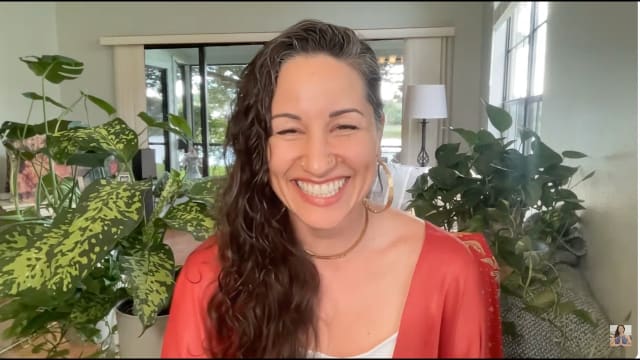
Transcript
[0:00] Dearly beloved, welcome
[0:04] to today's Mega Magic podcast. I love
[0:07] getting to do these conversational
[0:09] interviews and today I have a special
[0:12] guest that I met last year in Austin,
[0:15] Texas at a investment accelerator and
[0:18] went to one of her workshops and just
[0:22] loved her vibe, her message, her
[0:25] resilience and
[0:27] my knowing is that if you sit tight and
[0:31] you pay attention to this interview,
[0:33] you're going to walk away feeling
[0:34] incredibly inspired and empowered to
[0:37] overcome whatever adversity you are
[0:40] going through right now on your journey
[0:44] of bringing your visions to life. And so
[0:46] today's special guest is Beate Chelette,
[0:49] also known as the growth architect.
[0:52] She's a best-selling author,
[0:53] entrepreneur, and business strategist
[0:55] who has built and sold a company to Bill
[0:57] Gates' Corbis Corporation. She spent
[1:00] years helping entrepreneurs build, grow,
[1:02] and scale successful companies. Now,
[1:05] back in January 2025, a little while
[1:07] after I met her, her life was turned
[1:09] upside down when she lost both her home
[1:11] and office in a devastating Palisades
[1:14] fire. We all remember that.
[1:16] So, faced with that unimaginable loss,
[1:20] Beate made a conscious decision to
[1:22] search for the hidden gifts and
[1:23] opportunities within the catastrophe. As
[1:26] she puts it, she had to find something
[1:28] meaningful in the experience because
[1:30] otherwise she wasn't sure how she'd get
[1:33] through it. So, out of the ashes came
[1:36] The Forge. And we're going to be digging
[1:39] into what Beate's doing right now that
[1:42] combines business strategy with
[1:45] spirituality, helping founders, business
[1:48] owners, people like all of you who are
[1:50] in my audience that are trying to build
[1:52] something amazing to find greater
[1:55] alignment while building your systems,
[1:57] your processes, and the foundations that
[2:00] allow for you, your business, and the
[2:02] work that you're here to do in the world
[2:04] to thrive. So,
[2:06] Fialte, welcome to Making Magic. It's
[2:09] great to see you again.
[2:11] >> Bradley, it's always great to see you,
[2:12] and I just love how you like sort of
[2:14] took all the highlights and the and the
[2:16] hardship, and you like wrapped it up so
[2:18] nicely in the introduction. So, thank
[2:20] you for having me.
[2:21] >> How's life right now for you?
[2:24] >> You know, I'm coming up the heels of a
[2:26] big women's conference. I'm on the board
[2:28] of directors of a technology
[2:30] nonprofit called Women in Technology
[2:32] Hollywood. And I I love technology. I
[2:36] love uh innovation. And I'm feeling uh
[2:40] a little tired, but my uh my spirits are
[2:44] high. I think that what we are seeing
[2:46] now is that this next generation or this
[2:49] these new people, the new blood, they're
[2:52] so tired of this old nonsense that
[2:55] they're really stepping up, and they're
[2:56] hungry for information. They're hungry
[2:58] to learn, and they're showing up, and
[3:00] nothing makes me happier than that than
[3:01] information sharing and wisdom sharing.
[3:04] >> Yeah, it's so good to come together with
[3:06] the people and and do the thing. We need
[3:09] more of that in the world.
[3:10] >> Mhm.
[3:11] It's all about community building. Yes.
[3:13] >> Yeah.
[3:14] Um
[3:15] so, I I would love you just to describe
[3:17] to folks out there in your own words,
[3:21] uh how do you describe the work that
[3:23] you're doing at The Forge with folks?
[3:25] Just to help kind of lay the foundation
[3:28] for where we go in the conversation.
[3:30] >> Yes. So, it was after the fire when, you
[3:33] know, we have when when I'm experiencing
[3:35] this catastrophic loss.
[3:36] And I had to really think about what it
[3:40] means. So, the forge was born a lot out
[3:44] of the meditation and the the spiritual
[3:47] work that came afterward, coming to
[3:48] terms with the catastrophic loss.
[3:51] And when this this idea of the forge
[3:54] came through, I realized that we all
[3:56] have our fire. Maybe maybe yours is not
[3:58] little like mine, but everybody has a
[4:01] fire. They have If somebody dies,
[4:03] there's a
[4:04] you know, maybe you've been laid off,
[4:05] you're not finding the money, the the
[4:08] market stuff, the economy stuff, you've
[4:10] been laid off, whatever that might be,
[4:11] we all have a fire. And then I'm
[4:13] thinking about the spiritual concept of
[4:16] of a forge, right? So, you take a metal,
[4:18] you make it really hot, and it's very
[4:20] dangerous, and it feels it feels
[4:23] it it feels weak, right? Because you can
[4:25] bend it, but it has to be really hot,
[4:27] and then it's stronger afterward than it
[4:29] was before. And so, I took this concept
[4:32] and said, "If if this is the forge, then
[4:35] what do I want to shape or what do I
[4:37] want to form?" And so, the forge is
[4:41] really a methodology
[4:44] that is based on spiritual and strategic
[4:46] concepts that say that has taken
[4:49] everything that I learned about the
[4:50] three stages of business, the creative
[4:52] forge where we create, the growth forge
[4:56] where we are building the systems and
[4:58] the repetitive
[5:00] pieces of our business, and the legacy
[5:02] forge where we make ourselves obsolete
[5:04] either by enjoying our freedom or then
[5:07] going in an exit, and helping people
[5:10] understand what these three stages of
[5:12] the forming, the forge actually is, what
[5:16] you need in each one of these stages,
[5:18] and then building the back end where
[5:20] everything I know is getting baked into
[5:23] the operational system that I can
[5:25] provide, so people don't have to think
[5:26] about this anymore, but they know that
[5:28] what they need in each stage is already
[5:31] is already existing.
[5:32] >> Yeah, and I I love that you
[5:35] It's a great bouncing off of the next
[5:37] stage. I know so many people in my
[5:39] audience, so many people that I've
[5:40] worked with over the years,
[5:42] the Achilles heel for most people trying
[5:44] to do good work
[5:45] in the world, bring their gifts, shine
[5:48] their light. It's the operational piece.
[5:50] It's like, we know what we're here for,
[5:52] but how do we actually do that in the
[5:54] practical, tangible, day-to-day? How do
[5:57] we actually build an organization that
[6:00] lets us show up and serve? And so, I'm
[6:01] curious to understand a little bit
[6:04] deeper, help people understand like,
[6:06] when you're working with businesses,
[6:07] when you're talking about like building
[6:09] the operational infrastructure, what's
[6:10] that actually look like for for
[6:12] different types of businesses you're
[6:13] working with?
[6:15] >> Yes. So, I want to backtrack just a
[6:17] little bit. So, uh to lay the
[6:19] groundwork. So, what's happening in the
[6:22] marketing world?
[6:24] And you and I have talked about this
[6:25] many times.
[6:26] >> Yeah.
[6:26] >> Is that internet marketing is based on
[6:29] scarcity and fear principles.
[6:31] It is designed to make you feel like
[6:34] you're always missing something. So,
[6:36] when you when you go in this massive
[6:39] internet marketing affiliate world,
[6:42] there is the guy that teaches you how to
[6:43] speak from stage, only to be the next
[6:46] affiliate offer, with the guy that
[6:48] teaches you how to build a knowledge
[6:50] online product, only to be followed by
[6:54] the the person that says, "Yeah, but
[6:56] then you need the traffic." Only to be
[6:58] followed by the affiliate program that
[7:00] says, "Yeah, but you need to have a uh a
[7:04] first offer." Only to be followed by the
[7:06] guy that says, "But then you need to do
[7:07] a product launch." Only to be followed
[7:09] by the guy, you know? And so, suddenly
[7:12] you're in this $250,000
[7:14] circle of them handing you to each other
[7:18] based on a system that they perfected
[7:20] not for you, but for themselves.
[7:23] >> For their sales. Yes.
[7:24] >> For their sales. And so, now you have
[7:27] this suite of useless information,
[7:31] which is all in itself valuable if that
[7:34] happens to be part of your operational
[7:36] system.
[7:37] So, if you're building your business
[7:40] based upon a speaking model or a
[7:42] podcasting model, or a product launch
[7:45] model, then of course you need to know
[7:48] these things.
[7:49] >> Yeah.
[7:49] >> But that's not how that's designed. It's
[7:51] designed to make you spend $4,000,
[7:54] $10,000, $25,000. Oh, and by the way,
[7:57] then you need to learn how to write. And
[7:58] now you need to learn how to prompt. And
[8:01] you never get ahead because it's not a
[8:03] business model. So, my premise in The
[8:06] Forge is
[8:08] I help you to this establish what the
[8:09] business model is. And I'm going to give
[8:11] you an example that everybody
[8:13] understands. So, I have a somebody I'm
[8:16] talking to right now. It's a gay couple
[8:18] that just uh
[8:20] had welcomed their their baby. So, the
[8:22] baby's 4 months old.
[8:25] I'm not going to send somebody like this
[8:26] on the speaking circuit.
[8:30] Right?
[8:31] >> Yeah.
[8:31] >> I mean, they're they're brand new
[8:32] parents. Why would I do that to somebody
[8:34] like that? So, somebody like that, I I
[8:37] wouldn't even give them a podcast
[8:39] hosting
[8:40] uh model. I would say the most you
[8:43] should do is podcast guesting. Or, you
[8:45] know, your model, the Masterclass model,
[8:48] because that can easily be done. But
[8:50] he's doing a lifestyle business. He
[8:52] wants to make a million dollars with 10
[8:54] people. And and he can and he does. So,
[8:58] your business model, and this is the
[9:00] operational aspect of it, has to be in
[9:03] place before you buy or do anything that
[9:07] is not community building.
[9:10] >> Yeah.
[9:10] >> Because community building will always
[9:12] get you there. But all these other
[9:14] modalities of, you know, how do I
[9:16] generate leads?
[9:18] And how do I get in front of people? If
[9:19] it's not a community model, if it is a a
[9:22] internet marketing model, it will only
[9:25] work if it's part of an operational
[9:28] system you designed based on what works
[9:31] for you. Otherwise, your partner will
[9:33] hate you, your kids will hate you,
[9:36] uh you and you go down a very slippery
[9:38] road of overwork, burnout, and getting
[9:41] nothing done.
[9:42] >> Yeah, and doing doing stuff that you
[9:44] hate and resent.
[9:46] >> Yeah.
[9:46] >> And if you hate and resent it, it
[9:48] doesn't work. It's not a long long game
[9:50] plan. It really is So, there's the
[9:53] alignment piece that we're talking about
[9:55] is like okay, how do we get ourselves
[9:58] into alignment? And that looks different
[9:59] for everybody. And you know, sometimes
[10:02] we
[10:03] have to just like kind of walk with our
[10:05] eyes closed like we're blind and bump
[10:07] into walls and eventually find our way
[10:09] to like, oh, this this feels great.
[10:11] We've tried enough things to know what
[10:13] feels great. But we don't necessarily
[10:15] have to try all these things. You know,
[10:18] we can we can do some of that deeper
[10:19] listening or hire somebody to help us
[10:21] with the deeper reflections who's been
[10:23] in the game for a lot longer and
[10:24] understands, here's all the options and
[10:27] I see who you are and the life you're
[10:30] living and I understand. It's like, are
[10:32] you Do you need 10 clients like this
[10:34] person you just talked about? Do you
[10:36] need 100 clients for your online
[10:38] community space? Those are two very
[10:40] different strategies and and different
[10:42] infrastructure that's needed to find
[10:45] those people and serve those people.
[10:47] >> Exactly.
[10:48] >> Yeah.
[10:49] >> And then I and and then I thought about
[10:51] how do I do this? How do I help people
[10:53] to do that? And um, for the longest
[10:56] time, and I think this was really a big
[10:58] lesson of the fire, I realized how much
[11:00] I love the back end. I mean, I'm an
[11:02] operations person through and through,
[11:04] you know, and at the conference
[11:05] yesterday guess where I was. I wasn't It
[11:07] was the first year where I made a
[11:08] conscious decision not to be on stage. I
[11:11] wasn't facilitating. I wasn't doing a
[11:12] talk. And I have plenty to say. But I
[11:16] said, this time it is time for me, and
[11:19] this was part of the post-fire message
[11:21] that, you know, I perceived, it is time
[11:24] for me to help other people hold the
[11:25] microphone and take the
[11:29] uh, knowledge that I have to make these
[11:31] ideas a come to the public and come to
[11:35] fruition and make those ideas really
[11:39] have legs and wings and fly. And and I'm
[11:42] very good at it and it's very easy to me
[11:46] to figure to figure this out. And so to
[11:49] your point all these pieces have a place
[11:52] but at different stages in your
[11:54] business.
[11:56] And that's I think the critical part
[11:58] that has been
[12:00] not said out loud, that hasn't been
[12:03] identified, that hasn't been
[12:06] promoted. The more more more has been
[12:10] promoted.
[12:10] >> Yes.
[12:11] >> But your and my philosophy is less
[12:15] and deeper and better.
[12:17] >> Which is so much nicer. I mean there's
[12:20] just so much less to manage and
[12:24] you know, we can show up to who's in
[12:26] front of us and do our best work and do
[12:29] a really great job with the thing that's
[12:32] in front of us because we're not
[12:34] constantly having to feed the content
[12:37] machine or or whatever it is that we're
[12:39] doing that might be out of alignment.
[12:44] >> And it does it does it not like hurt
[12:46] your heart when you see how people are
[12:48] spinning
[12:50] and spinning and spinning and the money
[12:52] and the time and the frustration and
[12:55] none of it is necessary.
[12:56] >> Yeah, I mean I've I'm 23 years in of of
[12:59] being full-time and building and and
[13:02] I've had plenty of cycles where I'm like
[13:04] I'm trying things and it's not working
[13:06] and then I come back to
[13:07] something that's more simple and
[13:09] refined. It's like oh, oh there's
[13:11] traction. It's amazing. It's like we can
[13:14] over complicate everything in life
[13:17] whether it's like dieting or building a
[13:20] business and just over complicate things
[13:22] and typically coming back to simplicity
[13:25] is probably a great way to go. If we
[13:28] have 27 things that we're trying to
[13:29] sell, chances are we're not selling any
[13:32] one of them that great.
[13:35] So
[13:36] >> it's true. Yeah, go ahead.
[13:37] >> When we talk about I I loved your
[13:40] description of the forge and we have
[13:42] this hot metal and how do we want to
[13:44] shape it so that we can do the thing
[13:47] that we're here to do. Um
[13:49] can you give some examples of like when
[13:51] you're talking about building
[13:52] operational systems? Because I think
[13:54] people will be curious about like how
[13:56] how is what you're doing relevant to the
[13:58] people listening to this and what kind
[14:00] of operational pieces do you set up or
[14:02] what tools are you most excited about
[14:04] these days?
[14:06] >> Yeah, so for example, we have uh
[14:08] developed um a lot of workflows. I mean,
[14:11] I have a workflow for everything because
[14:13] that's what I do. So in the creative
[14:15] forge, it's something really simple.
[14:17] It's like how do you set an appointment
[14:19] and then how do you have a follow-up
[14:21] sequence, then how you have how you have
[14:23] a reminder sequence, how do you have a,
[14:26] you know, change the appointment
[14:27] sequence. Calendly is great, go uh
[14:30] OnceHub is great, but you still need to
[14:33] bring these people into your into your
[14:35] own database and then you need to do
[14:37] something with them. And then once the
[14:39] appointment is done, then what happens?
[14:41] Are they going to get uh
[14:43] moved into a Are you categorizing them
[14:47] as somebody who is a collaborative
[14:49] partner? Are you
[14:51] um putting them in long-term nurture
[14:52] nurture program because they're
[14:54] potential client? Are are they Are you
[14:56] going to abandon them because they are,
[14:59] you know, they're just not aligned with
[15:01] you? I had a guy that you know, on my
[15:03] LinkedIn outreach
[15:05] which is also part of what we've
[15:06] automated. Uh uh I mean, we have a
[15:09] actual person doing it, a VA doing the
[15:12] outreach because I think people know if
[15:14] it's not a an actual person.
[15:16] And and this guy, you know, stood me up
[15:19] the first time and then on the second
[15:21] time he's he's over 5 minutes late and
[15:23] then I just left the call and he goes
[15:25] like, "Well, are we not meeting?" I'm
[15:26] like, "We're not aligned."
[15:28] Because if you cannot even
[15:30] our idea of respecting each other's time
[15:33] even on something very simple like a
[15:34] get-to-know-each-other call is clearly
[15:36] not aligned. And then he gets marked as
[15:38] abandoned and not a fit and then and and
[15:42] and it gets shut down. He's not getting
[15:44] anything else from me. I'm I'm moving
[15:46] on. So, I'm helping people really think
[15:48] this through. Don't waste your time on
[15:50] people that where there's not no
[15:51] alignment. Yeah. So, what are you going
[15:53] to do with them when they do this? What
[15:55] are you going to do with them when they
[15:56] do that? And then so that's that's part
[15:59] of the Creator Forge is, you know, and
[16:01] we're setting up uh programs for uh how
[16:04] do you run a masterclass, you know, all
[16:06] the back-end stuff, you know, how do you
[16:08] get the
[16:09] uh from the Zoom registration, how do
[16:11] you get the contact into your database,
[16:15] and then uh we're working right now on a
[16:18] tool that allows to listen into your
[16:20] Zoom conversation
[16:22] and look for buying signals and then
[16:25] automatically draft follow-up emails
[16:28] based up on what was said by this person
[16:30] in this call. So, when I'm done with
[16:31] this, you know,
[16:33] I'm going to take a look at what uh
[16:35] what what this looks like to really help
[16:38] you to optimize these um small actions
[16:42] that are so necessary in the
[16:43] customization and in the touchpoints
[16:45] that that we need.
[16:47] In the uh Growth Forge, it's all about
[16:49] building your uh your signature growth
[16:51] system on
[16:54] what is it that um
[16:56] uh
[16:57] what's working that we now need to
[16:58] optimize, you know, how can we now take
[17:01] all these things that people come to you
[17:02] for that you now know and have a better
[17:04] idea. So, are we now adding podcast
[17:07] hosting or are are we adding podcast
[17:10] guesting? Are you doing facilitations? I
[17:13] have a facilitation guide. And so the
[17:15] the back-end that we're using is built
[17:18] on HighLevel and I'm very transparent
[17:20] about this. You can get HighLevel
[17:22] anywhere you want, but not with my stuff
[17:24] in it because my workflows and
[17:26] everything is already in built into the
[17:29] system. So, not just are we uh sharing
[17:33] how we do it, we then give you the
[17:35] prompts on how to take what we've done,
[17:39] run it through your AI, and then say,
[17:42] "Well, if she's done uh four
[17:44] announcement emails over the course of
[17:47] 10 days, or she's doing a 3-week
[17:50] announcement uh with with seven emails,
[17:54] she has uh reminder sequence of five,
[17:58] and it's uh you know,
[18:00] 3 days before, 2 days before, 1 day
[18:03] before, 1 hour before, 15 minutes
[18:06] before. So, all of that's already set
[18:08] up. All you have to now do is make sure
[18:11] that sort of our sequencing that that we
[18:14] use like you have.
[18:15] >> Yeah.
[18:16] >> I mean, you perfected this.
[18:18] And so, we've built that. And then now
[18:21] the question is how do we get your copy
[18:22] in it? We give you the prompts. We have
[18:24] a VA that you can use, or you bring your
[18:26] own, and we show them how to do it.
[18:28] >> Yeah.
[18:28] >> Uh so, that we really create this
[18:30] autonomy uh to do that. And then in the
[18:32] Legacy Forge,
[18:34] there is a lot of is this business
[18:38] acquisition ready? Because only if it's
[18:40] acquisition and exit ready, are you
[18:42] actually having the freedom. That means
[18:44] that's why we do a lot of the the
[18:46] teamwork. Is the team using the calendar
[18:49] integrations? Is the team using AI? Is
[18:52] the team generating the output that you
[18:55] need it to do so you can step back and
[18:57] have other people step up. So,
[19:00] >> Right.
[19:00] >> you know, because I've been doing it for
[19:02] so long, it's it's it's
[19:05] I I don't know how other people don't
[19:07] know how to do that, but that's because
[19:09] it is my my zone of genius and super
[19:11] skill.
[19:11] >> see the Here's what you're trying to do.
[19:13] Great, I see all the moving pieces.
[19:15] Let's get that organized and drop it in
[19:17] so you can move forward. I feel the
[19:19] Yeah, [laughter] I feel the same way
[19:20] when I I hear what somebody's working
[19:23] on. I was like, well, here's what you
[19:24] need to do. It's this, this, this, and
[19:26] this. There's There's your next steps.
[19:28] That might take you the next 2 weeks, it
[19:29] might take you the next 2 months, but
[19:32] here's here's the path. Just walk this
[19:34] path and do the things and pull it all
[19:36] together or, you know, like what you're
[19:38] saying is like
[19:39] hire a stead We'll get this built and
[19:41] it'll be really quick and then you're
[19:43] off and you can go and grow and just
[19:45] like, you know, there's always tweaking
[19:47] the dials and improving things and and
[19:49] fine-tuning that takes place, but having
[19:53] the infrastructure to grow up and and
[19:56] actually scale the impact you're trying
[19:59] to make or the revenue potential is like
[20:02] what you're talking about is like all
[20:05] these things
[20:07] require the foresight of like what am I
[20:10] actually doing here, trying to do?
[20:14] If there's sales cycles, like what are
[20:16] we selling this month? What are we
[20:18] selling in 3 months from now? And having
[20:21] that ability to like pull all that
[20:23] together so that the email campaigns are
[20:26] ready, the follow-up series are ready,
[20:28] and everything is in order so that you
[20:30] can actually open the receiving valves
[20:32] and instead of thinking logistics while
[20:34] you're on the fly, it's all there. You
[20:37] just have to fine-tune and and make it
[20:39] your own and then you can be in service.
[20:42] So.
[20:43] >> Yeah. Yeah, 100% and I I like what you
[20:46] said. Uh I think a lot of times the
[20:48] information's got like 10x. I'm like,
[20:51] how you going to 10x a zero?
[20:53] >> [laughter]
[20:55] >> 10 zeros.
[20:57] >> It's 10 zeros.
[20:59] >> [laughter]
[21:00] >> It's
[21:01] It's like, yeah, well, you know, I read
[21:02] all these books. I'm like, yeah, but you
[21:04] got nothing. You don't have a single
[21:05] sale. What are you What are you What are
[21:07] you trying to scale? And you have to
[21:09] figure out if your concept works.
[21:12] You have prove you get to that first
[21:14] sale, get to the first 10, get to the
[21:15] first 20. Let's make sure this works and
[21:19] then we can, you know, grow and scale it
[21:22] accordingly. But I think the
[21:24] misinformation is on purpose, honestly,
[21:27] and I think the misinformation is to
[21:28] keep you in this perpetual state of
[21:32] that you need someone to help you and
[21:36] that you need all these highly paid
[21:38] consultants. We don't even ask for for
[21:40] for contracts. Like in the CRM, I'm I'm
[21:43] not even asking you to sign up for a
[21:44] year, it's month by month. I I'm so
[21:47] tired of it. It's also not even a $97
[21:49] product, it's a $100 product. I'm I'm
[21:51] over it. You know what I mean? I'm over
[21:53] the
[21:54] And
[21:55] >> [laughter]
[21:56] >> we're well jaded.
[21:58] >> Everybody's jaded. Like it's
[21:59] >> I mean seriously and then you you need a
[22:03] VA. We give you a VA. We know how long
[22:06] it takes to set up a master class, it
[22:07] takes exactly 5 hours
[22:10] for somebody to do the, you know, the
[22:11] back end thing of this. It's $250
[22:14] because it's a VA that's trained to do
[22:16] that. You pay that one time and you're
[22:19] good. So for $250, do you need to think
[22:21] about setting this up yourself?
[22:23] Absolutely not. And that's and that's
[22:25] how we're building it and I learned this
[22:27] from the woman that sold me my first
[22:29] BMW.
[22:30] And she said to me because she had like
[22:32] six assistants and I said to her,
[22:35] "What's it like to work with you? Like
[22:37] what's the first thing you say to your
[22:39] your your people?" Because not just is
[22:40] she the number one salesperson in in
[22:44] California, she's the number one
[22:45] salesperson in all of North North North
[22:47] America. And she says, "The first thing
[22:49] I teach them is
[22:51] you don't get rich on one sale."
[22:54] >> Yeah.
[22:57] Yeah.
[22:58] >> You want them to stay with you.
[23:00] >> Yeah, it's a relationship.
[23:02] >> It's a relationship.
[23:03] >> Yeah.
[23:04] And uh uh
[23:06] something that that I think about is
[23:07] like it and it goes back to the not
[23:10] needing more is the easiest sale we can
[23:13] make is somebody who's already purchased
[23:15] from us, provided we have done a great
[23:18] job at serving and tending to that
[23:21] relationship. So, it's
[23:22] same kind of thing. It's like if we're
[23:24] doing a great job doing the thing that
[23:27] people are paying us for,
[23:30] then we will need a lot less people to
[23:33] say yes to us. So,
[23:35] >> And yeah, and to your point of I'm going
[23:37] to interrupt you here very impolitely
[23:38] and I'm going to just say because your
[23:40] clients also go through these stages of
[23:42] the forge.
[23:43] >> Yeah.
[23:43] >> Because they also start somewhere. And
[23:46] then they also get bigger. And then they
[23:48] also have the same idea of maybe getting
[23:50] to that exit. So, if I can provide my
[23:53] client with my knowledge on how to to do
[23:56] this transformation that I'm taking them
[23:58] through and I'm letting them see how
[24:01] they can do that for their client so
[24:02] they can have the same transformation.
[24:05] Now I have a client for a much longer
[24:07] period of time for the entire
[24:08] transformation journey. But I'm open
[24:10] about as I'm look, you know, if you need
[24:13] if you need uh
[24:14] an ads person, that's not what I do.
[24:17] Then by all means find somebody to do
[24:19] that. And if you are adding uh social
[24:22] media services and and graphic design,
[24:25] that's not what we do. You know, bring
[24:27] somebody else in, but we will help you
[24:30] with you know, the operational aspect of
[24:32] it.
[24:32] >> Yeah, I love that. It's so important to
[24:34] know like what we do, what we don't do,
[24:37] what we love to do, what we don't love
[24:38] to do. Like with Magic Media, we stopped
[24:40] doing video production
[24:43] bunch of years ago cuz I was just like,
[24:44] "Oh my god, this is absolute nightmare."
[24:47] Like working on I can work on my own
[24:50] videos because it's a creative project
[24:52] and it's an artistry, but working on
[24:54] other people's videos is one of my least
[24:57] favorite things in the entire world. Now
[24:59] I was like, you can't pay us enough
[25:01] money to do this work. I'm just I'm
[25:03] done. We could do audio. I'm happy to
[25:05] like produce people's audio meditations
[25:08] and that because it's it's just a
[25:10] different game. But yeah, it's it's so
[25:12] important. What do we do? What do we not
[25:14] do? And that again comes back to the
[25:18] alignment piece.
[25:19] Um another part about the alignment. So
[25:23] we we touched on this in the opening
[25:26] around finding the hidden gifts in the
[25:29] devastation. I mean, everybody listening
[25:31] to this right now is like we're we're
[25:33] living in pretty wild times at the
[25:35] moment. Everybody's dealing with some
[25:37] form of loss or another. Um we're all
[25:40] going through this crazy unpredictable
[25:42] change. Like humanity is transforming
[25:44] and the world's never going back to what
[25:46] we had in say the '80s and '90s and and
[25:49] early 2000s. Like we're in a new chapter
[25:52] here in a new timeline and it hasn't yet
[25:54] been defined and I feel like we right
[25:56] now are the ones to define it, not the
[25:58] people who have the loudest megaphones
[26:00] on social media and not the people who
[26:03] are making policy. Like we are here
[26:05] right now defining what the future is
[26:08] through our own actions and through our
[26:10] own collaborations and how we're
[26:11] choosing to
[26:13] build community and move through
[26:14] hardship. And I'm curious for you,
[26:17] >> [clears throat]
[26:17] >> what you turned to as you were going
[26:19] through that? Cuz I I mean, when we met,
[26:21] I know like you you were still
[26:24] processing and and like we met last
[26:26] October. And so 10 months later, you
[26:29] were still moving through your own
[26:32] fire there, like your own forge.
[26:34] Um and what helped you to get through
[26:36] that?
[26:39] >> I think that this is really the most
[26:41] critical part where you need your
[26:42] spirituality and your connection to and
[26:45] your alignment to the divine
[26:48] energy, universe, God, whatever you want
[26:50] to call it, more than ever.
[26:52] I believe in
[26:55] the
[26:56] I believe in the in the law of polarity
[26:59] above above everything. And the law of
[27:01] polarity says, if it exists on one side,
[27:03] it must exist on the other.
[27:05] It's a it's an accounting principle. If
[27:07] it's on one side, it must be on the
[27:08] other side. It's a scientific principle.
[27:11] If there's night, there must be day.
[27:13] If there's dark, there must be light.
[27:15] Because, you know, you can only
[27:17] understand that the dark exists because
[27:19] you you you see the opposite of this.
[27:22] So, if something like this some a
[27:23] catastrophic event happens
[27:25] in your life or something tough, then we
[27:29] have we have a choice. We can either use
[27:31] this as a defining moment, or we can say
[27:35] this is the law of polarity in motion.
[27:37] So, the other side of this must exist.
[27:40] But,
[27:41] the pendulum as it swings, you know,
[27:44] it swings lower in the middle. And so,
[27:47] the the vision is that you have your
[27:50] breakdown, so it goes down where it
[27:53] stops.
[27:54] You have your break through, which is a
[27:57] space of liminality,
[27:59] uh the surrender,
[28:01] which feels like giving up a lot of the
[28:03] times. It's the same very very much the
[28:06] same emotion. You're like, "Well, maybe
[28:08] I should just give up." Yeah, you kind
[28:10] of are. When you surrender, you kind of
[28:12] have to give up that what you thought is
[28:14] the right way. Because, you're obviously
[28:16] not working at your at your potential.
[28:19] And then comes the breakout.
[28:21] And because I understand these
[28:23] principles, when this happened, I I knew
[28:25] that I had to allow it to uh to come to
[28:29] the breakdown. And then there's a death
[28:30] of my my my godmother which was
[28:33] equally catastrophic, you know, that was
[28:35] my protector from my abusive mother.
[28:38] And
[28:39] uh and and and it just keeps breaking
[28:41] and breaking and breaking and breaking.
[28:43] And at one point, you're like, "Okay, I
[28:44] give up. I give up. I I can't keep this
[28:47] uh together. I'm just going to let it do
[28:49] what it does, and I am looking, and this
[28:52] is I think the critical question to ask
[28:54] myself, what is it forcing me to do?
[28:57] What is it forcing me to give up? What
[28:59] is forcing me to see? It forced me to
[29:01] give up um
[29:03] 80% of all the social media media that
[29:06] I'd done. I realized I'm working for
[29:07] Mark Zuckerberg for free,
[29:09] and all he gives me at best is a couple
[29:10] of likes, like I said earlier.
[29:12] >> Which are robots now.
[29:13] >> Yeah, which are robots now. And and and
[29:16] I'm just not willing to do that anymore.
[29:18] Then I took my podcast, which is called
[29:21] Founders of the Future,
[29:23] uh and I I took that from weekly to
[29:26] bi-weekly, and instead of that, we are
[29:28] now doing an Architect's Cut, which is a
[29:31] 10-minute version of the original uh the
[29:34] original version, and we're promoting it
[29:36] for 2 weeks. That gives me enough
[29:37] content for 2 weeks. All my content
[29:39] comes from a 30-minute uh one 30-minute
[29:42] interview once every 2 weeks, and I do a
[29:45] content for for 2 weeks.
[29:46] >> Amazing. Do you edit? Do you have an
[29:48] editor? Are you using AI to help cut
[29:50] that up? What's your What's your secret?
[29:52] >> an actual editor uh for that, and uh we
[29:55] have a lot of automated processes, so I
[29:57] use AI for the transcript editing and
[30:00] for, you know, I mean, I look at
[30:02] everything myself, because the content I
[30:04] put out, it needs to pack the punch I
[30:06] want it to pack. You You'll know if it's
[30:08] AI generated. I use it as a a tool. I
[30:12] had this conversation with my husband
[30:13] yesterday, who's who's trying to match
[30:16] He's in the Entrepreneur Organization on
[30:18] the board, and he was trying to match
[30:19] the mentors with the mentees.
[30:21] And then I said, "Well, let me Let me
[30:24] run the AI for you to do a match and
[30:26] explain to you why they're matching it."
[30:28] And then he sees it, and he says, "Well,
[30:30] that's absolutely not going to work."
[30:33] Well, that's
[30:35] Oh, I didn't think about that. I said,
[30:36] "That's the job of the AI, is not to
[30:38] make the decisions for you. It's to give
[30:40] you the parameter and the framework for
[30:42] you to have a strong reaction to what it
[30:44] does. I said, "For for you to say these
[30:47] two will never work, that's a decision
[30:49] and data point for you that you now can
[30:51] move on."
[30:52] >> Yes.
[30:52] >> So, I said, "It's just as valuable as if
[30:54] it would have been a perfect match.
[30:56] Because now you know you will not do
[30:58] that."
[30:59] And so,
[31:00] and
[31:01] to sort of get back to that
[31:04] what helps me is to go back to these
[31:07] principles that I teach my clients and
[31:10] that I truly believe in. And then it
[31:12] dawned on me, and I think Bradley, you
[31:14] went through a transformation like this
[31:16] yourself.
[31:17] If we are founders of the futures,
[31:19] if the the bully breaks,
[31:23] the
[31:24] creator creates.
[31:26] If we are creators and if we are
[31:28] founders of the future, we must allow
[31:31] the bullies to break. Because after the
[31:33] breaking,
[31:35] you right, the break down, the break in
[31:38] break down,
[31:40] comes this period, and I think we are
[31:42] just about there now, where people go,
[31:45] "This is so insane. I I I I cannot
[31:48] listen to this rhetoric anymore. I I
[31:50] can't I I don't believe any of this
[31:52] anymore. We are a little bit more
[31:54] conscious about AI."
[31:56] But now, who is being called to come
[31:59] forward?
[32:00] The creator.
[32:01] >> Yeah.
[32:02] >> The creator, the community builder. I
[32:04] talked to a woman yesterday who was in
[32:05] gaming, and she calls it the
[32:09] um
[32:10] uh steward. She says, "We've been given
[32:12] stewardship over communities." And I
[32:15] thought it was so beautiful and this
[32:17] beautiful young black woman, and and and
[32:20] when she said that word stewardship, I
[32:22] immediately saw a lineage of her
[32:24] grandmother and and and tribes before.
[32:27] And I And then I was watching her and 5
[32:30] minutes later I see her and there's a
[32:32] group of literally like 20 young women
[32:35] around her and I and I walked over and I
[32:37] I I I put my hand on her shoulder and I
[32:39] said, "I want you to pause for a
[32:41] moment." I said, "This is your innate a
[32:43] bill Do you feel that energy? This is
[32:45] your innate innate gift. You don't even
[32:49] have to look for them.
[32:51] They are drawn to you. They are already
[32:54] here." And And there's this huge circle
[32:56] around this woman who's trying to figure
[32:58] out what their next step is. I said,
[33:00] "You are already in it. It's already
[33:03] happening."
[33:05] >> Yeah.
[33:06] Yeah.
[33:06] >> That's how I made my way through this by
[33:11] saying I'm allowing myself the grief.
[33:14] I'm allow And I'm we're far from done.
[33:16] We are we about to break ground on the
[33:18] house is a whole other thing. Uh uh you
[33:20] know that still has to happen.
[33:22] But if I don't recognize the moments in
[33:25] between
[33:26] that come where I you know, in a moment
[33:30] like this yesterday when when I saw this
[33:32] woman and had this vision of of this uh
[33:35] ancestor
[33:37] uh her ancestors being there with her in
[33:39] that room helping her to figure this
[33:40] out.
[33:41] And my ability to see that and tell her
[33:43] that
[33:45] that's a moment. And I And I I hold that
[33:48] as a moment. So, that wasn't It was an
[33:50] incredibly busy conference and you know,
[33:52] everybody and I was the captain. I had a
[33:54] captain's hat and everybody was asking
[33:56] me questions.
[33:57] But these I took these 5 minutes.
[34:00] And I keep these 5 minutes in my heart.
[34:02] And that's I think what we need to learn
[34:04] in this insanity right now and for for
[34:06] all of your listeners that are going
[34:08] through this
[34:09] is
[34:10] recognize the moment and claim it as a
[34:13] moment
[34:15] because we are still in the breaking.
[34:17] >> Mhm.
[34:18] >> And that's how you get through it until
[34:20] we break back out and the pendulum
[34:22] swings the other way. Only then to swing
[34:25] back the other way. So,
[34:27] I mean, that's just the way it goes.
[34:29] >> And nobody knows how much more breaking
[34:31] is to come.
[34:31] >> No.
[34:32] >> We don't know. We can all sense it
[34:35] though. Everybody's like, we can all
[34:36] sense that there's more breaking that's
[34:38] coming.
[34:39] >> Yeah.
[34:39] >> Um and I think
[34:42] I've been saying this my wife and I for
[34:44] the last bunch of years is like, my god,
[34:47] people are hurting out there and like
[34:49] it's time we all just do this and we
[34:50] link arms and we figure out how we can
[34:53] support each other and serve the same
[34:56] purpose and mission and more
[34:58] collaboration, less of the competition
[35:01] that we all come from and we can figure
[35:05] this out together and it can actually be
[35:07] easier than the ways that we've all been
[35:09] doing it in the past when we do link
[35:11] arms and we do work together and we do
[35:13] start to cross-pollinate with each other
[35:15] and each other's audiences. Like it does
[35:17] get a lot easier when we embrace that.
[35:20] >> But but but that but that I I think, you
[35:23] know, and and I want to just give you
[35:24] really the shout-out here because I know
[35:27] this is your audience and
[35:29] this is really what amplifies you and
[35:31] this this to me was so obvious about
[35:34] you. You showed up. We are in a
[35:36] competitive setting in a certain, you
[35:38] know, on a certain level because, you
[35:41] know, we we we're here we're we're
[35:42] consultants, coaches, we're teaching
[35:43] people stuff.
[35:45] But you don't show up like that and I
[35:47] don't show up like that. But but but but
[35:50] you came and you said what you do is
[35:51] very interesting. Can I learn learn
[35:53] more? And as we we're talking about
[35:55] this, you weren't doing this to find out
[35:57] what my secret is. You were looking at
[36:00] this from the perspective maybe there's
[36:02] something here that I can bring to my
[36:03] audience.
[36:04] Something that I cannot do and and we're
[36:07] actively, you know, looking at what what
[36:09] is a collaborative piece that we can
[36:11] bring because both you and I at this
[36:14] point in our careers and lives know it
[36:16] is too damn exhausting to do this on
[36:18] your own.
[36:19] >> Oh, yeah.
[36:19] >> And and only if we are linking together
[36:22] and we are honest and show that
[36:24] vulnerability to our audience and say,
[36:26] "Hey, listen,
[36:28] I don't have all of this figured out but
[36:29] I happen to know somebody who knows this
[36:31] piece really really well.
[36:32] >> Yeah. I I don't want to pretend to know
[36:34] that piece. I I'd rather for certain
[36:37] aspects I'd rather send them off to
[36:39] somebody else and just be like you're
[36:40] going to be well served here.
[36:42] I don't need to be the guy for everybody
[36:43] to do everything. Um it's just it's more
[36:46] stressful that way. It's not uh in
[36:48] alignment cuz I have other things I want
[36:51] to do.
[36:51] >> [snorts]
[36:52] >> Yeah. And and there's always gaps, you
[36:54] know, that's that's one of the things
[36:55] that I've
[36:57] this last few years of touring my my
[37:00] signature workshop thriving business
[37:01] without social media is I have been
[37:03] hosted by a lot of people that would be
[37:05] viewed my competitors.
[37:07] Um and the reason
[37:09] there's not this like stand-offishness
[37:12] from them when I approach these these
[37:14] cold audiences to be like hey do you
[37:16] want to host this workshop
[37:18] is because we're we can fill gaps for
[37:21] each other. It's like
[37:23] sure we may have very similar things but
[37:26] there's gaps that you fill that I'm not
[37:28] necessarily an expert in or don't
[37:31] necessarily lean into and do and and
[37:34] vice versa and when we find those gaps
[37:37] that's where the collaboration happens
[37:39] is like oh you do that I don't do that.
[37:43] Here's like now we can start to like
[37:45] find ways to weave with each other.
[37:48] >> Yeah and and I want to I want to add one
[37:50] more one thing to that Bradley.
[37:53] And the thing is not necessarily about
[37:56] the you know, I think a lot of the
[37:57] internet marketing then was about you
[37:59] know, I'm I'm taking away your people
[38:01] and
[38:02] I vividly remember I was thrown out of a
[38:04] out of a group because the
[38:07] the woman that uh you know, ran this big
[38:09] community
[38:11] uh had added in her terms and condition
[38:15] that she at any time could throw anybody
[38:17] out that she would consider competition
[38:19] and you know, and she's she's a
[38:21] a coach so clearly every that the
[38:24] product what she does is geared for
[38:26] toward coaches and consultants.
[38:29] But then if she determines that I am a
[38:31] competition, then she can throw me out.
[38:34] So so she she she basically can be
[38:36] playing God.
[38:37] And I and and and when I was thrown out
[38:39] and then they told me that I I was a
[38:42] competitor.
[38:44] I was like
[38:45] See, this is everything that I don't
[38:48] want to be.
[38:49] >> Mhm.
[38:50] >> Because I think there's room for
[38:52] everybody.
[38:53] If I'm not stealing your stuff and if I
[38:56] have no intention to steal your stuff,
[38:57] if I know who I am, if I know what my
[38:59] stuff is
[39:01] then we don't we really don't need to do
[39:03] that anymore.
[39:04] >> Yeah.
[39:05] >> It's not necessary. There's enough for
[39:06] everybody.
[39:07] >> Yeah.
[39:08] Yeah, there is.
[39:10] There really is.
[39:12] Um
[39:13] I know we got to wrap this up in a
[39:14] moment. Uh
[39:16] do you have anything coming up that
[39:18] you're excited about? I know you have a
[39:19] workshop that you've been teaching and
[39:21] do you have another one of those coming
[39:23] up? This will be released probably next
[39:24] week. So
[39:25] >> Yes. So we we now we're following pretty
[39:28] much your format. So I'm I'm working on
[39:30] figuring out, you know, how to nail this
[39:33] masterclass format. And uh the URL is
[39:36] your business MC, so the initial MC for
[39:40] masterclass.com.
[39:42] And we are now running uh a workshop a
[39:45] masterclass. I've taken it off the
[39:46] webinar. I'm doing it on Zoom. So I'm in
[39:49] the same room as people and I'm
[39:50] literally showing them how I'm
[39:52] integrating my workflows with AI. Uh and
[39:56] I'm doing it live. So but we don't do
[39:59] replays because the people that are on
[40:01] there and that are opening up and whose
[40:03] businesses I'm talking about, I don't
[40:05] want that information to go out to
[40:07] people that are here it just to find out
[40:09] what I'm doing. Um I want to help
[40:11] people. I don't want to teach other
[40:12] people on how I do it. I want to help
[40:14] the people that are there.
[40:15] >> Amazing.
[40:17] Uh so that was the you said your
[40:20] business is called yourbusinessmc.com.
[40:22] Yeah. Perfect. I will make sure that's
[40:24] in the show notes.
[40:25] And if people want to engage with your
[40:27] work, I know you have your podcast. They
[40:28] can find your podcast anywhere podcasts
[40:31] are listened to, I would imagine.
[40:32] >> Yes, uh it's called the Business Growth
[40:34] Architect Show, Founders of the Future.
[40:37] Probably the longest title ever, but uh
[40:39] you know, people know me as a growth
[40:41] architect, so that had to be in there,
[40:42] but I'm really drawn to what the
[40:44] founders of the future because that was
[40:45] part of the the forge, you know, who is
[40:47] the forge for? For founder of the
[40:49] future, really somebody who wants to
[40:51] create something often coming from you
[40:54] know, the stress that a fire, a forge uh
[40:57] creates and and helping that. So, you
[41:01] know, either way you will find it. We
[41:03] are I think we're now a top three
[41:05] podcast according to Listen Notes.
[41:07] >> Amazing.
[41:08] >> We made it in the top 100 spiritual
[41:10] podcasts on Goodpods, which I'm
[41:13] very surprised about, but you know, we
[41:15] talk all about the concept of how does a
[41:17] spiritual journey drive a strategy and
[41:22] why that is so important. So, we talk a
[41:23] lot about these types of
[41:24] transformations, what happens to people,
[41:27] what they believed, and then
[41:29] their forge, their fire that they went
[41:31] through, and then what came out
[41:33] afterward, and you know, where they are
[41:35] now.
[41:37] >> Beautiful.
[41:38] Uh I know people are going to love
[41:40] listening and engaging with what you're
[41:43] up to in the world, and go check out the
[41:45] workshop, everybody. I know so many
[41:47] people in my audience are are leaning
[41:50] into what it is that you're doing, what
[41:52] what what I'm doing because again, like
[41:54] the old marketing methods, the old
[41:56] growth strategies, it's just not
[41:59] working. I know a lot of people are
[42:01] seeing revenue go down from historical
[42:03] numbers. It's because we need to lean
[42:05] more into community, more into going
[42:07] live, more into teaching, more into
[42:08] showing up, and figuring out on the
[42:11] ground right now, how do I serve the
[42:12] person that's in front of me?
[42:14] So, you're doing it. You're doing great
[42:16] work.
[42:17] It's always a pleasure to connect. We
[42:19] shall do this again, for sure.
[42:21] >> Thank you so much, and you'll be on my
[42:23] podcast very soon, too. So, we have
[42:25] double the pleasure. So, thank you so
[42:27] much for having me, Bradley.
[42:28] >> To be continued. And everybody out
[42:30] there, thank you for tuning in today.