BrightStar

すべてのEventsを見る

意識ある集いに出会う

events

Yoga
Meditation
Breathwork
Qigong
Tai Chi
Sacred Music
World Music
Medicine Music
Sound Healing
Ecstatic Dance
人気の目的地
BaliSedonaLos AngelesCosta RicaNew YorkSan FranciscoAustinMiamiJoshua TreeTulum
すべてのカテゴリを見るすべての目的地を見る

すべての機能を探索

イベントを成長させる強力なツール

プラットフォーム機能

スマートダイナミックプライシング
チケットカテゴリ
座席指定
カート放棄リカバリー
訪問者リカバリー
寄付とスライディングスケール
アフィリエイトシステム
チケットスキャナー
クーポンコード
カスタム質問
チケット共有
アップセルとアドオン
分析とレポート
メールシーケンス
ウェイトリスト / 通知 / リマインダー
人と場所
Artists & TeachersEvent OrganizersVenues & StudiosKnowledge BaseGlossaryInspiration
すべての機能を見る私たちについて
料金ブログ
Language
Saved events
すべてのイベントを見る

events

YogaMeditationBreathworkQigongTai ChiSacred MusicWorld MusicMedicine Music

人気の目的地

BaliSedonaLos AngelesCosta RicaNew YorkSan Francisco

人と場所

Artists & TeachersEvent OrganizersVenues & StudiosKnowledge BaseGlossaryInspiration

プラットフォーム機能

スマートダイナミックプライシングチケットカテゴリ座席指定カート放棄リカバリー訪問者リカバリー寄付とスライディングスケールアフィリエイトシステムチケットスキャナークーポンコードカスタム質問チケット共有アップセルとアドオン分析とレポートメールシーケンスウェイトリスト / 通知 / リマインダー
すべての機能を見る私たちについて
料金ブログ
ログイン探求者クリエイター
  • すべてのイベントを見る
  • 探求者向け
  • ヨガ
  • 瞑想
  • ブレスワーク
  • 気功
  • 太極拳
  • 聖なる音楽
  • ワールドミュージック
  • メディスンミュージック
  • サウンドヒーリング
  • エクスタティックダンス
  • リトリート
  • ワークショップ
  • すべてのカテゴリ →
  • Bali
  • Sedona
  • Los Angeles
  • Costa Rica
  • Tulum
  • Byron Bay
  • San Francisco
  • Austin
  • New York
  • San Diego
  • Denver
  • Seattle
  • Portland
  • Miami
  • すべての都市 →
  • Join the Movement
  • Why we list
  • Sell Globally
  • クリエイター向け
  • チーム向け
  • ライター向け
  • 講師向け
  • キルタンアーティスト向け
  • スタジオ向け
  • フェスティバル向け
  • リトリートセンター向け
  • 非営利団体向け
  • ブランドアンバサダー
  • 無料チケット販売
  • Elevate
  • Amplify
  • 50万人以上のバイヤーネットワーク
  • カート放棄リカバリー
  • スマートダイナミックプライシング
  • チケットカテゴリ
  • 定期イベント
  • 座席指定
  • アフィリエイトシステム
  • ウェイトリスト / 通知
  • チケットスキャナー
  • 埋め込みウィジェット
  • イベント配信
  • メッセージセンター
  • インテグレーション
  • レポート
  • すべての機能 →
  • 概要
  • エコシステム
  • ブログ
  • 用語集
  • インスピレーション
  • ヘルプセンター
  • お問い合わせ
  • APIドキュメント
  • ブランドアセット
  • 採用
  • プレス
  • 利用規約
  • プライバシーポリシー

イベント

  • すべてのイベントを見る
  • 探求者向け
  • ヨガ
  • 瞑想
  • ブレスワーク
  • 気功
  • 太極拳
  • 聖なる音楽
  • ワールドミュージック
  • メディスンミュージック
  • サウンドヒーリング
  • エクスタティックダンス
  • リトリート
  • ワークショップ
  • すべてのカテゴリ →

目的地

  • Bali
  • Sedona
  • Los Angeles
  • Costa Rica
  • Tulum
  • Byron Bay
  • San Francisco
  • Austin
  • New York
  • San Diego
  • Denver
  • Seattle
  • Portland
  • Miami
  • すべての都市 →

クリエイター向け

  • Join the Movement
  • Why we list
  • Sell Globally
  • クリエイター向け
  • チーム向け
  • ライター向け
  • 講師向け
  • キルタンアーティスト向け
  • スタジオ向け
  • フェスティバル向け
  • リトリートセンター向け
  • 非営利団体向け
  • ブランドアンバサダー
  • 無料チケット販売
  • Elevate
  • Amplify

機能

  • 50万人以上のバイヤーネットワーク
  • カート放棄リカバリー
  • スマートダイナミックプライシング
  • チケットカテゴリ
  • 定期イベント
  • 座席指定
  • アフィリエイトシステム
  • ウェイトリスト / 通知
  • チケットスキャナー
  • 埋め込みウィジェット
  • イベント配信
  • メッセージセンター
  • インテグレーション
  • レポート
  • すべての機能 →

会社

  • 概要
  • エコシステム
  • ブログ
  • 用語集
  • インスピレーション
  • ヘルプセンター
  • お問い合わせ
  • APIドキュメント
  • ブランドアセット
  • 採用
  • プレス
  • 利用規約
  • プライバシーポリシー
BrightStar
アプリを入手
App StoreからApp StoreGoogle Playで手に入れようGoogle Play
© 2026 BrightStar. 全著作権所有.
Inspiration

Ramkali Partaal: Sacred Kirtan Performance and Devotional Music

Professor Paramjeet Singh
Nov 25, 2021
読了 約5分
視聴 · 4

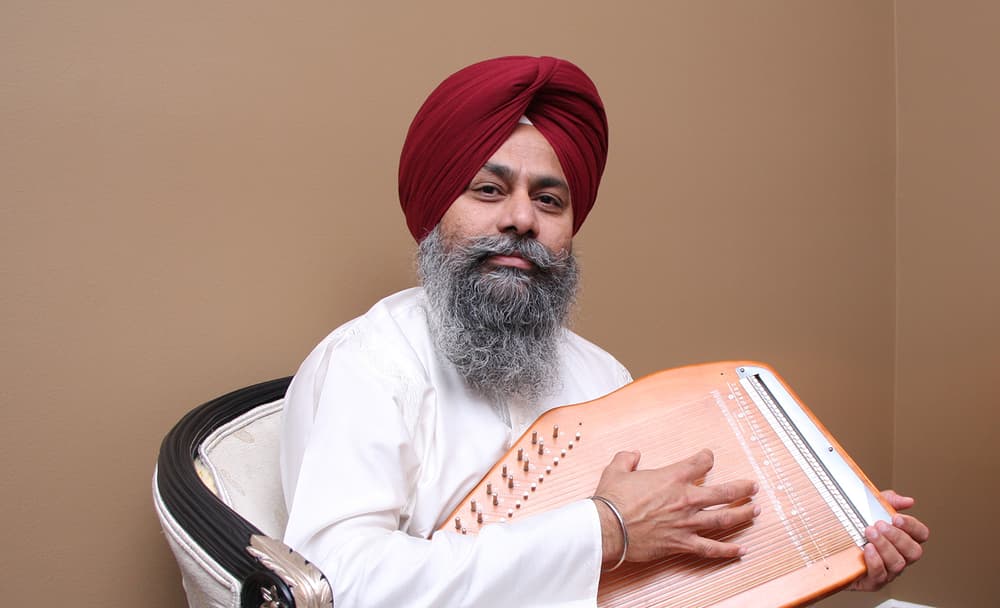
Professor Paramjeet Singh presents a devotional kirtan performance of Ramkali Partaal, a sacred composition that centers on the mantra "Nar Nareh Namaskarang." The five-minute piece demonstrates the integration of melodic raga form with devotional Sikh practice, where repetition of sacred names and phrases creates a contemplative sound environment. The performance draws from classical Indian musical traditions while serving as a vehicle for spiritual practice and reverential acknowledgment of the divine.

読む · 6セクション

What is Ramkali Partaal in the Sikh Devotional Tradition?

Ramkali Partaal represents a specific genre of Sikh devotional music that combines the raga form (a melodic framework from Indian classical music) with kirtan, the practice of singing sacred hymns. The word "Partaal" refers to the extended, fluid melodic elaboration characteristic of this style. Professor Paramjeet Singh's interpretation showcases how traditional musical structures serve as containers for spiritual practice rather than mere aesthetic display.

In Sikh liturgical practice, Ramkali is one of the significant ragas (melodic modes) used in the Guru Granth Sahib, the central sacred text of Sikhism. When applied to kirtan, Ramkali creates a specific emotional and spiritual atmosphere—one that traditionally carries associations with devotion, praise, and the acknowledgment of divine presence. The use of established ragas ensures that practitioners and listeners approach the sacred text through a shared musical language that has been refined over centuries.

How Does Repetition Function as a Spiritual Practice?

The core mantra of this piece—"Nar Nareh Namaskarang"—appears repeatedly throughout the performance. Rather than viewing repetition as monotonous, the kirtan tradition understands it as a deepening practice. Each iteration allows the practitioner and listener to settle more fully into the phrase, letting its meaning and resonance work at increasingly subtle levels of awareness. This method of sacred sound practice appears across multiple contemplative traditions and reflects an understanding that repetition, rather than distraction, can lead to concentration and insight.

The musical presentation of the mantra involves variations in melodic contour, rhythmic placement, and vocal ornamentation, even as the core phrase remains constant. This balance between repetition and variation prevents the mind from drifting into mechanical recitation while maintaining the stability that comes from sustained focus on a single devotional utterance. The listener is invited into a rhythm of attention that neither demands constant novelty nor permits complete inattention.

What Role Does Raga Structure Play in Devotional Expression?

The raga system of Indian classical music is not merely a collection of notes but a sophisticated framework that includes specific ascending and descending patterns, emphasis notes, and characteristic phrases. When a performer works within the Ramkali raga, they are drawing on centuries of accumulated musical knowledge about which intervals, movements, and emotional colorations belong to that particular raga's identity. This constrains the performer's choices in a generative way—the limitations of the raga system actually enable deeper expression rather than limiting it.

For devotional music specifically, the raga becomes a spiritual technology. The particular intervallic relationships and characteristic phrases of Ramkali are believed to resonate with specific spiritual states or divine attributes. By performing within the Ramkali framework, Professor Paramjeet Singh aligns his individual expression with a larger cosmological order. The listener, in turn, receives the devotional intention not just through the words and melody, but through the underlying mathematical and energetic properties of the raga itself.

How Does Kirtan Differ From Other Forms of Devotional Music?

Kirtan, in the Sikh and broader Indian devotional context, is characterized by call-and-response elements, the centering of sacred words or names, and the aim of creating a participatory spiritual experience. Unlike concert music designed primarily for listening, kirtan is fundamentally meant to engage the practitioner—whether the performer or the audience—in active spiritual participation. The repetition of mantras and sacred phrases is not background music but a primary tool for transforming consciousness.

The performance style in kirtan also tends to be more intimate and emotionally direct than some classical Indian concert music. While maintaining technical precision and respect for the raga form, kirtan performers emphasize devotional sincerity and the transmission of spiritual meaning. Professor Paramjeet Singh's rendering of Ramkali Partaal reflects this orientation—the music serves the devotional content rather than the other way around. Every melodic choice, every rhythmic emphasis, every moment of silence is placed in service of deepening the listener's connection to the sacred phrase and its underlying truth.

What Spiritual Significance Does the Mantra "Nar Nareh Namaskarang" Hold?

The phrase "Nar Nareh Namaskarang" carries multiple layers of meaning in Sikh spiritual practice. Breaking it down: "Nar" refers to human or being, "Nareh" can denote the divine manifestation within all beings, and "Namaskarang" means bowing, reverence, or offering of respect. Together, the mantra points to a fundamental spiritual insight—that within each individual being resides a spark of the divine, and that appropriate response to this recognition is reverence and respect.

This mantra embodies a non-dualistic understanding where the distinction between the individual self and the divine is recognized as ultimately illusory. To bow respectfully to another being is simultaneously to acknowledge the divine within them and within oneself. The repetition of this mantra throughout the kirtan performance serves to gradually impress this understanding into the listener's consciousness, moving it from intellectual knowledge to embodied realization. The musical rendering ensures that this teaching enters not through argument but through the direct pathway of sacred sound.

Where to go from here

Those interested in deepening engagement with this material might explore recordings of other Ramkali compositions from the Guru Granth Sahib, examining how different lyrical content is expressed through the same melodic framework. Learning about the basic characteristics of the Ramkali raga—its ascending and descending patterns, its characteristic phrases—will enhance listening to any devotional performance in this mode. Practicing the mantra "Nar Nareh Namaskarang" independently, outside the context of this recording, can help integrate its meaning into daily consciousness. Finally, investigating the broader role of kirtan in Sikh spiritual practice, and how it relates to meditation and prayer in the Sikh tradition, provides essential context for understanding why such performances matter beyond their musical interest alone.

Comments

Loading the conversation…

Transcript

[0:00] [संगीत]

[0:01] 2003

[0:04] धीर

[0:07] व झालें चा

[0:11] [संगीत]

[0:46] कि अ

[0:51] [संगीत]

[0:57] MP3 ओं

[1:01] [संगीत]

[1:17] के प्रति क्विंटल

[1:19] धान की बाढ़

[1:22] कि

[1:26] इतना धन तेरे दादा

[1:31] दाणा सेओ रा दाणा

[1:33] [संगीत]

[1:37] सेओ रा दाणा ओ

[1:42] [संगीत]

[1:47] सऊदी में

[1:49] [संगीत]

[2:10] [संगीत]

[2:32] कि अ

[2:34] [संगीत]

[2:42] है

[2:46] कि

[2:49] भाड़

[2:51] झंझाल

[2:52] [प्रशंसा]

[2:53] [संगीत]

[3:00] [प्रशंसा]

[3:02] कुएं में

[3:05] [संगीत]

[3:22] हुआ है

[3:25] MP3

[3:26] कि अ

[3:29] [संगीत]

[3:32] हुआ है

[3:34] हुआ है

[3:38] कि अ

[3:39] कि अ

[3:43] [संगीत]

[3:58] [संगीत]

[4:00] [प्रशंसा]

[4:03] [संगीत]

[4:05] [प्रशंसा]

[4:10] [संगीत]

[4:13] लुट

[4:15] [संगीत]

[4:18] कि अ

[4:26] [संगीत]

[4:49] [प्रशंसा]

[4:53] कि अ

[4:55] [संगीत]

[5:13] [प्रशंसा]

[5:13] [संगीत]

[5:18] [प्रशंसा]

[5:19] [संगीत]

[5:23] [प्रशंसा]

[5:25] [संगीत]

Professor Paramjeet Singh
ArtistProfessor Paramjeet Singh

Professor Paramjeet Singh is an Indian classical vocalist and Sikh kirtan artist who has mastered over 125 ragas and devoted his career to preserving the devotional music of saints…

プロフィールを見るウェブサイト
トピックを見る
KirtanSikh-devotionSacred-musicRagaMantra-repetition

ご質問はありますか?

よくある質問

Kirtan is a Sikh and Indian devotional music practice centered on repetition of sacred names and mantras as a spiritual discipline. Unlike regular singing, kirtan aims to engage practitioners in active spiritual transformation rather than provide aesthetic entertainment. The repetition of sacred phrases is designed to deepen concentration and move spiritual understanding from the intellectual to the experiential.
A raga is a melodic framework in Indian classical music with specific scales, emphasis patterns, and characteristic phrases that define its spiritual and emotional character. Ramkali is a significant raga used in Sikh sacred texts (Guru Granth Sahib) and is traditionally associated with devotion and divine praise. When performers work within Ramkali, they draw on centuries of accumulated knowledge about which musical intervals and movements belong to that particular spiritual mode.
The mantra translates roughly to 'Bowing to the divine presence in all beings.' It expresses a non-dualistic spiritual insight that the divine manifests within every individual, and the appropriate response is reverence. Repeating this mantra through kirtan is meant to gradually impress this understanding into consciousness, moving it from intellectual knowledge to lived realization.
Repetition in kirtan is understood as a focusing tool that deepens concentration and gradually settles awareness into subtler levels. Rather than becoming mechanical, kirtan repetition combines consistency with musical variation, allowing the mind to engage fully without distraction. This sustained attention on sacred sound and meaning is believed to gradually transform consciousness and align it with spiritual truth.
Kirtan functions similarly to meditation in that it uses focused repetition and sacred sound to concentrate the mind and access deeper states of awareness. However, kirtan is more actively participatory and devotional in orientation, while meditation can be silent or more internally focused. In Sikh practice, kirtan is part of a broader spiritual discipline that includes meditation, prayer, and service.
Ragas are understood in Indian spiritual tradition as containing energetic and mathematical properties aligned with specific states of consciousness and divine qualities. By performing devotional music within a specific raga framework, the practitioner works with both the conceptual meaning of the sacred words and the underlying spiritual resonance of the melodic mode itself. This creates a multi-dimensional transmission of spiritual meaning.

読みつづける

More from Professor

すべて表示
Raag Rageshwari Practice: How Sargam Phrases Build a Raag
Inspire

Raag Rageshwari Practice: How Sargam Phrases Build a Raag

A classroom Raag Rageshwari drill built from sargam phrases shows how sur, voice control, taal and riyaz come together. Here is what the pra…

1 min read
Raag-Based Gurbani Kirtan: The Beauty of Mere Laalan Ki Sobha
Inspire

Raag-Based Gurbani Kirtan: The Beauty of Mere Laalan Ki Sobha

Learn how raag-based Gurbani kirtan preserves authentic Sikh devotional music through the shabad "Mere Laalan Ki Sobha," performed in classi…

1 min read
Sacred Music for Sacred Forests: Chanting for Trees in Rishikesh
Inspire

Sacred Music for Sacred Forests: Chanting for Trees in Rishikesh

A short kirtan clip from Rishikesh ties chanting to forest protection. Proceeds from the 19 October concert support GoDharmic's Dharma Fores…

1 min read
Om Namah Shivaya Live Kirtan: Call, Response and the Shiva Chant
Inspire

Om Namah Shivaya Live Kirtan: Call, Response and the Shiva Chant

A live kirtan of Om Namah Shivaya, recorded at Medicine Festival 2026 in Reading, moves from slow mantra into ecstatic chant. Here is what t…

1 min read

探索を続ける

旅をつづける

BrightStarのディレクトリから、さらなる智慧と集いを。

もっと記事を読む

教え、インタビュー、ガイドのライブラリ全体をご覧ください。

すべての記事に戻る →

講師とアーティスト

コンシャスな世界の系譜、音楽家、導き手を探しましょう。

アーティストを探す →

イベントを見つける

キルタン、リトリート、サウンドバス、ブレスワーク、フェスティバル — まもなく開かれます。

イベントを見る →
