BrightStar

すべてのEventsを見る

意識ある集いに出会う

events

Yoga
Meditation
Breathwork
Qigong
Tai Chi
Sacred Music
World Music
Medicine Music
Sound Healing
Ecstatic Dance
人気の目的地
BaliSedonaLos AngelesCosta RicaNew YorkSan FranciscoAustinMiamiJoshua TreeTulum
すべてのカテゴリを見るすべての目的地を見る

すべての機能を探索

イベントを成長させる強力なツール

プラットフォーム機能

スマートダイナミックプライシング
チケットカテゴリ
座席指定
カート放棄リカバリー
訪問者リカバリー
寄付とスライディングスケール
アフィリエイトシステム
チケットスキャナー
クーポンコード
カスタム質問
チケット共有
アップセルとアドオン
分析とレポート
メールシーケンス
ウェイトリスト / 通知 / リマインダー
人と場所
Artists & TeachersEvent OrganizersVenues & StudiosKnowledge BaseGlossaryInspiration
すべての機能を見る私たちについて
料金ブログ
Language
Saved events
すべてのイベントを見る

events

YogaMeditationBreathworkQigongTai ChiSacred MusicWorld MusicMedicine Music

人気の目的地

BaliSedonaLos AngelesCosta RicaNew YorkSan Francisco

人と場所

Artists & TeachersEvent OrganizersVenues & StudiosKnowledge BaseGlossaryInspiration

プラットフォーム機能

スマートダイナミックプライシングチケットカテゴリ座席指定カート放棄リカバリー訪問者リカバリー寄付とスライディングスケールアフィリエイトシステムチケットスキャナークーポンコードカスタム質問チケット共有アップセルとアドオン分析とレポートメールシーケンスウェイトリスト / 通知 / リマインダー
すべての機能を見る私たちについて
料金ブログ
ログイン探求者クリエイター
  • すべてのイベントを見る
  • 探求者向け
  • ヨガ
  • 瞑想
  • ブレスワーク
  • 気功
  • 太極拳
  • 聖なる音楽
  • ワールドミュージック
  • メディスンミュージック
  • サウンドヒーリング
  • エクスタティックダンス
  • リトリート
  • ワークショップ
  • すべてのカテゴリ →
  • Bali
  • Sedona
  • Los Angeles
  • Costa Rica
  • Tulum
  • Byron Bay
  • San Francisco
  • Austin
  • New York
  • San Diego
  • Denver
  • Seattle
  • Portland
  • Miami
  • すべての都市 →
  • Be Found
  • Sell Globally
  • クリエイター向け
  • チーム向け
  • ライター向け
  • 講師向け
  • キルタンアーティスト向け
  • スタジオ向け
  • フェスティバル向け
  • リトリートセンター向け
  • 非営利団体向け
  • ブランドアンバサダー
  • 事例紹介
  • 無料チケット販売
  • Elevate
  • Amplify
  • 35万人以上のバイヤーネットワーク
  • カート放棄リカバリー
  • スマートダイナミックプライシング
  • チケットカテゴリ
  • 定期イベント
  • 座席指定
  • アフィリエイトシステム
  • ウェイトリスト / 通知
  • チケットスキャナー
  • 埋め込みウィジェット
  • イベント配信
  • メッセージセンター
  • インテグレーション
  • レポート
  • すべての機能 →
  • 概要
  • エコシステム
  • ブログ
  • 用語集
  • インスピレーション
  • ヘルプセンター
  • お問い合わせ
  • APIドキュメント
  • ブランドアセット
  • 採用
  • プレス
  • 利用規約
  • プライバシーポリシー

イベント

  • すべてのイベントを見る
  • 探求者向け
  • ヨガ
  • 瞑想
  • ブレスワーク
  • 気功
  • 太極拳
  • 聖なる音楽
  • ワールドミュージック
  • メディスンミュージック
  • サウンドヒーリング
  • エクスタティックダンス
  • リトリート
  • ワークショップ
  • すべてのカテゴリ →

目的地

  • Bali
  • Sedona
  • Los Angeles
  • Costa Rica
  • Tulum
  • Byron Bay
  • San Francisco
  • Austin
  • New York
  • San Diego
  • Denver
  • Seattle
  • Portland
  • Miami
  • すべての都市 →

クリエイター向け

  • Be Found
  • Sell Globally
  • クリエイター向け
  • チーム向け
  • ライター向け
  • 講師向け
  • キルタンアーティスト向け
  • スタジオ向け
  • フェスティバル向け
  • リトリートセンター向け
  • 非営利団体向け
  • ブランドアンバサダー
  • 事例紹介
  • 無料チケット販売
  • Elevate
  • Amplify

機能

  • 35万人以上のバイヤーネットワーク
  • カート放棄リカバリー
  • スマートダイナミックプライシング
  • チケットカテゴリ
  • 定期イベント
  • 座席指定
  • アフィリエイトシステム
  • ウェイトリスト / 通知
  • チケットスキャナー
  • 埋め込みウィジェット
  • イベント配信
  • メッセージセンター
  • インテグレーション
  • レポート
  • すべての機能 →

会社

  • 概要
  • エコシステム
  • ブログ
  • 用語集
  • インスピレーション
  • ヘルプセンター
  • お問い合わせ
  • APIドキュメント
  • ブランドアセット
  • 採用
  • プレス
  • 利用規約
  • プライバシーポリシー
BrightStar
© 2026 BrightStar. 全著作権所有.
Inspiration

Raag Multani Todi: Classical IndianRaga Structure and Performance

Professor Paramjeet Singh
May 21, 2015
読了 約5分
視聴 · 5

Professor Paramjeet Singh demonstrates Raag Multani Todi, a Hindustani classical raga that combines elements of two distinct melodic frameworks (raags). The performance illustrates the raga's characteristic ascending and descending scale patterns, the use of microtonal slides and bends, and the improvisational exploration central to classical Indian music performance. This video captures a live performance at Jashn-e-Mousiqi in Toronto, showing how a trained vocalist navigates the rules and aesthetic conventions of a specific raga while maintaining expressive freedom.

読む · 7セクション

What is Raag Multani Todi?

Raag Multani Todi exists at an intersection within Hindustani classical music—it is a raga that incorporates elements of two parent raags: Multani and Todi. Each parent raga has its own melodic identity, scale patterns, and emotional character. Raag Todi is known for its melancholic, introspective quality, while Multani carries different intervallic relationships and mood. By combining these frameworks, Multani Todi creates a unique sonic palette that allows for a broader range of melodic exploration than either parent raga alone.

In Hindustani classical tradition, a raga is not simply a scale—it is a complete system governing which notes are used, how they are approached, which intervals are emphasized, and in what order phrases typically unfold. Raag Multani Todi follows these conventions while offering distinctive characteristics that a trained listener can recognize and an informed performer must respect.

How are the scales and melodic patterns structured?

The performance captures the ascending (arooh) and descending (avrooh) patterns that define the raga's melodic shape. Unlike Western scales, which are typically evenly divided, Indian ragas feature unequal intervals called srutis—microtonal gradations that give Indian classical music its characteristic sound. A note in Raag Multani Todi may be approached from below with a slide, bent slightly sharp or flat, or struck directly, depending on the raga's rules and the performer's artistic choice.

Professor Singh's performance demonstrates the phrase-based nature of raga. Rather than simply playing individual notes, classical singers and instrumentalists construct characteristic melodic figures (mukhras) and patterns that recur throughout a performance. These patterns are not rigid; they serve as a vocabulary within which improvisation occurs. The performer generates new variations by altering rhythm, ornamentation, and the length of time spent on particular notes.

What role does improvisation play in the performance?

The core of Hindustani classical music lies in real-time improvisation within a defined framework. A performer begins with a written composition (bandish) but then moves into extended improvisational sections (vilambit and drut khayal) where the melody is elaborated and explored. This is not free-form—every note and slide must belong to the chosen raga. The performer's skill lies in discovering fresh melodic paths while remaining within the raga's aesthetic boundaries.

In Raag Multani Todi, this means that while certain note combinations and ornamentations are preferred or required, the performer still has significant interpretive freedom. Two different singers performing the same raga will sound distinct, each bringing their own phrasing, timing, and emotional emphasis. This balance between structure and spontaneity is central to how Indian classical music is experienced and valued.

How does microtonal inflection enhance expression?

One of the most striking differences between Indian classical music and Western classical tradition is the extensive use of microtones and portamento—continuous pitch slides between notes. A single note in Raag Multani Todi may be sung slightly flat or sharp depending on context. A performer might slide from one note to another rather than jump, creating a seamless, vocal quality even on stringed instruments.

These subtle pitch inflections are not errors or approximations; they are deliberate expressive choices that define the raga's character. Professor Singh's vocal technique in this performance demonstrates how these microtonal shifts convey emotion and establish the raga's particular flavor. The ear attuned to Hindustani classical music perceives these small pitch variations as essential to the music's meaning and beauty.

What is the role of rhythm and time cycles?

While Professor Singh's performance emphasizes melodic exploration, rhythm and time cycles (taals) form the other pillar of Hindustani classical music. A taal is a repeating rhythmic pattern that can last 8, 12, 16, or more beats depending on the taal's type. A performance cycles through this pattern repeatedly, and improvisational phrases are constructed to land on significant beats (sams) within the taal cycle.

This creates a dialogue between the melody and rhythm. The performer must keep track of where they are in the taal cycle even while exploring intricate melodic variations. The listener, familiar with the chosen taal, experiences satisfaction when a phrase resolves on the sam—the first beat of a new cycle—and anticipation during the off-cycle exploration.

How is this raga situated within the broader classical tradition?

Raag Multani Todi represents the depth and specificity of the Hindustani classical repertoire. With hundreds of named raags, each with distinct rules and associations, a classical musician's knowledge is encyclopedic. Training in classical Indian music involves memorizing not only the scales and phrases of many raags but also understanding their emotional character, the time of day or season they are traditionally performed, and their historical lineage.

Professor Singh's performance at Jashn-e-Mousiqi—a major North American festival of Indian music—shows how this living tradition continues to thrive outside the Indian subcontinent. Diaspora communities and international audiences have become important contexts for classical music performance, even as the core principles remain unchanged.

Where to go from here

To deepen your understanding of Raag Multani Todi and Hindustani classical music, explore recordings of the same raga by different masters to hear how individual artists interpret its structure. Listen for the characteristic phrases and the way microtonal ornamentation shapes the melody. If possible, attend a live classical music concert; the immediacy of real-time improvisation is difficult to convey in recorded form. Consider learning about taals and how rhythm cycles interact with melodic improvisation. Finally, seek out documentary or educational resources that explain the historical development of Hindustani classical music and the training systems (gharanas) that preserve and transmit these traditions across generations.

Comments

Loading the conversation…

Transcript

[0:29] ا

[0:59] ا

[1:29] ا

[1:59] ا

[2:29] ن

[3:29] ‏par

[3:59] ن

[4:29] ن

[4:59] ز

[5:29] ز

[5:59] دي

[6:29] ‏sa

[6:59] ز

[7:29] خ

[8:28] ز

[9:28] م

[9:58] ن

[10:28] ار

[10:58] ار

[11:28] ن

[11:58] ز

[12:58] خ

[13:28] نا

[13:58] ‏g

[14:28] س

[15:37] ‏than you

Professor Paramjeet Singh
ArtistProfessor Paramjeet Singh

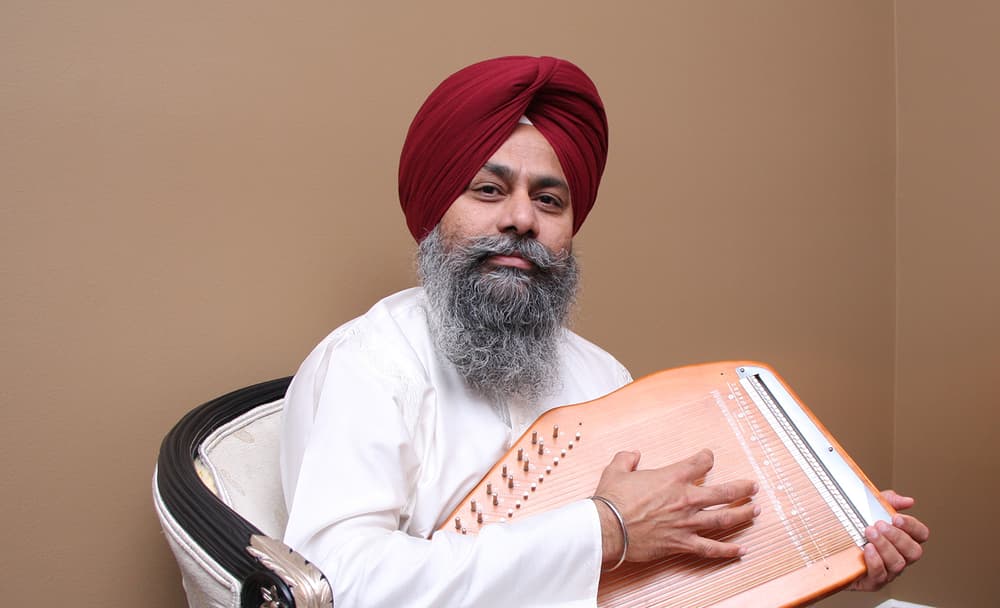
Professor Paramjeet Singh is an Indian classical vocalist and Sikh kirtan artist who has mastered over 125 ragas and devoted his career to preserving the devotional music of saints…

プロフィールを見るウェブサイト
トピックを見る
Raag-multani-todiHindustani-classical-musicRaga-performanceMicrotonal-singingIndian-classical-vocal

ご質問はありますか?

よくある質問

Raag Multani and Raag Todi are two distinct raags in Hindustani classical music, each with its own scale patterns and emotional character. Raag Todi is typically melancholic and introspective, while Multani carries different intervallic relationships and mood. Raag Multani Todi combines elements of both parent raags, allowing performers to navigate a broader melodic palette than either alone.
Hindustani classical music is built on raags (melodic frameworks with specific rules about scale patterns, note ornamentation, and emotional character) rather than compositions in the Western sense. It emphasizes real-time improvisation within these frameworks, uses microtonal intervals (srutis) not found in Western twelve-tone equal temperament, and relies on rhythm cycles (taals) that structure timing rather than standard Western meters.
Srutis are microtonal pitch gradations—intervals smaller than the semitones used in Western music. In Raag Multani Todi and other raags, notes are approached and inflected using these subtle pitch variations, which are essential to the raga's character and emotional expression. They are not approximations but deliberate expressive choices that define how the raga sounds.
A taal is a repeating rhythmic time cycle that forms the foundation of timing in Hindustani classical music. It can last 8, 12, 16, or more beats depending on its type. Improvisational melodic phrases are structured to land on significant beats (particularly the sam, the first beat of a cycle), creating a dialogue between melody and rhythm.
Classical Indian musicians undergo years of intensive training, typically within a gharana (school or lineage). They memorize not only the scales and characteristic phrases of hundreds of raags but also their emotional character, traditional times of performance, and historical development. This knowledge is transmitted orally through direct teacher-student relationships.
A bandish is a composed melody that serves as the starting point for a khayal performance. After performing the bandish, the vocalist moves into extended improvisational sections (vilambit and drut khayal) where the melody is elaborated within the raga's structure. The improvisation must stay within the chosen raga's rules but allows the performer to create new melodic paths and demonstrate skill.

読みつづける

More from Professor

すべて表示
Raag-Based Gurbani Kirtan: The Beauty of Mere Laalan Ki Sobha
Inspire

Raag-Based Gurbani Kirtan: The Beauty of Mere Laalan Ki Sobha

Learn how raag-based Gurbani kirtan preserves authentic Sikh devotional music through the shabad "Mere Laalan Ki Sobha," performed in classi…

1 min read
Raag-Based Gurbani Kirtan: Tukhari, Bhairavi, and Classical Tradition
Inspire

Raag-Based Gurbani Kirtan: Tukhari, Bhairavi, and Classical Tradition

Experience the spiritual depth of Patiala Gharana kirtan through rare raags and Gurbani compositions. A live performance honoring classical …

1 min read
Improvised Live Electronic Music: Channeling Energy Through Sound
Inspire

Improvised Live Electronic Music: Channeling Energy Through Sound

A live electronic performance filmed at Es Vedra during the full moon equinox explores how musicians improvise together in real-time, lettin…

1 min read
Live Yin Yoga Music: Improvised Journey with Mose and Sam Garrett
Inspire

Live Yin Yoga Music: Improvised Journey with Mose and Sam Garrett

A 1-hour-45-minute live collaboration between Mose and Sam Garrett during a silent retreat, blending improvised electronic music with yoga a…

1 min read

探索を続ける

旅をつづける

BrightStarのディレクトリから、さらなる智慧と集いを。

もっと記事を読む

教え、インタビュー、ガイドのライブラリ全体をご覧ください。

すべての記事に戻る →

講師とアーティスト

コンシャスな世界の系譜、音楽家、導き手を探しましょう。

アーティストを探す →

イベントを見つける

キルタン、リトリート、サウンドバス、ブレスワーク、フェスティバル — まもなく開かれます。

イベントを見る →