BrightStar

すべてのEventsを見る

意識ある集いに出会う

events

Yoga
Meditation
Breathwork
Qigong
Tai Chi
Sacred Music
World Music
Medicine Music
Sound Healing
Ecstatic Dance
人気の目的地
BaliSedonaLos AngelesCosta RicaNew YorkSan FranciscoAustinMiamiJoshua TreeTulum
すべてのカテゴリを見るすべての目的地を見る

すべての機能を探索

イベントを成長させる強力なツール

プラットフォーム機能

スマートダイナミックプライシング
チケットカテゴリ
座席指定
カート放棄リカバリー
訪問者リカバリー
寄付とスライディングスケール
アフィリエイトシステム
チケットスキャナー
クーポンコード
カスタム質問
チケット共有
アップセルとアドオン
分析とレポート
メールシーケンス
ウェイトリスト / 通知 / リマインダー
人と場所
Artists & TeachersEvent OrganizersVenues & StudiosKnowledge BaseGlossaryInspiration
すべての機能を見る私たちについて
料金ブログ
Saved events
すべてのイベントを見る

events

YogaMeditationBreathworkQigongTai ChiSacred MusicWorld MusicMedicine Music

人気の目的地

BaliSedonaLos AngelesCosta RicaNew YorkSan Francisco

人と場所

Artists & TeachersEvent OrganizersVenues & StudiosKnowledge BaseGlossaryInspiration

プラットフォーム機能

スマートダイナミックプライシングチケットカテゴリ座席指定カート放棄リカバリー訪問者リカバリー寄付とスライディングスケールアフィリエイトシステムチケットスキャナークーポンコードカスタム質問チケット共有アップセルとアドオン分析とレポートメールシーケンスウェイトリスト / 通知 / リマインダー
すべての機能を見る私たちについて
料金ブログ
ログイン探求者クリエイター
Tibetan BuddhistOm Mani Padme Hum · Om Mani Padme Hum · Om Mani Padme Hum · Om Mani Padme Hum ·
  • すべてのイベントを見る
  • 探求者向け
  • ヨガ
  • 瞑想
  • ブレスワーク
  • 気功&太極拳
  • 太極拳
  • 聖なる音楽
  • リトリート
  • ワークショップ
  • すべてのカテゴリ →
  • Bali
  • Sedona
  • Los Angeles
  • Costa Rica
  • Tulum
  • Byron Bay
  • San Francisco
  • Austin
  • すべての都市 →
  • クリエイター向け
  • チーム向け
  • ライター向け
  • 講師向け
  • キルタンアーティスト向け
  • スタジオ向け
  • フェスティバル向け
  • リトリートセンター向け
  • 非営利団体向け
  • ブランドアンバサダー
  • 事例紹介
  • 無料チケット販売
  • Elevate
  • Amplify
  • 35万人以上のバイヤーネットワーク
  • カート放棄リカバリー
  • スマートダイナミックプライシング
  • チケットカテゴリ
  • 定期イベント
  • 座席指定
  • アフィリエイトシステム
  • ウェイトリスト / 通知
  • チケットスキャナー
  • 埋め込みウィジェット
  • イベント配信
  • メッセージセンター
  • インテグレーション
  • レポート
  • すべての機能 →
  • 概要
  • エコシステム
  • ブログ
  • 用語集
  • インスピレーション
  • ヘルプセンター
  • お問い合わせ
  • APIドキュメント
  • ブランドアセット
  • 採用
  • プレス
  • 利用規約
  • プライバシーポリシー

イベント

  • すべてのイベントを見る
  • 探求者向け
  • ヨガ
  • 瞑想
  • ブレスワーク
  • 気功&太極拳
  • 太極拳
  • 聖なる音楽
  • リトリート
  • ワークショップ
  • すべてのカテゴリ →

目的地

  • Bali
  • Sedona
  • Los Angeles
  • Costa Rica
  • Tulum
  • Byron Bay
  • San Francisco
  • Austin
  • すべての都市 →

クリエイター向け

  • クリエイター向け
  • チーム向け
  • ライター向け
  • 講師向け
  • キルタンアーティスト向け
  • スタジオ向け
  • フェスティバル向け
  • リトリートセンター向け
  • 非営利団体向け
  • ブランドアンバサダー
  • 事例紹介
  • 無料チケット販売
  • Elevate
  • Amplify

機能

  • 35万人以上のバイヤーネットワーク
  • カート放棄リカバリー
  • スマートダイナミックプライシング
  • チケットカテゴリ
  • 定期イベント
  • 座席指定
  • アフィリエイトシステム
  • ウェイトリスト / 通知
  • チケットスキャナー
  • 埋め込みウィジェット
  • イベント配信
  • メッセージセンター
  • インテグレーション
  • レポート
  • すべての機能 →

会社

  • 概要
  • エコシステム
  • ブログ
  • 用語集
  • インスピレーション
  • ヘルプセンター
  • お問い合わせ
  • APIドキュメント
  • ブランドアセット
  • 採用
  • プレス
  • 利用規約
  • プライバシーポリシー
BrightStar
© 2026 BrightStar. 全著作権所有.
Inspiration

Prayer for Compassion: Avalokiteshvara Mantrain Times of Tragedy

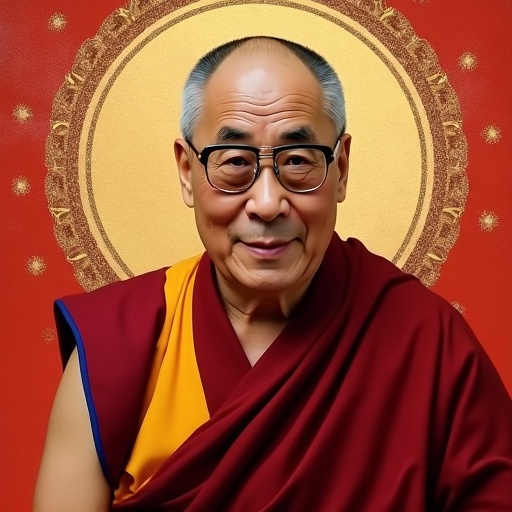
Dalai Lama
Dalai Lama
Aug 30, 2026
読了 約6分
視聴 · 5

In the aftermath of the August 2024 flash floods that devastated the Tibet-Nepal border region—particularly Kyirong on the Tibetan side and Rasuwa in Nepal—entire communities faced not only material loss but the existential weight of sudden death and displacement. Hundreds were missing, hundreds more bereaved. In such moments, the question of how to hold grief collectively, across geographic and political boundaries, becomes urgent. One answer lies in an ancient practice: the recitation of mantra, the six-syllable invocation Om Mani Padme Hum, addressed to Avalokiteshvara, the bodhisattva of compassion.

読む · 5セクション

What Is Avalokiteshvara, and Why Prayer to This Deity?

Avalokiteshvara—known in Chinese Buddhism as Guan Yin, and in Japanese as Kannon—is not a god in the Western theistic sense. In the Mahayana Buddhist tradition, Avalokiteshvara represents the embodiment of compassion itself, the quality of boundless loving-kindness extended to all sentient beings without exception. The name translates loosely as "the Lord who looks upon the world with compassion." Practitioners invoke Avalokiteshvara not as a distant deity dispensing favor, but as a mirror: a reflection of the compassion that exists within consciousness itself, waiting to be awakened.

When disaster strikes, turning toward Avalokiteshvara in prayer is an act of alignment. It says: in this moment of immense suffering, we consciously choose compassion as our response. We choose to see the humanity in those who have died, those still missing, those grieving. We choose to extend our hearts across the chasm of loss.

The Six-Syllable Mantra: Om Mani Padme Hum

The mantra Om Mani Padme Hum is perhaps the most widely recited invocation in Himalayan Buddhism. Syllable by syllable, it carries layers of meaning. Om is the primordial sound, the vibration from which all phenomena arise. Mani means jewel—the jewel of enlightened wisdom. Padme is the lotus, symbol of purity and spiritual unfoldment even in muddy waters. Hum seals the mantra, integrating the intention into the practitioner's being.

Reciting this mantra is not petition in the colloquial sense—asking for a favor from an external power. Rather, it is a practice of consciously embodying compassion, of aligning oneself with the frequency of loving-kindness. When recited in the presence of suffering—whether personal or collective—the mantra becomes an anchor, a way of saying: even here, even now, compassion is possible. Even here, the heart can open.

In the Tibetan Buddhist lineage, the six-syllable mantra is so central to daily practice that prayer wheels—cylindrical devices inscribed with the mantra—spin continuously in monasteries and communities, their rotation understood as the endless circulation of compassionate intention. For Himalayan Buddhists, particularly those in Tibet and Nepal, this mantra is woven into the fabric of life and death.

Collective Prayer as a Response to Shared Tragedy

Natural disasters create a rupture in the normal order. They are indiscriminate—they do not distinguish between the virtuous and the struggling, the rich and the poor. In their wake, communities often search for a ritual framework through which to process shock and honor the dead. For many in Tibet and Nepal, that framework is prayer.

The offering of prayers specifically for the deceased and for those missing reflects a fundamental Buddhist understanding: that consciousness does not simply vanish at death, and that the living can offer spiritual support to the dead through intention and mantra. This is not superstition but a sophisticated working hypothesis about the nature of mind and its independence from the body. Whether or not one accepts this cosmology, the practice itself serves the living: it provides a dignified container for grief, a way to say that the dead are not forgotten, that their suffering matters, that the community holds them in awareness.

Prayers offered for the bereaved families serve a parallel function. They affirm that grief is witnessed, that loss is real, and that the larger community stands in solidarity with those whose lives have been shattered. In the Himalayan context, such prayers cross political borders—they are recited by Tibetan Buddhists, Nepali Buddhists, and practitioners worldwide, creating an invisible network of compassion that transcends the nation-states whose boundaries had no meaning to a flash flood.

Mantra as Medicine for the Mind

From a contemplative perspective, the repetition of mantra serves as a stabilizing force for the mind in turbulent times. When confronted with large-scale suffering—images of destruction, lists of the missing, the helplessness of not being able to materially aid those affected—the ordinary mind can become destabilized, oscillating between denial, panic, and despair. Mantra practice offers an alternative: a focal point for attention, a rhythm that aligns the breath and heartbeat, a verbal formulation of an intention that is healing rather than reactive.

The vibration of the mantra itself—the way the syllables resonate through the body when spoken aloud or internally—is understood in tantric Buddhism to have a subtle effect on the nervous system and the subtle energy channels (nadis) that Buddhist physiology maps within the body. Whether understood in these traditional terms or through contemporary neuroscience (which has documented the calming effects of repetitive chanting and mantra on heart rate and stress hormones), the practice works. It orients the practitioner toward compassion, steadies the mind, and transforms helplessness into purposeful spiritual action.

Where to Go From Here

For those drawn to this practice, exploring the meaning and recitation of Om Mani Padme Hum need not require conversion to Buddhism or adoption of a new belief system. The mantra can be encountered as a meditation tool, a linguistic artifact of profound beauty, or a spiritual technology refined over centuries. Many teachers offer guided introductions to the six-syllable mantra, both in Tibetan centers and in secular mindfulness contexts.

More broadly, the response of the Buddhist community to the Tibet-Nepal floods illustrates how contemplative traditions serve not only individual practitioners but entire societies. When disaster strips away the ordinary distractions of daily life, the question of how we want to show up for one another becomes unavoidable. Prayer—whether one believes in its metaphysical efficacy or understands it as a practice of cultivating compassion—is one eloquent answer: by turning toward suffering with an open heart, by witnessing loss, by holding the deceased and grieving in awareness. In that turning, in that witnessing, something shifts. The isolation of private grief becomes part of a larger human gesture. Compassion, which seemed absent in the face of such senseless destruction, reasserts itself as possible, as necessary, as real.

Transcript

[0:07] 아

[0:09] 베니지 산성 표지루장

[0:15] 러수산의

[0:18] 만불로장

[0:20] 설 섭시경

[0:24] 어 내종신 당 가성 참여봐

[0:29] 매주보

[0:51] О

[1:43] 지고

[1:48] 다나니무니소하니

[1:58] 마무소니

[2:01] 마무니소니

[2:03] 마무니모니

[2:05] 마무니소니

[2:07] 마

[2:12] >> 어머니메니

[2:21] 어바사 나지 아라

[2:24] >> 어바사나지

[2:26] 아라바나지 아라파사나지라

[2:32] >> 어라파사나

[2:35] >> 어 두다에 들려서 두

[2:39] >> 옴딸에 두에 들여서

[2:41] >> 옴에 두 옴딸에 두에 들리소

[2:45] >> 옴에 두 옴딸에 두에 들여서

[2:48] >> 옴딸에 두

[2:50] >> 옴딸의 두에 들여서

[2:52] >> 옴딸리 옴딸의 두리 들여서

[2:55] >> 옴딸에

[2:59] 아

[3:00] >> 어마자고

[3:04] 아

[3:11] >> 어

[3:18] >> 아마지

[3:27] 다

[3:34] 말

Dalai Lama
著者Dalai Lama

Spiritual leader of Tibetan Buddhism and Nobel Peace Prize laureate (1989). Born Lhamo Thondup in 1935, recognized at age two as the reincarnation of the 13th Dalai Lama, he fled i…

プロフィールを見るウェブサイト
トピックを見る
MantraAvalokiteshvaraCompassionCollective-prayerBuddhism

ご質問はありますか?

よくある質問

Avalokiteshvara is a bodhisattva who represents the embodiment of compassion in Mahayana Buddhism. Practitioners invoke Avalokiteshvara not as a distant god granting favors, but as a reflection of the boundless loving-kindness that exists within consciousness itself, waiting to be awakened. Prayer to Avalokiteshvara is an act of consciously choosing compassion as one's response to suffering.
The six-syllable mantra breaks down as: Om (primordial sound), Mani (jewel of wisdom), Padme (lotus of purity), and Hum (sealing the intention). Together, the mantra invokes the jewel of enlightened wisdom blossoming like a lotus. It is recited to align oneself with the frequency of compassion and loving-kindness, particularly in moments of suffering.
Mantra practice stabilizes the mind during turbulent times by providing a focal point for attention and aligning breath and heartbeat. The repetition and vibrational quality of the mantra calm the nervous system and transform helplessness into purposeful spiritual action oriented toward compassion. Both traditional Buddhist understanding and contemporary research document its calming effects.
Buddhist cosmology understands consciousness as independent from the physical body, continuing after death. Prayers and mantra recitations for the deceased are understood to offer spiritual support to the consciousness in transition. Whether or not one accepts this metaphysically, the practice serves the living by providing a dignified container for grief and affirming that the dead are remembered and honored.
Yes. The mantra can be encountered as a meditation tool, linguistic artifact, or spiritual technology refined over centuries, independent of religious belief. Many secular mindfulness contexts and non-sectarian teachers offer guided introductions to Om Mani Padme Hum. The practice's calming effects on the nervous system are accessible to anyone regardless of worldview.
Disaster creates a shared human experience that transcends political borders. Buddhist communities worldwide recite prayers for those affected by the Tibet-Nepal floods, creating an invisible network of compassion. This collective spiritual response affirms that the dead and bereaved are held in awareness across nations and cultures, offering solidarity that nation-states cannot contain.
Prayer wheels are cylindrical devices inscribed with Om Mani Padme Hum. Their rotation is understood as the endless circulation of compassionate intention. For Himalayan Buddhists, these wheels are integral to daily practice, spinning continuously in monasteries and communities as a constant embodiment of the mantra's healing power.

読みつづける

More from Dalai

すべて表示
The Deep Bond Between Abdul Kalam and the Dalai Lama
Inspire

The Deep Bond Between Abdul Kalam and the Dalai Lama

A rare encounter between two spiritual and intellectual giants reveals the profound mutual respect that transcended titles, achievements, an…

1 min read
Indian Civilization's Unique Philosophical and Spiritual Heritage
Inspire

Indian Civilization's Unique Philosophical and Spiritual Heritage

The Dalai Lama reflects on what makes Indian civilization distinctive in its approach to philosophy, spirituality, and human understanding a…

1 min read
Chanting Together: The Sacred Practice of Kirtan
Inspire

Chanting Together: The Sacred Practice of Kirtan

A Thursday night satsang showcases the transformative power of collective chanting, weaving Sanskrit invocations with musical ensemble and d…

1 min read
By Thy Grace: Snatam Kaur's Twenty-Five Years of Mantra
Inspire

By Thy Grace: Snatam Kaur's Twenty-Five Years of Mantra

From a Colorado birth and a California childhood to a Grammy stage — Snatam Kaur marks 25 years of sacred chant with the By Thy Grace tour, …

1 min read

探索を続ける

旅をつづける

BrightStarのディレクトリから、さらなる智慧と集いを。

もっと記事を読む

教え、インタビュー、ガイドのライブラリ全体をご覧ください。

すべての記事に戻る →

講師とアーティスト

コンシャスな世界の系譜、音楽家、導き手を探しましょう。

アーティストを探す →

イベントを見つける

キルタン、リトリート、サウンドバス、ブレスワーク、フェスティバル — まもなく開かれます。

イベントを見る →