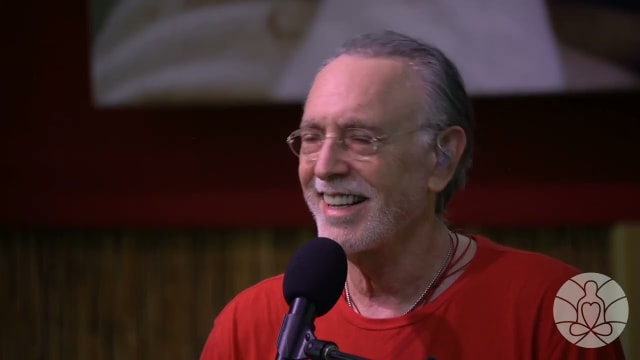
Nadi pariksha is the Ayurvedic practice of reading the body through its pulse, and in an 81-second clip from The Art of Living, the teaching arrives as a single striking image: a thread tied to a wrist, and a physician waiting in another room to read it. The practice asks the practitioner to identify the three doshas, vata, pitta, and kapha, and to understand that the pulse reveals the subtle body as well as the physical one.
The clip opens with a story. According to the speaker, doctors were not permitted to touch Mughal queens, so a thread was tied to the queen's wrist and the doctor held the other end from another room, making the diagnosis by pulse alone (0:15). Whatever the historical details, the anecdote makes the central point vivid: the pulse is a readable signal, and the skill lies in interpreting it.
The speaker frames the method around Ayurveda's three body types. Identifying which dosha is yours, and then balancing it through lifestyle changes, is described as "essentially nadi pariksha" (0:27–0:37). That reframing matters. The diagnosis is not a one-time verdict but the starting point for daily adjustment.
Practitioners work in three ways, the speaker says. Prashna is the art of history-taking, which builds a picture of the person at this moment. Sparshana is palpation, the touch that gathers information from the pulse. Darshana means simply looking (0:40–0:58).
The clip's most intriguing claim is etymological. "The word nadi means channel," the speaker says, "and there are so many channels in the subtle body" (1:01). On this view, the assessment reads the physical body and the subtle body together, and reaching that subtle level requires a kind of initiation (1:12). The clip does not explain how that initiation works, so it remains a question for the fuller teachings.
This is an 81-second teaser that closes with a call to book a session. It does not show how a reading is conducted or what each dosha looks like in practice. For the deeper material, explore The Art of Living's channel for longer talks on Ayurveda and the subtle body. Treat this clip as an introduction to the vocabulary: channels, three doshas, three methods, and a diagnosis that begins with the wrist.