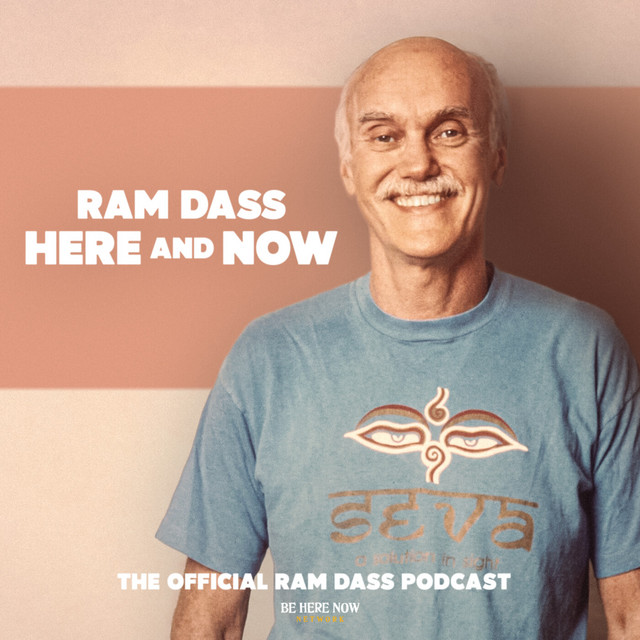
Ram Dass draws on classical yoga philosophy to articulate a radical shift in how we understand spiritual work. Karma—the accumulated patterns, actions, and conditions you've inherited or created—is not a punishment to transcend or escape. Rather, it's the raw material of your dharma, your unique path and purpose.
This inversion reframes spiritual life entirely. Instead of seeking a practice disconnected from your actual circumstances, you take what you've been given—your body, your family, your historical moment, your fears—and you work with it directly. The stuff of your daily life becomes the method. Ram Dass emphasizes this by opening with classical poetry: Kabir and Rumi both teach that the world itself is the teacher, and your job is to stay awake to it.
The implication is profound: you don't need permission to begin practice, and you don't need to wait for "perfect" conditions. Your life, exactly as it is, is your practice ground. What changes is your relationship to it—your willingness to meet each moment as an opportunity for awakening rather than as a problem to be solved or escaped.
Ram Dass identifies a specific mechanism at the heart of suffering: the identification with things that are impermanent. We construct a sense of self around conditions—our health, our status, our beliefs, our political order—and when those conditions shift, we experience it as a threat to who we are.
He notes that we live in "interesting times," a phrase laden with uncertainty: ecological crises, political upheaval, personal aging. Rather than reacting to these changes with resistance, Ram Dass suggests the real art lies in noticing the identification itself. "Part of the real art is to look at what is changing and see how your identification with that which changes is creating so much fear in you that you're pushing against change."
This pushing—the effort to lock down, control, or deny change—creates the actual suffering. You can observe this directly in your own life: when you resist a physical illness, a relationship ending, or a loss of status, the resistance often amplifies the pain more than the condition itself. The spiritual work, then, is not to make change stop, but to gradually unhook your sense of self from the things that inevitably transform.
This doesn't mean passivity or indifference. Rather, it means acting in the world (addressing ecology, politics, justice) from a place of clarity and love rather than from the desperation of someone whose identity is on the line. That shift in stance changes everything about how you show up.
Ram Dass brings aging and mortality into the discussion not as abstract philosophical topics, but as direct, embodied practices. As the body ages—strength fades, attractiveness shifts by cultural standards, abilities decline—there is a constant prompt to release identification with physical form.
He describes his work with people who are dying as "really work on myself." This reveals a non-dual understanding: there is no "me helping them"; instead, each encounter with someone facing death is a mirror, a teaching moment in your own liberation. When you sit with someone dying, you cannot hide from the reality of impermanence. You cannot maintain the delusion that you will keep your youth, your health, your loved ones forever.
Rather than make this morbid, Ram Dass frames it as a gift. "For me, each act becomes part of the awakening." Every meal you serve to a hungry person, every moment you sit with someone in pain, every recognition that your body will age and die—these are all invitations to wake up. The key is not to run from death, but to let it inform how you live now.
The mechanism is simple but requires consistent attention. Ram Dass describes it as "flipping" what you're given: taking the circumstances, relationships, challenges, and losses that arise and consciously working with them as practice.
In practical terms, this means several things. First, it means noticing when you're resisting or when you're holding tight to something. The resistance itself is information. Second, it means bringing awareness and intention to whatever you're doing—not as a burden, but as an opportunity to practice presence and release. Whether you're dealing with a difficult person, a career transition, aging parents, or your own body's changes, you can ask: "How is this teaching me? Where is my attachment? What is trying to die in me?"
Third, it means understanding that there is no higher or lower practice. Serving food to hungry people is not lesser than sitting in meditation. Washing dishes is not less spiritual than reading scripture. The difference lies in your quality of presence and your willingness to use each moment as fuel for awakening. Ram Dass's famous phrase—"We're all just walking each other home"—captures this: every interaction is the practice.
In times of ecological crisis, political polarization, and rapid social change, it's easy to experience the present moment as a curse. Ram Dass reframes this. Stability can lull you into complacency; you can coast through life without being challenged to wake up. Difficult times—times of genuine change and uncertainty—force attention.
When your assumptions are questioned, when your security feels fragile, when you must act with integrity despite unclear outcomes, you are being asked to grow. The blessing is that you cannot sleepwalk through such times. You cannot hide from the reality of impermanence or the call to serve.
This does not minimize real suffering—climate change is real, injustice is real, aging is real. Rather, it locates the spiritual opportunity within that difficulty. If you can hold both—grief at what is lost, and clarity about what is being asked of you—then even crisis becomes a teacher. Your job becomes not to make the difficulty go away, but to meet it with consciousness and compassion.
In Western spirituality, karma is sometimes misunderstood as punishment: "bad karma" as cosmic payback for past misdeeds. Ram Dass's teaching is subtler. Karma is the pattern of cause and effect, action and consequence. Your karma includes not just your personal choices, but your birth circumstances, your family lineage, the historical moment you inhabit, your body's tendencies, and the unresolved patterns you carry.
Rather than try to escape karma or "clear" it through some special practice, Ram Dass suggests working with it directly. Your dharma—your unique calling, your role in the awakening—emerges from a conscious relationship with your karma. You don't get to choose your starting conditions, but you do get to choose whether you work with them consciously or remain asleep within them.
This has profound implications for how you relate to privilege and struggle, advantage and limitation. If you have inherited wealth, racism, or trauma, those are not signs you're doing something wrong; they're invitations to work with those patterns consciously. If you lack certain privileges, that doesn't mean you're less capable of awakening; it means your dharma will be shaped by those real constraints, and your work is to find freedom within that reality.
A common misunderstanding of non-attachment or acceptance is that it leads to passivity. Ram Dass's teaching does not support this. The statement "every human being has a right to be fed" (from the talk's title) grounds his spirituality in concrete care for human welfare. You cannot sit in detachment while people suffer.
However, the way you engage with suffering matters. If you're driven by guilt, desperation, or the need to fix the world to manage your own anxiety, that energy, however well-intentioned, can become intrusive or unsustainable. If you're driven by the recognition that all beings deserve dignity and presence, and you're willing to act within the limits of what you can actually do, then your work becomes part of your awakening rather than a drain on your energy.
This is the synthesis Ram Dass offers: you take full responsibility for your actions in the world (your karma), you notice where you can serve (your dharma), and you do both while remaining loosely identified with outcomes. You feed the hungry person not because it will make you enlightened or because you'll collapse if you don't, but because they are hungry, they are you, and it's what love does.
This teaching invites several practical next steps. First, spend time noticing where you're pushing against change in your own life—whether that's aging, relationships, work, or the state of the world. What would happen if you relaxed your grip slightly?
Second, ask yourself: What is the raw material of my life right now? What karma (circumstances, patterns, challenges) have I been given? Rather than wishing it were different, how could I work with it consciously as my practice?
Third, consider areas of service that call to you—not from guilt, but from genuine compassion. What does your dharma ask of you? Ram Dass's own life (decades of service to the dying, the poor, the marginalized) demonstrates that awakening and social engagement are not opposites but partners.
Finally, revisit the classical poets Kabir and Rumi. Their teaching that the world itself is the path is not poetic decoration; it's practical instruction. Your life, exactly as it is, is the meditation. The question is not whether you have time to practice, but whether you're awake to what's already happening.
]]>