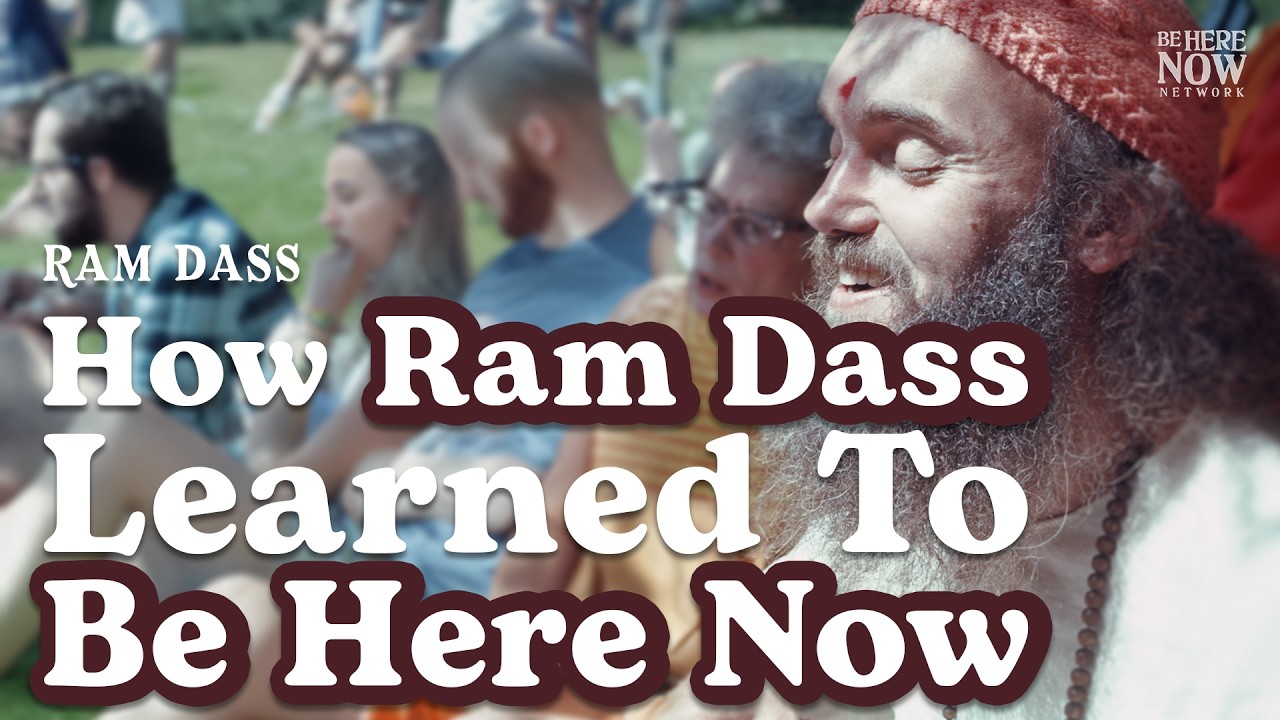
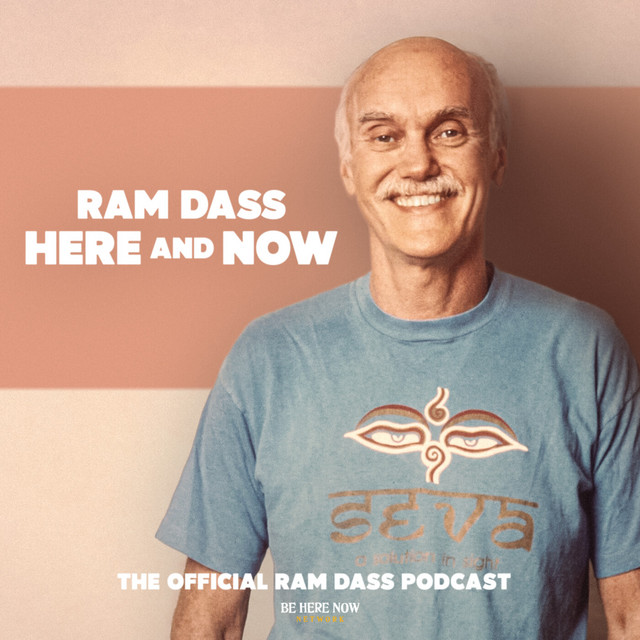
In a 1994 Q&A session recorded in Boulder, Colorado, Ram Dass addresses the core tension between honoring established spiritual lineages and the modern impulse toward eclecticism. He argues that lineages represent humanity's accumulated wisdom for liberation, passed from teacher to student through specific, tested methods—and that respecting this transmission doesn't mean blind dogmatism. He also examines the psychedelic renaissance of the 1990s, the rave culture emerging at that moment, the difference between fundamentalism and spiritual integrity, and how to bring genuine heart-centered presence into intellectual and academic spaces.
What Does It Mean to Honor a Lineage?
Ram Dass begins the session by framing lineage as one of humanity's greatest gifts: the deliberate preservation and transmission of methods for spiritual freedom across generations. A lineage, he explains, is not a brand or dogma to be defended, but a living chain of understanding passed from teacher to student through specific teachings. When he says "honor a lineage," he means recognizing that beings before us—sometimes across centuries—have refined practices and insights through their own realization, and that we inherit this work with gratitude.
The key insight here is that honoring lineage does not require abandoning discernment or becoming fundamentalist. Ram Dass acknowledges the modern spiritual impulse toward eclecticism—drawing from many traditions—and asks a deeper question: What methods actually work for *you*, and can you trace them back to a realized source? He suggests that the best approach is neither rigid orthodoxy nor rootless picking-and-choosing, but rather a sincere commitment to a genuine teaching path while remaining open to where the truth appears.
This reflects a mature view of tradition: you can deeply respect the sangha (community) and lineage holders who preserved a teaching while still taking responsibility for your own practice. The transmission isn't magic or blind faith; it's the communication of effective methods for transformation that have been tested in lived experience.
Self-Destructing Methods and Finding Your Path
Ram Dass addresses questions about which spiritual methods work and which ones might be counterproductive. He notes that some approaches can actually reinforce ego-clinging or create spiritual bypassing—practices that look spiritual on the surface but avoid genuine inner work. His advice is to notice whether a method is making you more awake, more compassionate, more free from reactivity—or whether it's just feeding a spiritual identity.
This requires honest self-assessment. If you're practicing a technique from a lineage you don't truly trust, or if you're doing it to impress others rather than to transform, the method becomes self-destructing. Conversely, a simple practice done with genuine intention and connection to a lineage can be profoundly liberating. Ram Dass emphasizes that the best method is often the one you're willing to commit to wholeheartedly, ideally under the guidance of someone who has walked the path before you.
Psychedelics, the Rave Scene, and Consciousness Exploration
Speaking in 1994, Ram Dass offers a nuanced perspective on the rave culture that was then emerging as a countercultural force. Rather than dismissing it, he sees potential in the communal intention behind raves—the desire to break through the ordinary mind and experience collective transcendence. He recognizes that psychedelics and electronic music create spaces where people naturally seek connection, dissolution of ego boundaries, and altered states of consciousness.
However, he also cautions that pharmacological opening is only the beginning. A psychedelic experience can crack open your sense of separation and reveal deeper layers of reality, but the real work happens afterward: integrating that experience, allowing it to change how you live, and developing the stability and wisdom to embody what you've glimpsed. Without integration and a mature spiritual context, intense experiences can become merely recreational or even destabilizing.
Ram Dass suggests that the rave scene, at its best, could become a gateway to genuine spiritual seeking—but only if participants take the experiences seriously and seek deeper teaching. The energy and openness generated in those spaces is valuable; the risk is mistaking an altered state for actual transformation. A lineage-based practice offers what psychedelics alone cannot: a sustained path, a teacher-student relationship, and methods for stabilizing consciousness beyond the trip.
Fundamentalism Versus Spiritual Integrity
When discussing fundamentalism, Ram Dass distinguishes between holding firm spiritual convictions and becoming rigid, defensive, or violent about them. He uses the political moment of the Clinton administration as a backdrop to explore how people on all sides can become fundamentalist—clinging to a worldview so tightly that they lose the ability to listen, adapt, or respond with compassion to those who disagree.
True spiritual integrity, by contrast, involves both groundedness in your practice and openness to the presence of mystery, chaos, and different perspectives. It means being able to respond reflectively rather than reactively to uncertainty. You can honor your lineage deeply without needing to prove it superior to others or dismiss alternative paths out of fear.
This distinction becomes crucial in pluralistic societies where different spiritual traditions coexist. Ram Dass advocates for what we might call "confident humility"—knowing what you believe and practice, standing firm in that commitment, while genuinely respecting the sincere practice of others on different paths. Fundamentalism is reactive and defensive; spiritual maturity is grounded and generous.
How Do You Bring Heart Into Academic and Intellectual Spaces?
Ram Dass takes a question about bringing heart quality into academia—an environment often structured around intellectual achievement, competition, and the abstraction of concepts from lived experience. His answer is both practical and radical: you become present. You listen to the other people in the room as conscious beings, not as competitors or intellects to be impressed. You allow your own vulnerability and genuine curiosity to show.
In an academic setting, this might mean pausing during an argument to acknowledge the person across from you, asking questions from authentic not-knowing rather than from a hidden agenda to prove a point, or bringing the whole self—emotion, intuition, body awareness—into intellectual discourse. It means recognizing that every person in that space is seeking something, even if they're disguising it as a debate about theory.
Ram Dass suggests that academia's disconnection from heart is not inevitable; it's a cultural choice. When individuals within academic systems choose to practice presence, listen deeply, and honor the humanity of their colleagues and students, the entire quality of the space shifts. One person practicing genuine availability can influence an entire classroom or department.
The Importance of Honoring Teachers
Throughout the session, Ram Dass returns to the theme of honoring—honoring lineages, honoring the people we learn from, honoring each other's different paths. He emphasizes that in a genuine teacher-student relationship, the teacher is not claiming perfection or demanding worship; rather, the teacher is pointing the way and holding space for the student's own awakening.
To honor a teacher doesn't mean blind obedience; it means taking seriously what they offer and testing it in your own life. It means recognizing that they have walked a path you are walking, and that their experience and wisdom can illuminate yours. When you honor a teacher authentically, you're also honoring the lineage that produced them and the students who will learn from you in turn.
Responding to Uncertainty With Reflection Rather Than Reaction
Ram Dass closes by emphasizing a key capacity for spiritual maturity: the ability to meet chaos, uncertainty, and discomfort with a reflective rather than reactive response. When the world feels unstable—politically, personally, spiritually—the impulse is to tighten, defend, and react. A reflective response, by contrast, involves pausing, bringing awareness to what's happening, and allowing your deeper wisdom and compassion to inform how you act.
This capacity is not achieved through willpower or positive thinking; it grows through sustained practice, through genuine relationship with a teacher or lineage, and through the willingness to look at your own mind with honesty. When you practice regularly—whether through meditation, mantra, service, or contemplative study—you train yourself to have that extra moment of choice between stimulus and response. In that space, freedom lives.
Where to Go From Here
If you are drawn to spiritual practice, consider these questions: What lineage or teaching resonates with genuine honesty for you, not because it's trendy but because something in it feels true? Can you find a teacher or guide who can help you navigate your own path with both firmness and flexibility? If you have had psychedelic experiences, how have you been integrating them—are they leading to sustained practice and change, or remaining isolated peak experiences? And finally, in your own life and work—whether academic, creative, relational—how might you bring more presence and heart into the spaces you occupy? The answers to these questions form the real path, not the concept of the path.