Most of us live in a permanent state of alert. The mind races. The to-do list never ends. We run perpetually behind. And because everyone around us feels the same—always rushed, always checking their phones, always one crisis away from breaking—we have come to believe this is simply what being alive in the modern world requires. We accept it as normal.
But the nervous system was not designed to live in this state. It evolved with a specific logic: encounter a challenge, mount a response, return to rest. The nervous system's alert mode is a tool, not a dwelling place. It was meant to activate when you need it—when there is actual danger, when genuine effort is required—and then to stand down. To let the body return home.
What happens when that return never comes? What happens when you stay braced for a threat that isn't there?
The Cost of Chronic Alarm
When the nervous system never receives the all-clear signal, the body remains in a state of low-level emergency. Sleep becomes lighter and more fragmented. The nervous system stays vigilant even when you are trying to rest, waiting for the other shoe to drop. Patience thins. Small frustrations that would normally roll off become major irritations. Joy—which requires a degree of nervous system relaxation—becomes harder to access. The world takes on a sharper, more threatening edge.
This is not a character flaw or a sign of weakness. It is a physiological adaptation. The body is doing exactly what it was designed to do—protecting you. The problem is that the protection never switches off.
What Real Rest Requires
The cultural narrative around rest is deeply confused. Rest is often framed as laziness, as something to feel guilty about, as a luxury for people who have already accomplished enough. Slowing down is treated as weakness. The opposite is true. Without the capacity to truly rest, the nervous system cannot reset. Without reset, the system becomes dysregulated. And without regulation, nothing you build—no achievement, no relationship, no creative work—can be sustained with joy.
Real rest is not about productivity hacks or optimization. It is not about meditation apps that promise to squeeze more out of your day. Real rest is about signaling to the nervous system that it is safe. That the threat has passed. That you can come down from high alert now.
For many, the most healing intervention is not doing more. It is not another strategy or another practice stacked on top of an already full life. Often it is as simple as sitting still for a moment—truly still—and letting the body know through that stillness that you are safe now.
Sound as a Path to Nervous System Safety
Music has long been recognized as a powerful tool for nervous system regulation. Certain frequencies, certain timbres, certain rhythmic patterns—or the absence of aggressive rhythm altogether—can signal safety to a dysregulated system. Sustained, harmonic tones create an environment where the nervous system can begin to relax its guard.
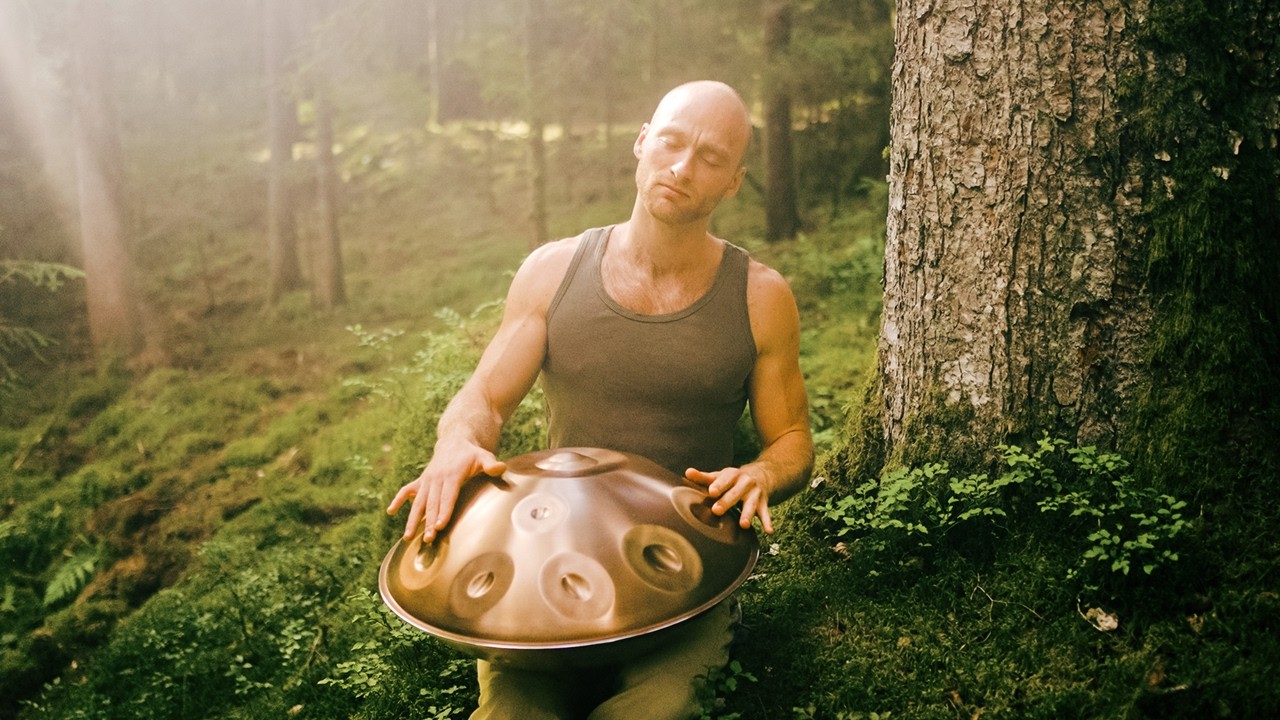
The handpan, a relatively modern instrument with ancient roots in percussion traditions, creates exactly this kind of environment. Its sound is percussive but not jarring. It has rhythm but not the kind that drives. The fundamental tones of the handpan—especially when played in slow, meditative passages—sit in a frequency range that the human nervous system recognizes as benign. Non-threatening. Grounded.
When you listen to the handpan played with intention and space, something shifts. The listener is not being asked to do anything. There is no goal, no finish line, no achievement required. The sound simply exists, and you exist with it. For many people, this is a novel experience—to occupy time without trying to optimize it or get through it or turn it into something productive.
The Physics and Philosophy of Sustained Tone
The handpan's unique construction allows for both struck tones and long, resonant sustains. When played slowly and deliberately, these sustains create a kind of sonic bed—a foundation upon which the listener's nervous system can rest. There is no surprise. No sudden shift. The tone arrives and remains. The body learns: this environment is stable. This is a place where I do not need to brace.
Paired with a specific frequency—in this case, 999 Hz, which sits slightly below the 1000 Hz frequency sometimes used in meditative contexts—the handpan becomes a tool for what some practitioners call "nervous system reset." Not relaxation in the sense of getting sleepy, but reset in the sense of returning the system to its baseline state of safety and ease.
This is not mystical. It is grounded in neuroscience. The vagus nerve, which runs from the brain down through the body and is central to the parasympathetic (rest-and-digest) nervous system, responds to sustained, harmonic tones. The frequency 999 Hz falls into a range that some sound healers associate with grounding and return. Whether through direct physiological effect or through the psychological permission that sustained, safe sound provides, the result is similar: the nervous system downregulates.
Building a Practice of Genuine Rest
An hour-long piece of music like this works not through intensity or novelty, but through consistency and containment. There is a beginning, a middle, and an end. The listener knows the music will be there for a full hour, which means there is no need to grasp or hold on. The listener can simply receive.
For someone living in chronic nervous system activation, this kind of exposure can be transformative. Not because it solves anything or fixes any external problem, but because it reminds the body of a state it may have forgotten: the state of being safe, of being still, of not needing to do anything to earn the right to rest.
Many people approach meditation or contemplative practices as another task to optimize. Another thing to be good at. But the most healing use of a piece of music like this is the most passive: sit with it. Let it happen. Let your nervous system learn, through exposure to sustained and harmonic sound, that safety is possible. That rest is not something you have to earn. That underneath all the hustle is a simpler self—calmer, steadier, more grounded—waiting to be remembered.
Where to Go From Here
If you are drawn to this kind of music, the invitation is to create space for it in your life—not as another thing to accomplish, but as permission to pause. Play it during work if you need grounding. Play it in the evening as your nervous system winds down. Play it in the background while you sit quietly, asking nothing of yourself but to be present to the sound. Over time, as your nervous system becomes more familiar with the state of regulated rest, you may find that the racing thoughts slow naturally. That patience returns. That joy becomes accessible again. Not through effort, but through the simple act of letting yourself come home.