BrightStar

すべてのEventsを見る

意識ある集いに出会う

events

Yoga
Meditation
Breathwork
Qigong
Tai Chi
Sacred Music
World Music
Medicine Music
Sound Healing
Ecstatic Dance
人気の目的地
BaliSedonaLos AngelesCosta RicaNew YorkSan FranciscoAustinMiamiJoshua TreeTulum
すべてのカテゴリを見るすべての目的地を見る

すべての機能を探索

イベントを成長させる強力なツール

プラットフォーム機能

スマートダイナミックプライシング
チケットカテゴリ
座席指定
カート放棄リカバリー
訪問者リカバリー
寄付とスライディングスケール
アフィリエイトシステム
チケットスキャナー
クーポンコード
カスタム質問
チケット共有
アップセルとアドオン
分析とレポート
メールシーケンス
ウェイトリスト / 通知 / リマインダー
人と場所
Artists & TeachersEvent OrganizersVenues & StudiosKnowledge BaseGlossaryInspiration
すべての機能を見る私たちについて
料金ブログ
Language
Saved events
すべてのイベントを見る

events

YogaMeditationBreathworkQigongTai ChiSacred MusicWorld MusicMedicine Music

人気の目的地

BaliSedonaLos AngelesCosta RicaNew YorkSan Francisco

人と場所

Artists & TeachersEvent OrganizersVenues & StudiosKnowledge BaseGlossaryInspiration

プラットフォーム機能

スマートダイナミックプライシングチケットカテゴリ座席指定カート放棄リカバリー訪問者リカバリー寄付とスライディングスケールアフィリエイトシステムチケットスキャナークーポンコードカスタム質問チケット共有アップセルとアドオン分析とレポートメールシーケンスウェイトリスト / 通知 / リマインダー
すべての機能を見る私たちについて
料金ブログ
ログイン探求者クリエイター
  • すべてのイベントを見る
  • 探求者向け
  • ヨガ
  • 瞑想
  • ブレスワーク
  • 気功
  • 太極拳
  • 聖なる音楽
  • ワールドミュージック
  • メディスンミュージック
  • サウンドヒーリング
  • エクスタティックダンス
  • リトリート
  • ワークショップ
  • すべてのカテゴリ →
  • Bali
  • Sedona
  • Los Angeles
  • Costa Rica
  • Tulum
  • Byron Bay
  • San Francisco
  • Austin
  • New York
  • San Diego
  • Denver
  • Seattle
  • Portland
  • Miami
  • すべての都市 →
  • Join the Movement
  • Why we list
  • Sell Globally
  • クリエイター向け
  • チーム向け
  • ライター向け
  • 講師向け
  • キルタンアーティスト向け
  • スタジオ向け
  • フェスティバル向け
  • リトリートセンター向け
  • 非営利団体向け
  • ブランドアンバサダー
  • 無料チケット販売
  • Elevate
  • Amplify
  • 50万人以上のバイヤーネットワーク
  • カート放棄リカバリー
  • スマートダイナミックプライシング
  • チケットカテゴリ
  • 定期イベント
  • 座席指定
  • アフィリエイトシステム
  • ウェイトリスト / 通知
  • チケットスキャナー
  • 埋め込みウィジェット
  • イベント配信
  • メッセージセンター
  • インテグレーション
  • レポート
  • すべての機能 →
  • 概要
  • エコシステム
  • ブログ
  • 用語集
  • インスピレーション
  • ヘルプセンター
  • お問い合わせ
  • APIドキュメント
  • ブランドアセット
  • 採用
  • プレス
  • 利用規約
  • プライバシーポリシー

イベント

  • すべてのイベントを見る
  • 探求者向け
  • ヨガ
  • 瞑想
  • ブレスワーク
  • 気功
  • 太極拳
  • 聖なる音楽
  • ワールドミュージック
  • メディスンミュージック
  • サウンドヒーリング
  • エクスタティックダンス
  • リトリート
  • ワークショップ
  • すべてのカテゴリ →

目的地

  • Bali
  • Sedona
  • Los Angeles
  • Costa Rica
  • Tulum
  • Byron Bay
  • San Francisco
  • Austin
  • New York
  • San Diego
  • Denver
  • Seattle
  • Portland
  • Miami
  • すべての都市 →

クリエイター向け

  • Join the Movement
  • Why we list
  • Sell Globally
  • クリエイター向け
  • チーム向け
  • ライター向け
  • 講師向け
  • キルタンアーティスト向け
  • スタジオ向け
  • フェスティバル向け
  • リトリートセンター向け
  • 非営利団体向け
  • ブランドアンバサダー
  • 無料チケット販売
  • Elevate
  • Amplify

機能

  • 50万人以上のバイヤーネットワーク
  • カート放棄リカバリー
  • スマートダイナミックプライシング
  • チケットカテゴリ
  • 定期イベント
  • 座席指定
  • アフィリエイトシステム
  • ウェイトリスト / 通知
  • チケットスキャナー
  • 埋め込みウィジェット
  • イベント配信
  • メッセージセンター
  • インテグレーション
  • レポート
  • すべての機能 →

会社

  • 概要
  • エコシステム
  • ブログ
  • 用語集
  • インスピレーション
  • ヘルプセンター
  • お問い合わせ
  • APIドキュメント
  • ブランドアセット
  • 採用
  • プレス
  • 利用規約
  • プライバシーポリシー
BrightStar
アプリを入手
App StoreからApp StoreGoogle Playで手に入れようGoogle Play
© 2026 BrightStar. 全著作権所有.
Inspiration

Guided Meditation: Close Every Exit and Rest as Awareness

Mooji
Mooji
Nov 2, 2026
読了 約10分

出典:Moojiji

視聴 · 8

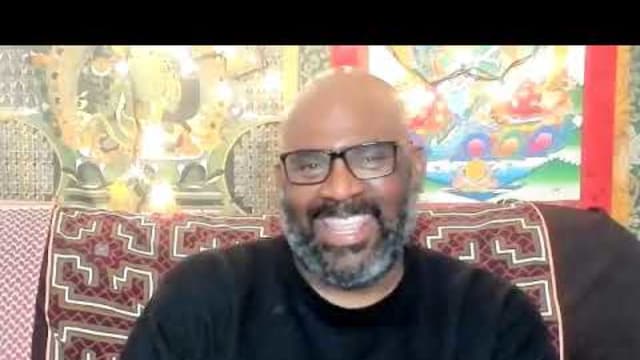
Three. Two. One. Then a voice falls silent, and for the next few minutes the only thing being asked of you is that you stop going anywhere. In a guided meditation recorded at Monte Sahaja, Portugal, and published under the title "Simply Be," Mooji offers a practice that is spare to the point of austerity: close off every exit to the mind and the world, refuse the habits and reflexes that pull attention outward, and then examine what is left when nothing is being added. The talk runs just over twelve minutes, and nearly all of it is instruction in the art of not doing. It is a small piece of work, but it is built with the care of a good arrangement, where each line removes one more layer until the core is audible. What follows is a close reading of that structure, and of the ideas that give it weight.

読む · 9セクション

What is the talk actually asking you to do?

The sitting opens with a diagnosis rather than a technique. Mooji notes how many people come to him asking for help, and says that many feel they "can't just can't stay so conscious with God and in the self." (0:35) The exercise he offers is a remedy for that difficulty: a short container, three or five minutes, in which you set a single intention and hold it.

The intention is the whole instrument. For those who pray, he gives words to hold: "Lord, I shut off all exits to the outer world, to the mind, and bury myself in you." (0:48) But he is quick to add that you do not have to pray in words at all. What matters is the intention itself, which he states as a plain resolve: "I don't need to run out to anything in the mind or the world. Nor will I allow the things of the world to intrude here." (1:29)

Notice the verb. Not "try to be calm," not "empty the mind." The instruction is to close, which is a decision about direction rather than a effort toward a state. That distinction runs through the whole talk.

How do you close the exits when the mind keeps opening them?

The mechanism Mooji names is refusal, but not the tense, white-knuckled kind. He describes it this way: "Simply refuse to engage with any of the mind's invitations or habits or reflexes, and simply remain simply conscious in an attitude of leaving all things." (1:45)

Think about how often attention is recruited in a day. A thought arrives with the offer of a story; a sensation arrives with the offer of a judgment; a memory arrives with the offer of a mood. Most of the time we accept without noticing, and the acceptance is so fast it feels like the thing itself. The practice asks you to notice the offer and decline it, not in a dramatic way but as a matter of quiet non-participation. Mooji is specific that this is not a rejection of the world. Later in the sitting he says: "You're not rejecting the world, no cause, no fight. But a choice to leave aside everything, every engagement, every invitation." (9:42)

That line matters because it locates the practice in choice rather than suppression. A musician will recognize the difference between a player who mutes strings out of panic and one who simply lifts the hand and lets the room ring. The first deadens the instrument. The second reveals what the instrument was doing all along.

What remains when you stop engaging?

This is the question the talk builds toward, and Mooji frames it as an act of looking: "examine what really is here. What is left here?" (2:07) Then he answers it, in the same breath, with four words: "Just be that."

"This is not a mind a thing. But you abide in this. You stay here. Conscious. But unmixed."

Mooji, guided meditation "Simply Be," Monte Sahaja, Portugal, recorded 7 October 2026 (2:10)

The word "unmixed" carries most of the weight. Ordinarily, awareness is blended with its contents: the feeling of the chair with the thought about the chair, the sense of being present with the story about being present. The practice asks you to notice the awareness itself, separate from what it happens to be holding. Mooji also addresses the body directly. "Do not identify with the form of the body. The body is not in the way." (2:25) He describes the resulting sense as "unmixed, formless," a sense of being "where the sense of existence cannot be denied. But is not mixed with anything from the mind." (4:20)

He offers two possible phrasings of what you might discover: "I am alone with God," or simply "I'm alone," "without a form for myself or form for God." Both are invitations, not beliefs to adopt. He is careful to say that the words are optional: "We don't have to be saying this. We don't have to be saying this with your lips. You don't have to be even thinking this. Simply be." (3:10)

Why does the timer barely matter?

Mooji sets the container deliberately small. Three or five minutes, he says, "so that this feels more easy." He also acknowledges that "many people have to sit all day" in order to meet their responsibilities, which is why the sitting is framed as something that can fit into a life rather than replace one. "It doesn't matter if you're accurate with the time of 3 minutes or 5 minutes." (3:30)

There is a craft lesson in this. A short, bounded practice is less likely to become another performance of effort. When the timer is not a goal, you are not waiting for a reward at the end of it. And he is blunt about what he expects to happen in those few minutes: "in this 3 minutes or 5 minutes something will be here. That doesn't belong to the mind. Does not belong to the world." (4:00) He does not promise a dramatic experience. He points to the modest, persistent presence that is there when the usual traffic is turned down.

Why is this not a state you have to reach?

Mooji repeatedly steers the listener away from anticipation. Early on he says: "Be aware that you are not in a state of waiting or expecting." (7:17) Later: "There's no time here. You're not a self-portrait here. Not an entity with a background or history. Not about time. Not about evaluations. Simply aware." (7:34)

This is where the practice differs from many forms of meditation that treat the session as a training ground for a future self. The talk describes the opposite: nothing to become, no history to bring, no evaluation of how the sitting went. Even the idea of "doing an exercise" is set aside. "You're not someone doing an exercise," he says. For a listener used to measuring progress, this can feel disorienting, and that disorientation is perhaps the point. You are invited to notice that the self doing the measuring is also something that can be looked at.

Is awareness something you have, or what you are?

The most consequential line in the talk comes near its midpoint, and it is delivered with the simplicity of a chord change: "There's no you and awareness. What you refer to as yourself is awareness itself." (10:22)

This is the nondual heart of the teaching, the idea that the sense of a separate person sitting in a room observing awareness is itself a conceptual layer laid over awareness. The practice does not ask you to believe this in advance. It asks you to examine, during the sitting, whether there is a separate experiencer apart from the awareness in which everything appears. Mooji frames it as a discovery to be made in place, not an argument to be won. "You can switch off your engagement with [everything] but awareness. Awareness is what is."

For readers coming from the Advaita and nondual traditions, this will sound familiar. For readers new to the vocabulary, it may be better understood as an invitation to test a claim against your own direct attention. Sit for three minutes, refuse the invitations, and see whether anything remains that is not a thought, a sensation, or a story about yourself.

What do you do when resistance shows up mid-sitting?

It will. Mooji anticipates this and tells you in advance how to meet it. "Resistance in the mind has nothing to do with this. It will show up, but it's only like anything else, a fleeting appearance." (11:26) Later he sharpens the point: resistance "can do nothing to awareness apart from appearing momentarily as a blip of feeling thought." (11:39)

This is one of the most practically useful ideas in the talk. Restlessness, boredom, irritation, and the pull to check the time do not disqualify the sitting. They are weather moving through the same open space. You do not have to win an argument with them or fix them before you can rest. You can let them appear and pass as a blip, and return to the simple examination of what is left. The practice is less about achieving silence than about seeing that silence was never the thing that could be disturbed.

Mooji closes the instruction with a reframing that moves the practice from the cushion into ordinary life: "This is your opportunity." (11:50) The talk's final words are a single sound, "Om," and then a breath of "Mhm," which is perhaps the most honest ending a guided sitting could have.

Why does this practice matter beyond the cushion?

Mooji is explicit that the voice on the recording is a scaffold, not a permanent presence. "Now you have my voice with you. But you are not always needed. Take this opportunity wherever and whenever you can. It's a choice." (11:03) The aim is to carry the act of closing exits into the rest of the day: a conversation, a commute, a moment of irritation, each one an occasion to notice what the mind is offering and to decline the invitation where it is not needed.

He also invites repetition: "come to this reserve this space as often as you like." (9:21) A practice this simple depends on frequency more than depth. A three-minute sitting taken daily, with no expectation attached, may do more over months than a single long retreat that becomes another project to complete.

Where to go from here

If this talk has given you a taste for the practice, the most direct next step is to sit with it. Find a place where you will not be easily disturbed, set a timer for three or five minutes if you want one, and try the intention Mooji describes: refuse the mind's invitations, remain conscious, and ask what is left. Keep the exercise small, and let the timer be a convenience rather than a test.

For more of Mooji's guided sittings and silent practices, the teacher's collection is freely available at mooji.org/collections/guided-meditations-silent-sittings. The description accompanying "Simply Be" also points to a donation page for those who wish to support the sharing of satsang. Whatever you choose, the talk itself makes one point clear: you do not need to build a new self to begin. You only need to stop running out the door long enough to see who is still here.

Comments

Loading the conversation…

Transcript

[0:11] Beloved,

[0:17] I see and

[0:18] >> [clears throat]

[0:18] >> how much

[0:21] you've come and ask for

[0:24] help.

[0:26] And many people feel I can't

[0:28] just can't stay

[0:30] so conscious with God and

[0:33] in the self. So, I want to

[0:35] share with you this simple exercise.

[0:40] For 3 or 5 minutes,

[0:42] you do this.

[0:45] If you're in a mode for prayer,

[0:48] you simply say,

[0:51] "Lord,

[0:52] I shut off

[0:55] all exits to

[0:59] the outer world, to the mind,

[1:02] and

[1:04] bury myself in you."

[1:09] Have this idea.

[1:11] You don't even have to pray in in words,

[1:14] but have this intention.

[1:17] Just to sit

[1:19] place that feels good for you,

[1:22] and

[1:23] that you may not be so easily disturbed.

[1:26] And for 3 or 5 minutes, have this

[1:28] intention

[1:29] to close off all exits, I don't need to

[1:32] run

[1:33] out to anything in the mind or the

[1:35] world.

[1:37] Nor will I

[1:39] allow

[1:40] the things of the world to intrude here.

[1:44] And how to do this?

[1:45] Simply refuse to engage with any of the

[1:48] mind's

[1:49] invitations or habits or reflexes,

[1:54] and simply remain

[1:56] simply conscious

[1:59] in an attitude of

[2:01] leaving all things.

[2:04] And to examine what really is here.

[2:07] What is left here?

[2:08] Just be that.

[2:10] This is not a mind

[2:12] a thing.

[2:14] But

[2:15] you abide in this. You stay here.

[2:18] Conscious.

[2:21] But unmixed.

[2:25] Do not

[2:27] identify with the form of the body.

[2:29] The body is not in the way.

[2:35] Do not

[2:36] engage in any of minds offers or

[2:39] resistances.

[2:40] They simply don't matter.

[2:43] But yourself

[2:45] just be onto yourself.

[2:48] Mhm.

[2:49] So in this place, if you feel

[2:51] here I am alone with God.

[2:55] Or I'm simply alone.

[2:58] Without a form for myself or form for

[3:01] God.

[3:03] And just as that unmixed awareness

[3:07] I abide.

[3:08] In and as that.

[3:11] We don't have to be saying this.

[3:14] We don't have to be saying this with

[3:15] your lips.

[3:17] You don't have to be even thinking this.

[3:20] Simply

[3:22] be.

[3:25] And don't be concerned.

[3:28] If you want, you can set a timer. Say

[3:30] for 5 minutes if you want. But it won't

[3:32] matter. It doesn't matter if you're

[3:34] accurate with the time of 3 minutes or 5

[3:36] minutes. But just sit.

[3:42] I say to do this for 3 minutes or 5

[3:44] minutes.

[3:46] So that this feels more easy. It doesn't

[3:48] feel many people have to sit all day

[3:50] like this.

[3:51] But in this 3 minutes or 5 minutes

[3:55] something will be here.

[3:58] That doesn't belong to the mind. Does

[4:00] not belong to the world.

[4:02] Just the simplicity of being.

[4:05] Not being being something.

[4:08] Just a sense of being.

[4:11] Unmixed, formless.

[4:17] Where the sense of existence

[4:20] cannot be denied.

[4:22] But is not mixed with anything from the

[4:25] mind.

[4:26] And stay.

[4:29] So, here you begin.

[4:34] Three.

[4:35] Two. One.

[7:14] >> Be aware that you are not

[7:17] in a state of waiting or expecting.

[7:24] Effortless awareness being.

[7:34] There's no time here.

[7:44] You're not a self-portrait here.

[7:50] Not an entity with a background or

[7:52] history.

[7:59] Not about time.

[8:05] Not about evaluations.

[8:12] Simply aware.

[8:21] It's not a bodily experience.

[8:32] Do not require of the world or the mind

[8:34] to be anything.

[8:38] Abide only in and as

[8:40] a space of awareness.

[8:44] It doesn't matter

[8:46] what shows up in the senses

[8:49] or mind or the sense of world.

[8:52] That's quite okay.

[8:55] You're not this.

[9:05] You're not someone doing an exercise.

[9:21] And come to this

[9:23] reserve

[9:25] this space

[9:27] as often as you like.

[9:29] Step aside a little.

[9:35] Find a place

[9:37] that you will not be easily disturbed.

[9:40] And sit.

[9:42] You're not rejecting the world, no

[9:44] cause, no fight.

[9:48] But a choice to leave aside everything,

[9:50] every engagement

[9:51] >> [snorts]

[9:52] >> every invitation.

[9:58] Everything you can turn away from.

[10:03] You can switch off your engagement with

[10:06] but awareness.

[10:13] >> is what is.

[10:22] There's no you and awareness.

[10:32] What you refer to as yourself

[10:35] is awareness itself.

[10:44] When natural

[10:46] uh functioning

[10:48] is engaged with again,

[10:49] it cannot touch or remove this.

[10:52] It never did or could.

[11:02] Now you have my voice with you.

[11:08] But you are not always needed.

[11:14] Take this opportunity

[11:18] wherever and whenever you can.

[11:20] It's a choice.

[11:24] Resistance in the mind

[11:26] has nothing to do with this. It will

[11:28] show up, but it's only like anything

[11:31] else,

[11:34] a fleeting appearance.

[11:39] It can do nothing to awareness apart

[11:41] from appearing momentarily

[11:44] as a blip

[11:45] of feeling thought.

[11:50] This is your opportunity.

[12:05] Om.

[12:22] >> Mhm.

Mooji
ArtistMooji

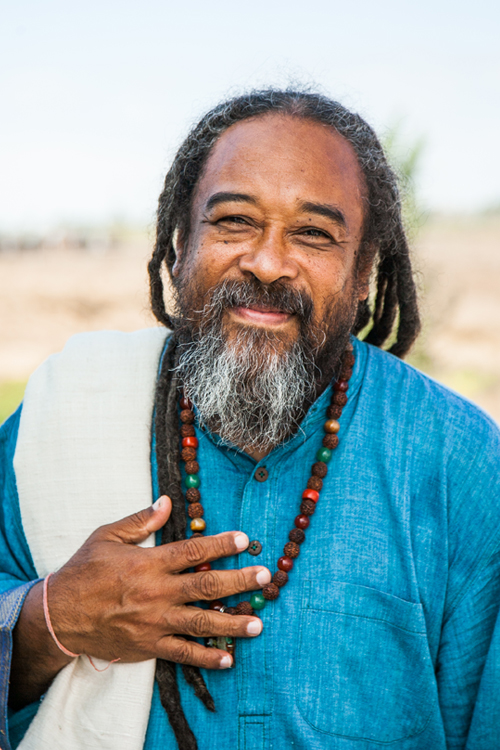
Jamaican-born teacher of Advaita Vedanta in the lineage of Ramana Maharshi and Papaji. After a transformative meeting with Papaji in 1993, he began holding satsangs that have grown…

プロフィールを見るウェブサイト
トピックを見る
Guided-meditationAwarenessNondualityAdvaitaSelf-inquiry

ご質問はありますか?

よくある質問

It is a short guided sitting in which Mooji asks you to close off all exits to the mind and the outer world for three or five minutes. You refuse the mind's invitations and habits, remain conscious, and examine what is left. He ends the instruction with the phrase 'Just be that.'
Mooji recommends three or five minutes, saying this length makes the practice feel easier and that many people cannot sit all day. He adds that it does not matter if you are exact about the time, so a timer is optional.
Yes, Mooji offers a prayer form: 'Lord, I shut off all exits to the outer world, to the mind, and bury myself in you.' He also says you do not have to pray in words at all, and that holding the intention is enough.
It is the examining question at the heart of the practice. After you stop engaging with the mind and the world, you look at what remains, and Mooji describes this as unmixed, formless awareness rather than a mind or a thing.
Mooji says resistance will show up and is 'only like anything else, a fleeting appearance.' He describes it as a blip of feeling or thought that can do nothing to awareness, so you can let it pass and return to the examination.
No. Mooji says, 'You're not rejecting the world, no cause, no fight,' and describes the practice as a choice to leave aside engagements and invitations. The emphasis is on non-participation rather than suppression.
In the talk, Mooji says, 'What you refer to as yourself is awareness itself.' It is a nondual pointer offered as something to examine during the sitting, not a belief to adopt in advance.

読みつづける

More from Mooji

すべて表示
From Mind to Heart: Finding the Witness Behind Longing
Inspire

From Mind to Heart: Finding the Witness Behind Longing

Mooji's satsang guidance turns a seeker's longing for God into a method: follow the yearning, question the one who perceives, and test every…

8 min read
Namo Namo: The Devotional Song Sung Back to a Teacher
Inspire

Namo Namo: The Devotional Song Sung Back to a Teacher

A three-minute devotional song, written by Sutara and Omkara and shared with a sangha room in June 2026, turns a teacher's teaching into a c…

8 min read
Medicine Buddha Practice: Feeling Healing Energy Within
Inspire

Medicine Buddha Practice: Feeling Healing Energy Within

A weekly Medicine Buddha session shows how a deity practice can start with feeling rather than imagining. Here is how Lama Rod Owens teaches…

9 min read
Why You Can't Choose Your Reactions (and the Step Back)
Inspire

Why You Can't Choose Your Reactions (and the Step Back)

Eckhart Tolle shows how the ego turns a neutral event into an angry story. Here's why thinking can feel like it happens to us, and the first…

10 min read

探索を続ける

旅をつづける

BrightStarのディレクトリから、さらなる智慧と集いを。

もっと記事を読む

教え、インタビュー、ガイドのライブラリ全体をご覧ください。

すべての記事に戻る →

講師とアーティスト

コンシャスな世界の系譜、音楽家、導き手を探しましょう。

アーティストを探す →

イベントを見つける

キルタン、リトリート、サウンドバス、ブレスワーク、フェスティバル — まもなく開かれます。

イベントを見る →