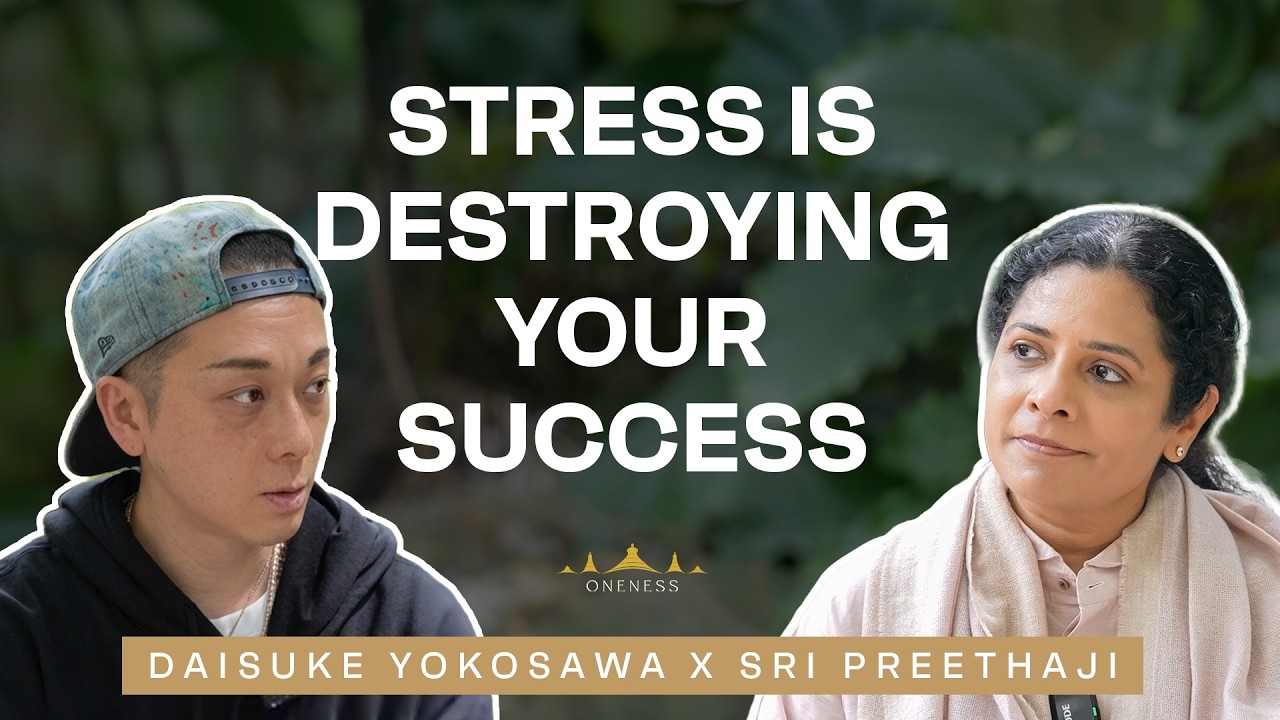
This teaching invites you to recognize that awakening to a state of oneness—where suffering dissolves and beauty manifests naturally in your consciousness—is not a distant ideal but an immediate possibility available within you right now. The transformation of the world begins not with external solutions, but with the dissolution of fragmentation in your own heart and mind, allowing you to recognize the fundamental interconnection that underlies all existence.
What does it mean to awaken to a beautiful state?
Awakening to a beautiful state refers to a shift in consciousness where you directly perceive and experience the inherent beauty of existence. This is not about positive thinking or forced optimism, but rather a clearing away of the mental and emotional obscurations that prevent you from naturally experiencing the world as it actually is—fundamentally whole, interconnected, and radiant. When suffering falls away, what remains is not emptiness but fullness: a state where your heart naturally expands and your capacity to receive and offer beauty increases exponentially.
This awakening is particularly significant because it is not reserved for special people or distant spiritual realms. The teaching suggests that such a state is your natural inheritance, available within this very moment if you turn your attention inward with clarity and sincerity.
How does individual awakening relate to world transformation?
The Oneness Movement teaches that transformation of the world is not primarily a matter of political systems, social programs, or external activism, though these have their place. Rather, the fundamental shift begins when enough individuals awaken from the illusion of separation. When you awaken to oneness—when you genuinely experience that the boundaries between self and other are permeable and ultimately illusory—your entire relationship to the world shifts. Competition, fear, and exploitation become impossible because you no longer see the world as composed of separate entities locked in struggle. Instead, you perceive a unified field of consciousness expressing itself in infinite forms.
This is not abstract philosophy. When suffering dissolves in your own consciousness, you naturally cease to project suffering onto others. When you experience beauty in your own being, you begin to recognize and honor that same beauty in every living thing. The collective awakening that the teaching envisions is thus built not on collective willpower or ideology, but on the cumulative effect of individual hearts opening to this direct perception of oneness.
What is the role of suffering in this awakening?
Suffering is portrayed not as a permanent condition but as a symptom of fragmentation—a sign that consciousness has contracted into a narrow, separate sense of self. From the perspective of the Oneness Movement, suffering is like pain that signals something has gone out of alignment. Rather than being something to escape or deny, suffering can be recognized as a messenger pointing toward the very disconnection that, when healed, leads to awakening.
The dissolution of suffering does not require suffering to be eliminated from the world—others will continue to have their journeys. Rather, it refers to your personal liberation from the contracted state that produces existential suffering: the sense of isolation, unworthiness, or fundamental disconnection from life itself. When this inner suffering dissolves, your capacity to meet the world with compassion, clarity, and resourcefulness actually increases.
Why does personal transformation matter more than external change?
The teaching emphasizes that sustainable world change must be rooted in consciousness shift rather than externally imposed solutions. History shows that laws, systems, and reforms created from a foundation of fragmentation and fear tend to perpetuate new forms of the same problems. However, when individuals awaken to oneness, their actions naturally arise from a different source. They are not driven by ideology, guilt, or fear of judgment, but by the direct perception that harming the world is harming themselves, and serving life is serving their own deepest nature.
This does not mean withdrawing from the world or becoming passive. Rather, it means that your engagement with the world becomes increasingly intelligent, compassionate, and effective because it flows from genuine wholeness rather than reactive fragmentation. You begin to see problems not as external enemies to conquer, but as invitations to greater understanding and integration.
How can you begin to awaken to this beautiful state?
The Oneness Movement suggests several foundational approaches. First is honest self-observation—the willingness to look clearly at your own consciousness without judgment. Notice where you experience fragmentation, contraction, or the sense of separation. This honest seeing is itself the beginning of awakening because it breaks the automatic patterns that keep consciousness trapped.
Second is opening to grace. While personal effort and sincere intention matter, the teaching acknowledges that true awakening is not solely dependent on individual willpower. It involves opening yourself to receive the blessing or grace that is constantly available but which we habitually block through resistance, doubt, or the belief that we are unworthy. This opening can come through meditation, prayer, service, or simply through moments of genuine surrender where you acknowledge the limits of your small self and allow something larger to work through you.
Third is recognizing oneness in daily life. This means beginning to notice moments where you spontaneously feel connected to others, to nature, or to life itself. Rather than dismissing these moments as sentimental, treat them as pointers to your true nature. Cultivate these moments through practices like heart-centered meditation, loving-kindness practices, or simply taking time to genuinely listen to others without the filter of judgment or self-protection.
Fourth is releasing the burden of separation. Much of your suffering comes from the effort required to maintain the illusion that you are fundamentally separate and responsible for fixing everything alone. As you begin to experience genuine interconnection, you also experience profound relief—not the relief of irresponsibility, but the freedom that comes from recognizing that you are held within something far larger and more intelligent than your individual mind.
What does oneness actually feel like in experience?
Rather than being an abstract concept, oneness is first and foremost a felt experience. It often comes as a sudden softening of the heart, a sense of profound belonging, or a clear perception that the boundary between observer and observed has become transparent. In such moments, your individual concerns do not disappear, but they naturally find their right proportion within a much larger context. You realize that your true self is not your small personality, but something vast that includes and transcends all particularity.
These moments of oneness are often accompanied by a sense of beauty—not the beauty of perfect things, but the beauty of existence itself in all its complexity and seeming imperfection. A simple gesture of kindness, the way light falls through trees, the interconnectedness of all life—these are perceived directly as expressions of the same consciousness that is your innermost nature.
Where to go from here
Begin with a simple practice: once each day, take a moment to notice when you feel genuinely connected—to a person, an animal, nature, or simply to being alive. Let yourself fully feel that connection without analyzing it. Notice what happens in your consciousness when you do. This simple act of recognition is itself a form of awakening.
Explore whether your current commitments and activities align with your deepest values and your emerging sense of oneness. Are there ways you can simplify your life or redirect your energy toward what genuinely matters—toward healing the sense of separation within yourself and in your relationships?
Consider practices that support the direct experience of oneness: meditation, prayer, time in nature, or authentic dialogue with others. The specific form matters less than the sincere intention to awaken to what you already are beneath all conditioning and contraction.
Finally, recognize that awakening is not a distant goal but an immediate possibility available in this very moment. The world you imagine—where suffering dissolves and oneness blossoms—begins with your own heart opening to this truth now.