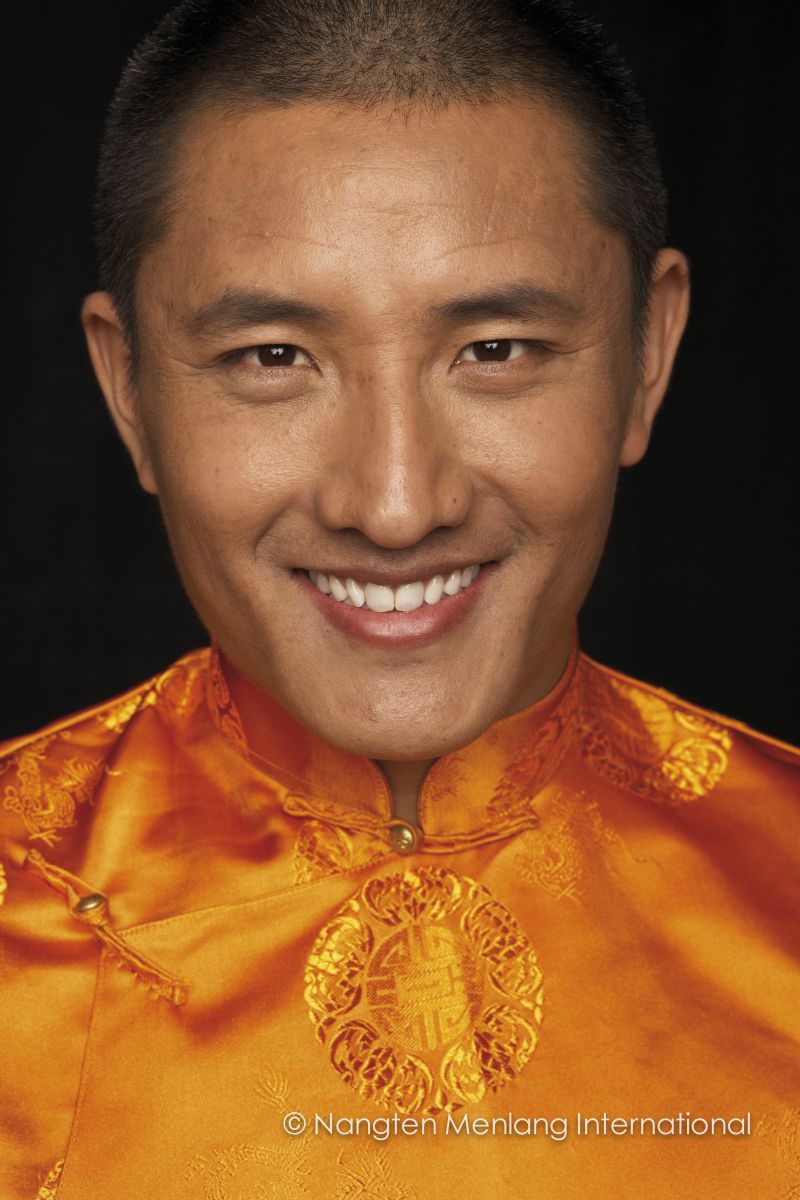

Tulku Lobsang Rinpoche occupies an unusual place in the landscape of contemporary Tibetan Buddhism: he is both a traditionally trained master and a bridge-builder to the secular West. At thirteen, he was recognized as the eighth reincarnation of the Nyentse Lama, a lineage within Tibetan Buddhism tasked with preserving specific meditation and healing practices. This recognition set the trajectory for a life dedicated to mastering and transmitting the esoteric methods of Tantrayana, the branch of Tibetan Buddhism that treats the body itself as an instrument of awakening.
His early training followed the classical path for recognized tulkus—reincarnated teachers—spanning multiple monasteries where he studied sutras, Buddhist medicine, and Tibetan astrology. This education grounded him in both the philosophical frameworks and practical technologies of Tibetan Buddhism, preparing him for a teaching role that would eventually reach far beyond monastery walls.
The turning point in Rinpoche's work came with a deliberate choice: to make practices historically confined to monasteries available to lay practitioners in the modern world. For centuries, methods like Tummo and Lu Jong were guarded within monastic institutions, transmitted only to those who had taken vows and completed years of preliminary practices. Rinpoche's mission has been to adapt these teachings for people living ordinary lives—those with jobs, families, and responsibilities—while maintaining their transformative power.
For over two decades, he has traveled through Europe, the United States, and Asia, teaching in retreat centers, universities, and public venues. This itinerant teaching schedule reflects both the Tibetan tradition of the wandering lama and a contemporary commitment to meeting students where they are. His workshops and multi-day intensives draw practitioners who seek direct, embodied methods rather than purely philosophical instruction.
Rinpoche is best known for three interrelated practices drawn from the Tantrayana tradition: Tummo, Lu Jong, and Shiné. Each represents a different entry point into the Tibetan Buddhist understanding of transformation.
Tummo, the inner-heat meditation, is perhaps the most striking of these practices. It trains practitioners to generate internal warmth through specific breathing techniques and visualizations, working with the body's subtle energy channels. While Tummo has captured Western imagination through stories of Tibetan yogis meditating in snow, Rinpoche teaches it as a method for working directly with the body's energetic system—what Tibetan Buddhism calls the winds and channels—to support deeper states of meditation and awareness.
Lu Jong, or Tibetan yoga, consists of healing movements designed to balance the body according to Tibetan medical theory. This system works with the three humors—wind, bile, and phlegm—that Tibetan medicine identifies as fundamental to health. The movements are both therapeutic and preparatory, creating the physical conditions that support meditation practice.
Shiné, or calm-abiding meditation, provides the foundation. Drawn from classical Tibetan meditation manuals, Rinpoche's Shiné instruction develops single-pointed concentration, the stable attention required for more advanced practices.
What distinguishes Rinpoche's approach is his insistence that these are not museum pieces but living technologies. He presents them as methods anyone can use to work with stress, illness, emotional turbulence, and the fundamental questions of existence.
Teaching Tibetan Buddhist practices to Western audiences requires more than language translation. It demands cultural translation—finding ways to convey concepts developed in monastic Tibet to people shaped by secular modernity. Rinpoche has become skilled at this work, explaining practices rooted in Tibetan cosmology and medicine in terms that resonate with contemporary students while preserving their essential logic.
His role as a teacher extends beyond technique transmission. As a tulku enthroned within a recognized lineage, he carries the authority to adapt practices while maintaining their lineage integrity. This gives him unusual freedom to innovate in how he presents these methods without breaking from their traditional roots.
With teaching circuits spanning multiple continents and a modest but committed following across digital platforms, Rinpoche reaches several overlapping audiences. There are Western practitioners drawn to Buddhism's contemplative depth but seeking something more embodied than philosophy. There are people interested in traditional healing systems who approach Lu Jong as a wellness practice. There are serious meditators looking for advanced methods within an authentic lineage.
His significance lies partly in what he represents: the possibility that ancient practices can remain powerful outside their original context. In an era when Tibetan Buddhism faces questions about its relevance in the contemporary world, Rinpoche demonstrates one answer—not by modernizing the teachings beyond recognition, but by identifying which elements translate directly to different lives and circumstances.
He also serves as a reminder that Tibetan Buddhism contains practical, body-based methods alongside its philosophical sophistication. While Western interest in Buddhism has often focused on mindfulness and philosophy, Rinpoche brings attention to the tradition's yogic dimensions—practices that work directly with breath, movement, and subtle body experience.
Rinpoche continues his peripatetic teaching schedule, maintaining the model of direct transmission through workshops and retreats rather than building institutional infrastructure. This approach prioritizes personal instruction and embodied learning over organizational expansion. For those who study with him seriously, the work involves not just learning techniques but entering into relationship with a living lineage, encountering practices that have been refined and transmitted through generations.
His work suggests that certain forms of knowledge resist purely digital or textual transmission—that some practices require the presence of someone who has mastered them, who can demonstrate not just the form but the inner logic of methods designed to transform how we inhabit our bodies and minds.