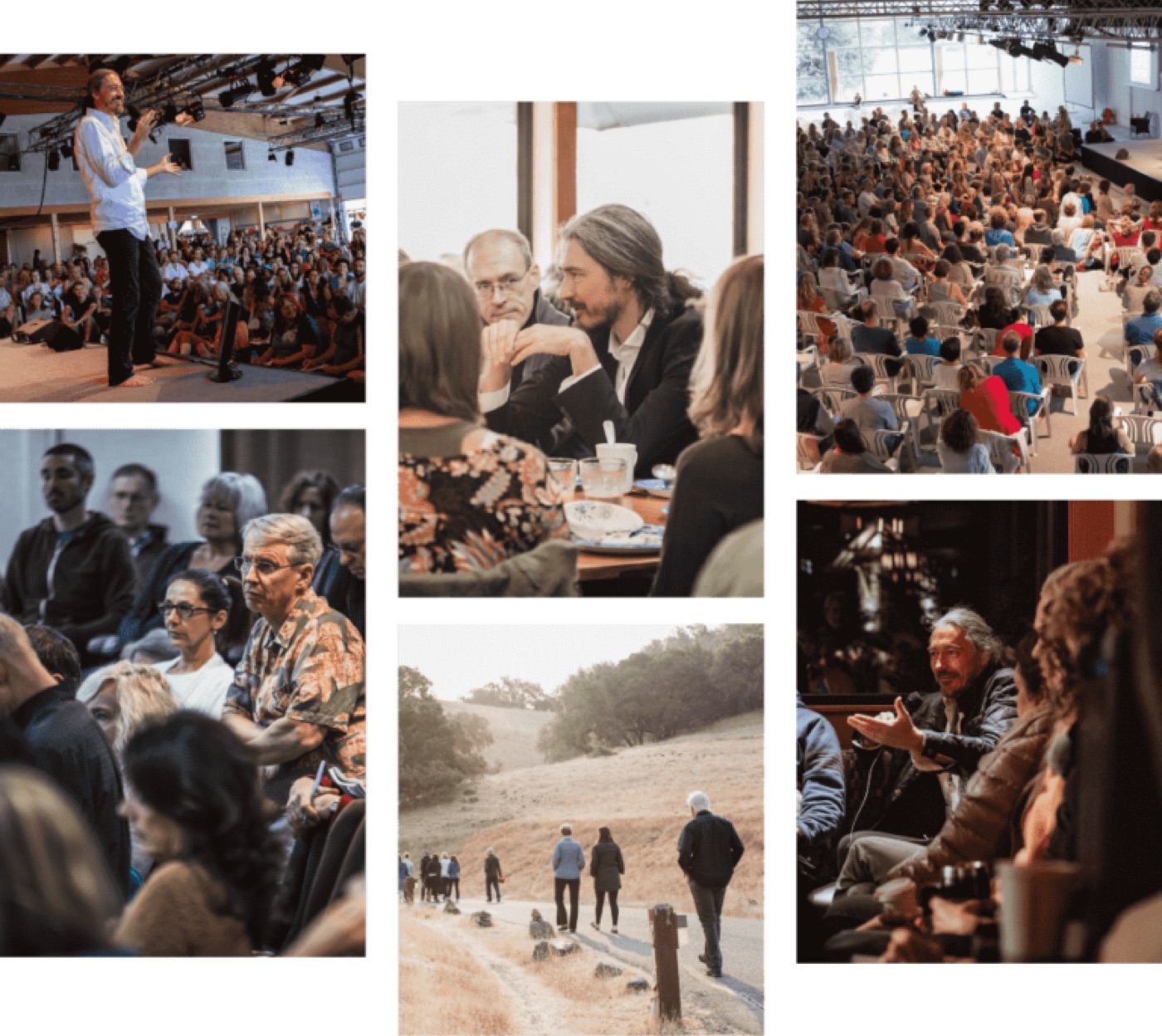

Thomas Huebl occupies an unusual space in contemporary spirituality—part mystic, part systems theorist, all focused on something most teachers skirt around: collective trauma. If you're coming to his work for the first time, you're probably sensing that personal growth has hit a ceiling, or you're noticing patterns in your family or community that feel older than you are. Here's how to begin.
Your best entry point is Huebl's shorter YouTube content, specifically interviews where he's in conversation rather than leading a process. Look for his appearance on the "Collective Trauma Summit" recordings or interviews where he discusses intergenerational trauma. These 20-40 minute pieces let you hear his core concepts—the transparent self, relational field theory, collective shadow—without committing to a full course or book. You'll get his unusual speaking style (measured, precise, occasionally circling) and his central thesis: that much of what we experience as personal blockage is actually inherited, unmetabolized experience from previous generations.
From there, explore his guided meditations on the same platform. Choose something under 20 minutes that focuses on "relational presence" or "attunement." This gives you the experiential dimension his work requires.
After YouTube, move to "Healing Collective Trauma" if he has published a book by that title, or locate his longest-form written work available. Huebl's ideas need space to unfold—his synthesis of Kabbalistic principles, mystical Christianity, and trauma research doesn't compress well into sound bites. Reading provides the conceptual map his experiential work assumes you have.
Then attend a free online group meditation he periodically offers. Huebl's method depends on what he calls "group field" dynamics—the idea that synchronized nervous systems can process material individuals cannot access alone. You need to feel this, not just understand it intellectually.
Finally, explore his longer workshop recordings (3-4 hours), particularly ones addressing collective shadow work or systemic trauma patterns. These show his full methodology: teaching segments alternating with guided processes, then group integration.
Huebl sounds like no other spiritual teacher. He speaks slowly, uses clinical language ("architectures of consciousness," "synchronization"), and rarely offers the emotional warmth of traditional dharma talks. First encounters often feel overly intellectual or frustratingly abstract.
His guided meditations are similarly spare—no soothing music, minimal imagery, lots of silence punctuated by precise instructions about where to place attention. If you're used to Tara Brach or Jack Kornfield, this will feel cold. It's not. It's just operating from a different model: he's teaching you to become an instrument sensitive enough to perceive what's normally invisible.
People often mistake Huebl's work for therapy. It's not. He's not helping you process your individual story—he's teaching you to develop the capacity to sense and metabolize collective material moving through you. The personal healing that results is almost a side effect.
Others assume his relational field work is just group dynamics with mystical language. Missing here: he's pointing to something literal about how nervous systems entrain and how trauma information transmits across generations through mechanisms science is only beginning to map.
The biggest misunderstanding: thinking you can extract his techniques from his developmental framework. His methods assume you're building capacity progressively. Jumping to advanced collective trauma work without foundational presence practice is like attempting surgery without anatomy training.
Huebl's approach typically resonates during specific life phases: when you've done significant personal work but keep hitting the same walls; when family patterns feel louder than your individual efforts; after becoming a parent and suddenly feeling your lineage more acutely; or when working in fields (education, medicine, social justice) where you're confronting systemic dysfunction that personal solutions don't touch.
It also lands for people drawn to both rigorous meditation practice and intellectual frameworks—you need tolerance for both extended silence and complex systems thinking.
Days 1-2: Watch three YouTube interviews (60-90 minutes total). Note which concepts keep appearing.
Day 3: Read his bio and core theoretical pieces on his website. Map the vocabulary.
Days 4-5: Do his 15-minute guided meditations daily. Notice your resistance.
Day 6: Watch a full workshop recording. Don't try to "do" everything—just observe his method.
Day 7: Join a live online meditation if available. Otherwise, revisit the concept that confused you most and sit with it for 20 minutes.
After this week, you'll know if this work is calling you deeper.