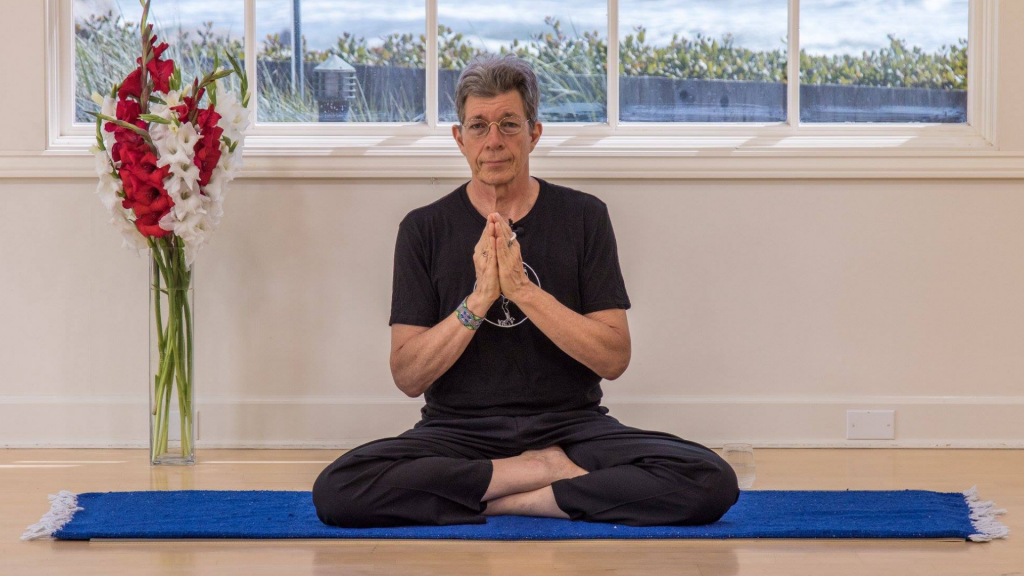

Robert Svoboda occupies a distinctive position in the landscape of Western engagement with Indian healing traditions. He is neither a casual popularizer nor a strictly academic observer, but rather a practitioner who has lived the tradition from the inside out. As the first Westerner to graduate from a college of Ayurveda in India and receive a license to practice there, Svoboda's career represents more than personal achievement—it marks a crucial moment in the cross-cultural transmission of ancient medical knowledge, demonstrating that these traditions could be genuinely inhabited by outsiders willing to submit to their full rigor.
The turning point in Svoboda's life came during the 1970s and 1980s, when he traveled to India and entered into an intensive apprenticeship with Vimalananda, an Aghori master. The Aghoris represent one of Hinduism's most esoteric and misunderstood paths, practitioners of left-hand Tantra who embrace what conventional society rejects in order to transcend duality. This mentorship proved foundational, introducing Svoboda not simply to the technical aspects of Ayurvedic medicine but to an entire cosmological framework encompassing astrology, alchemy, ritual, and the subtle dimensions of the human being.
Where he might have pursued Ayurveda as a discrete medical system—learning pulse diagnosis, herbal formulas, and dietary protocols—Svoboda instead received it as one strand in a larger tapestry of knowledge. Vimalananda taught him to understand the doshas not merely as biological principles but as manifestations of cosmic forces, to see disease as karmically shaped, and to recognize the inseparability of healing from spiritual practice. This holistic initiation would distinguish Svoboda's subsequent teaching from much of what emerged as "Ayurveda" gained popularity in the West.
What Svoboda is fundamentally known for is his role as an interpreter and bridge-builder, someone who can articulate the classical Indian worldview to Western audiences without diluting its complexity. His work rests on Samkhya philosophy, the doctrine of the three gunas, and the understanding that physical health cannot be separated from one's relationship to cosmic principles. While many contemporary Western Ayurvedic practitioners focus primarily on diet and herbalism—valuable but limited applications—Svoboda insists on preserving the tradition's metaphysical depth.
His writing and teaching consistently emphasize that Ayurveda is not merely a collection of therapeutic techniques but a complete system of knowledge requiring engagement with ritual, astrology, and the subtle body. He addresses practitioners seeking rigorous technical knowledge while simultaneously offering general readers access to the worldview that makes Ayurvedic practice coherent. This dual accessibility has made him influential across different audiences.
Svoboda has authored twelve books, with the Aghora trilogy standing as perhaps his most significant contribution. These volumes chronicle his time with Vimalananda, offering an intimate portrait of an unconventional teacher and a detailed exploration of Tantric philosophy and practice. The trilogy has become essential reading for those interested in understanding Tantra beyond its modern distortions, presenting the tradition in its original complexity and strangeness.
Prakriti: Your Ayurvedic Constitution represents another cornerstone of his bibliography—a foundational text on constitutional analysis that has been adopted by numerous Ayurvedic training programs. The book systematically explains the doshas and how individual constitutions shape health, disease, and appropriate treatment, providing both practical guidance and theoretical grounding.
The Greatness of Saturn ventures into Jyotish, the Vedic system of astrology, examining the planet Shani and its significance in the Indian cosmological imagination. Here again, Svoboda demonstrates his capacity to translate complex traditional concepts without simplification, helping Western readers understand how astrology functions within the broader framework of dharma and karma.
Svoboda's cultural significance lies in his refusal of easy answers. At a time when ancient traditions are frequently commodified, reduced to wellness trends or self-help formulas, his work insists that genuine engagement requires intellectual humility and sustained study. He reaches several distinct constituencies: serious students of Ayurveda who need comprehensive training materials, practitioners of yoga and meditation seeking deeper philosophical context, and scholars interested in how traditional knowledge systems translate across cultures.
His influence extends beyond his immediate readership through the institutions and teachers he has shaped. As Ayurveda has grown in the West, Svoboda's texts have provided foundational education for countless practitioners, while his example—of rigorous apprenticeship, cultural immersion, and respect for lineage—has established a standard for what serious engagement with these traditions might look like.
Svoboda continues to teach and write, maintaining his commitment to presenting Ayurveda and related traditions in their full complexity. His work remains relevant precisely because it resists the pressure to simplify, instead inviting audiences into the challenging but rewarding work of understanding health within a radically different conceptual framework than modern biomedicine provides.
In an era of increasing interest in alternative medicine and ancient wisdom, Svoboda stands as a reminder that these traditions demand more than enthusiasm—they require discipline, mentorship, and the willingness to question one's fundamental assumptions about body, mind, and cosmos. His legacy is not merely the information he has conveyed but the example he has set: that cross-cultural learning at its best is a transformative apprenticeship, not a casual transaction.