
Michael Meade - Mosaic Voices's Teaching: Approach, Method, and Voice
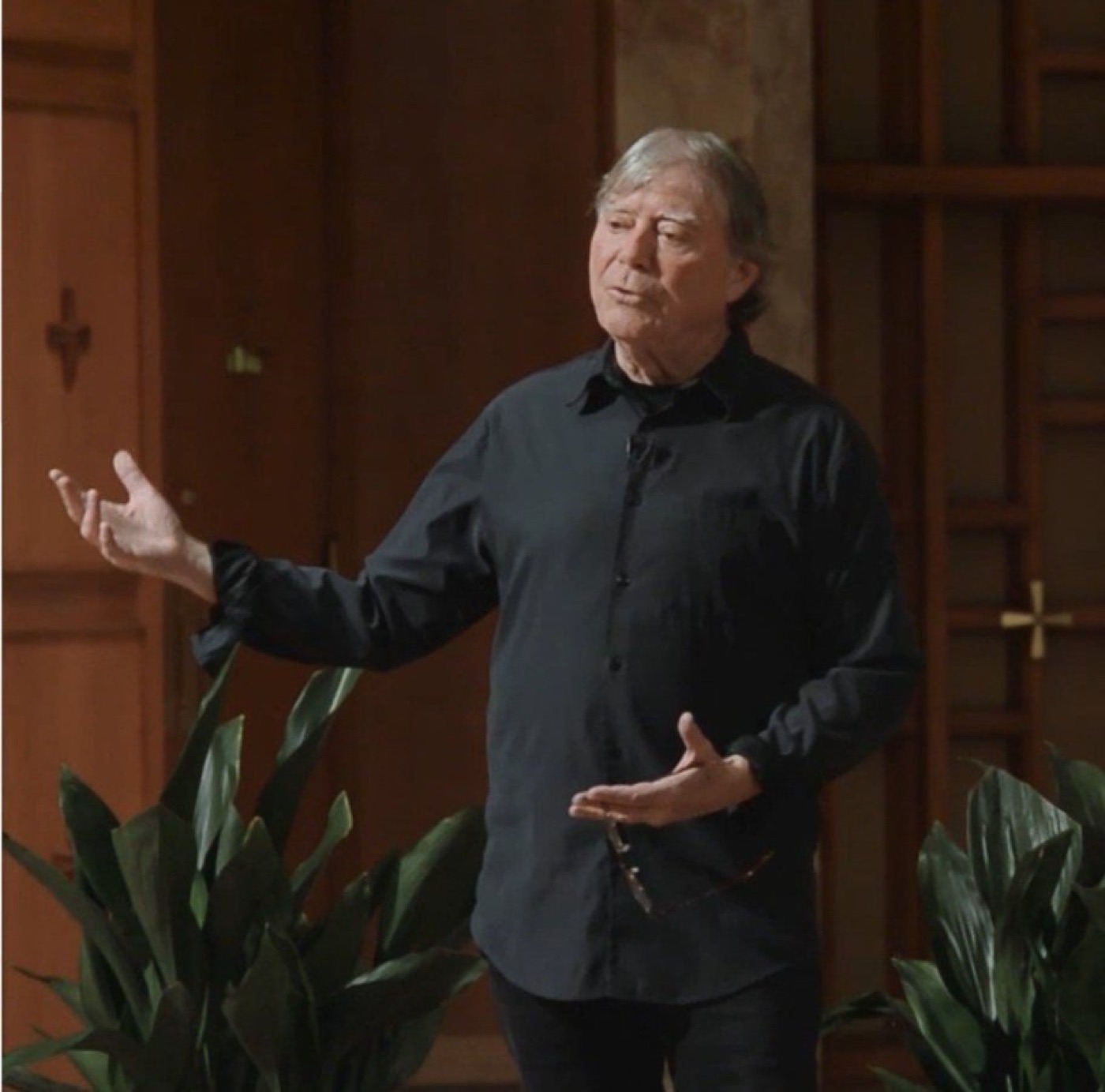
A Michael Meade event begins not with introduction but with drumming. The rhythm establishes a threshold, marking the passage from ordinary time into what he calls "mythic time." Then comes story—not read but told, often at length, drawn from traditions as disparate as Yoruba divination tales and Irish fairy lore. The telling is theatrical but not performative; Meade inhabits these narratives as living material, pausing to let images settle, circling back to refigure key moments. A two-hour session might involve one extended myth, followed by exegesis that never becomes strictly interpretive. He doesn't explain what the story means. He asks what it's doing in the room.
The structure is deceptively simple: story, reflection, conversation. But the architecture beneath is complex. Meade works from the premise that myth is not symbolic decoration but diagnostic technology. A Greek tragedy or West African creation story becomes a lens through which participants examine their own lives—not metaphorically but literally. He insists that these old stories already know the shape of contemporary crisis: the collapse of initiation, the loss of soul, the failure of elderhood. His retreats often center on liminal states—the moment before transformation, the refusal of a call, the breakdown that precedes insight. The questions he returns to are consistent: What is trying to be born in you? What have you been initiated into without choosing it? Where is your soul trying to go?
Recurring Territory
Meade's thematic terrain is narrow and deep. He circles obsessively around certain ideas: genius (understood as an indwelling spirit rather than aptitude), fate and destiny (as two separate agreements the soul makes before birth), initiation (the necessity of crisis for genuine transformation), and what he calls "living mythically" in a literalized world. He draws heavily on the notion that modern culture has lost its capacity for symbolic thinking, leaving individuals adrift in flatness. Myth, in his framework, restores depth—not comfort.
He is uninterested in myth as entertainment or edification. The stories he chooses tend toward darkness: Persephone's abduction, the dismemberment of Osiris, the trials of Inanna. He emphasizes descent, ordeal, and the necessity of facing what cannot be fixed. There is little optimism here, but there is insistence—on the soul's resilience, on the possibility of renewal even in collapse. His work since 2016 has increasingly engaged political and ecological catastrophe, framing them not as aberrations but as mythic patterns repeating.
Aesthetic and Atmosphere
Meade's delivery is bardic, with roots in oral traditions rather than lecture pedagogy. His voice carries the cadence of someone trained by repetition and live audiences; he can hold a narrative thread for forty minutes without notes. Humor appears, but it's wry and self-aware, often directed at the absurdity of trying to do ancient work in contemporary settings. He does not traffic in inspiration or uplift. The emotional register is serious, occasionally somber, but animated by the urgency he attributes to the stories themselves.
Silence is structural. He leaves long pauses after posing questions, resisting the instinct to fill them. Group discussion, when it occurs, is framed not as sharing but as communal interpretation—an attempt to think together rather than testify individually. Drumming punctuates transitions, and music (often provided by collaborators like Mosaic Voices) serves not as interlude but as another form of mythic speech.
Who This Lands For
Meade's teaching finds its audience among those already conversant with depth psychology, those in the midst of personal or collective crisis, and those dissatisfied with both religious dogma and secular rationalism. His listeners tend to be educated, middle-aged or older, and drawn to frameworks that honor complexity over solutions. This is work for people willing to sit with ambiguity, to consider that their suffering might be initiation rather than mistake.
It will not land for those seeking clarity, technique, or progressive narratives of self-improvement. Meade offers no program, no stages of development, no measurable outcomes. His insistence on myth as primary can feel circular to those outside the paradigm. The extended storytelling requires patience; the density of cross-cultural references can overwhelm newcomers unfamiliar with the terrain.
Lineage and Tradition
Meade stands within the lineage of mythopoetic men's work that emerged in the 1980s and '90s, alongside figures like Robert Bly and James Hillman, though his work has evolved beyond that initial context. He draws explicitly from Jungian archetypal psychology, Joseph Campbell's comparative mythology, and Mircea Eliade's work on sacred time and initiation. But he parts ways with purely psychological readings, insisting on myth's autonomy—its existence independent of human interpretation. His integration of Indigenous perspectives, particularly African and Native American cosmologies, reflects decades of cross-cultural study, though questions of appropriation and authority remain live for some critics.
His teaching belongs to the broader tradition of wisdom transmission that prioritizes oral culture, experiential learning, and the authority of story over doctrine. It is teaching meant to disorient as much as orient, to break open rather than build up.