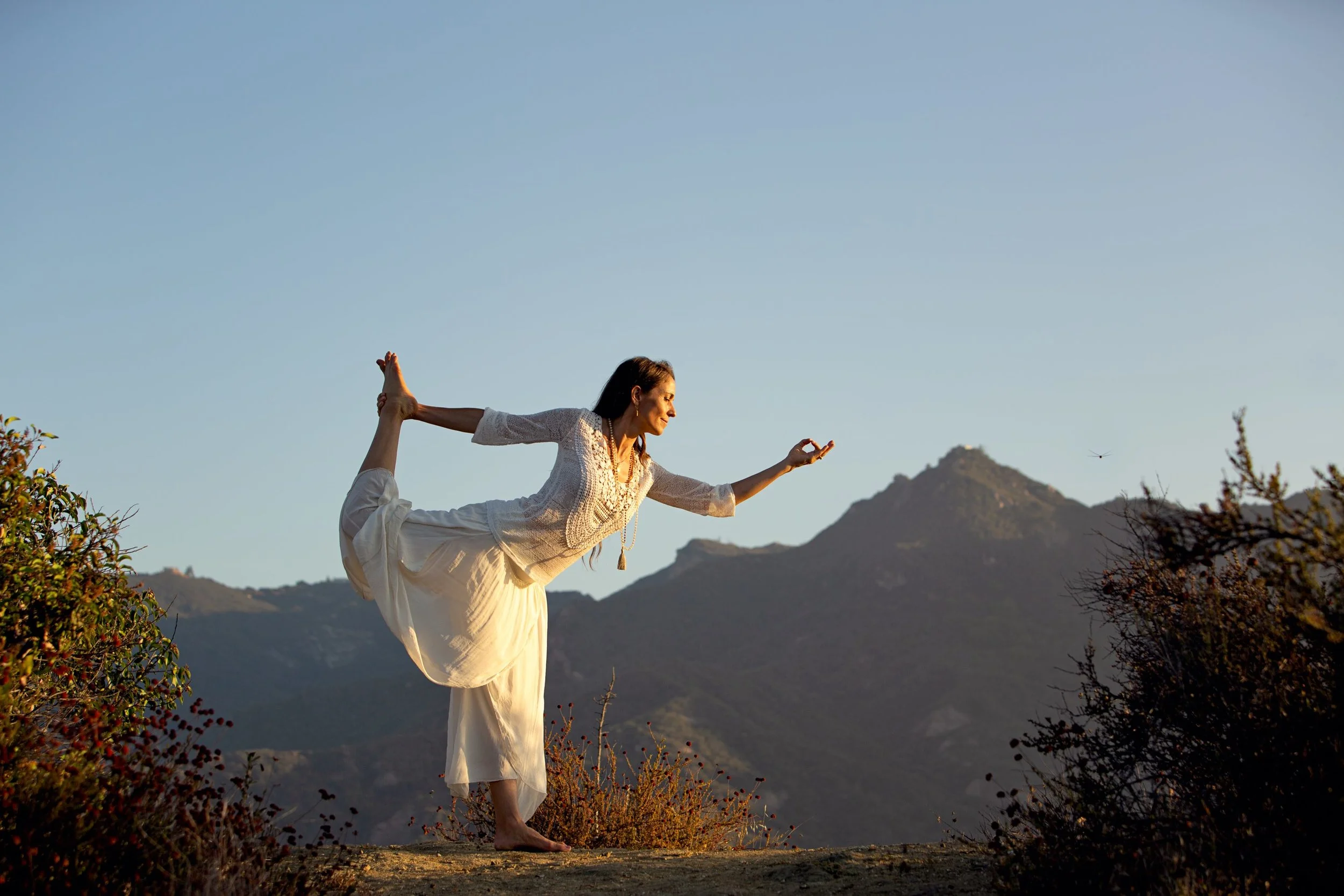

Kia Miller's Teaching: Approach, Method, and Voice
A Kia Miller session doesn't ease you in. Whether it's a ninety-minute kriya set or a multi-day residential training in Sedona, the structure is deliberate and often rigorous from the first breath. She builds sequences that layer asana with pranayama, mantra, and mudra—each element stacked intentionally, not decoratively. The physical demands can be high: holding poses past comfort, breathing in precise ratios that flood the system with sensation, chanting phrases in Gurmukhi that most Western students can't translate. There's little casual flow here. The aesthetic is technical, focused, and unapologetically rooted in the mechanics of transformation. Students report feeling worked—not in the athletic sense alone, but in the way one feels worked over by a process larger than personal preference.
Miller teaches from inside the Kundalini yoga lineage transmitted through Yogi Bhajan, a tradition marked by its kriyas: integrated sets designed to produce specific energetic and psychological effects. Her delivery of this material is both faithful and adaptive. She doesn't soften the tradition's intensity, but she does translate it through the language of anatomy, nervous system regulation, and contemporary somatic awareness. A kriya might be hundreds of years old, but Miller will explain its impact on the vagal nerve, the endocrine system, the way breath ratios shift brainwave states. This dual fluency—in the esoteric and the physiological—marks her pedagogy. She treats yoga as both ancient technology and applied science.
Recurring Themes and Questions
Miller returns again and again to the question of presence: not as a abstract spiritual ideal, but as a trainable capacity. How do you stay with discomfort without reactivity? How do you notice the impulse to escape before you act on it? Her teaching pushes students to observe the gap between stimulus and response, to sit inside that gap and learn its texture. She frames this as the essential work—learning to be with what is, to tolerate the intensity of aliveness without numbing or fragmenting.
Another throughline is the relationship between discipline and devotion. Miller doesn't shy from the word discipline, even as wellness culture has largely abandoned it in favor of softer language. She asks students to commit to practice with consistency, to show up even when motivation wanes, to treat the mat as a site of both rigor and reverence. The devotional aspect isn't sentimental. It's functional: mantra as a focusing agent, breath as a bridge between voluntary and involuntary systems, repetition as the method by which old patterns are overwritten.
Aesthetic and Delivery
Miller's voice in class is clear and direct. There's warmth, but not excess warmth. She doesn't perform intimacy or manufacture rapport through casual banter. Humor appears sparingly, and when it does, it's usually self-aware—acknowledging the strangeness of holding your arms up for eleven minutes or the absurdity of the ego's resistance to simple instructions. She uses story selectively, often drawing from her own practice or from traditional yogic texts, but never as filler. Silence is frequent and intentional. She'll cue a breath practice, then step back, letting students labor through it without constant narration or reassurance.
Scripture and mantra are woven throughout, not as decoration but as technology. She treats sound—specific syllables, specific rhythms—as tools with mechanical properties. A mantra isn't recited for its poetry; it's employed for its effect on consciousness. This can feel esoteric to newcomers, but Miller doesn't dilute the tradition to make it more palatable. She teaches it straight.
Who It Lands For
Miller's teaching resonates most with students who want rigor, who are suspicious of yoga that feels too soft or therapeutically vague. It appeals to those drawn to systems, to maps of consciousness, to practices that promise transformation through sustained effort rather than instant relief. Her approach suits practitioners willing to tolerate discomfort, to sit with the awkwardness of chanting in a language they don't speak, to trust a process before they understand it intellectually.
It may bounce off those seeking gentleness, accessibility, or a more fluid, intuitive approach. Miller doesn't adjust much for beginners in terms of intensity—she offers modifications, but the container itself remains demanding. Students allergic to hierarchy, lineage language, or the residual aesthetics of guru-based traditions may struggle here, even as Miller herself functions more as technician than charismatic authority.
Tradition and Context
Miller operates within Kundalini yoga's complex legacy—a tradition rich in practice but shadowed by Yogi Bhajan's documented abuses. She has continued teaching the kriyas while adapting the framing, emphasizing personal sovereignty and nervous system literacy over guru devotion. Her work through Radiant Body Yoga positions her as a bridge figure: preserving potent techniques while attempting to separate them from the more problematic dimensions of their transmission. Whether this synthesis holds depends largely on each student's relationship to lineage, authority, and the question of what can be salvaged from compromised sources.