
House of Deeprelax is a project rather than a conventional personal story, and the public record says little about where it began. There is no documented hometown, founding year, or account of the path that led to it. What can be said is what the work is: a Dutch-language mental relaxation platform, built around an app, for listeners in the Netherlands and Belgium. Its stated purpose is plain. It offers a daily portion of mental relaxation so people can unwind, discharge stress, and recover, wherever they are and whenever it suits them.
Profiles of wellness teachers often hinge on a breakdown, an illness, or a revelation. For House of Deeprelax, no such moment is documented, and it would be dishonest to invent one. The project's own framing points elsewhere. Its design suggests a shift in thinking more than a dramatic event: the idea that relaxation should not be a special occasion requiring a retreat, a quiet room, or a free hour. It should fit into the day as it is actually lived.
What House of Deeprelax is known for is practicality, and the clearest expression is the way the work meets people in ordinary moments. Many meditation offerings assume a dedicated sit. House of Deeprelax has made meditations that can be done lying down, sitting, or even while cooking. There are short "boost talks" meant for listening while cycling, ironing, or walking. Sessions run from about three minutes to sixty-five, so the library can accommodate a work break, an evening wind-down, or a night of broken sleep.
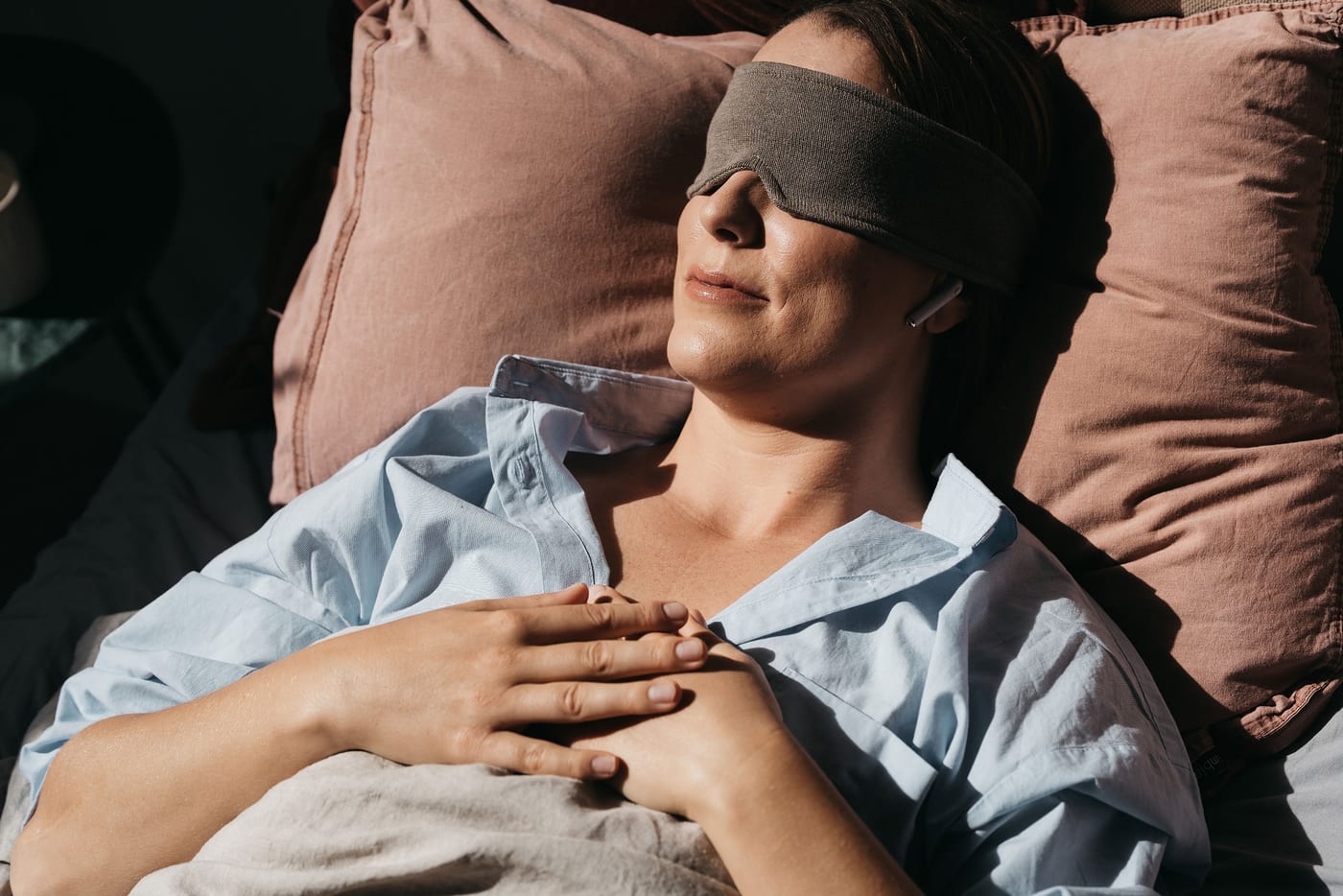
At the center sits Yoga Nidra, which the project presents as a form of deep-sleep or hypnosis-style meditation. It is a guided practice that lives somewhere between meditation and sleep. The platform describes itself as rooted in the Yoga Nidra tradition, but it does not name a particular teacher or lineage, and it would be a mistake to assign one. The sensibility is pragmatic and body-centered rather than devotional or philosophy-heavy, which makes the work approachable for people who want rest and nervous-system recovery without adopting a spiritual framework.
The app holds more than one hundred sessions, programmes, and audio guides. Its main strands are:
- Yoga Nidra: the longest and most central sessions, suited to deep rest and to sleep.
- Meditations for different postures and moments: lying down, sitting, or doing something else entirely, like cooking.
- Deeprelax Nidra Breath: breathwork sessions that pair slower breathing with the logic of Yoga Nidra.
- Walking meditations: practices for contact with the body and the surroundings.
- Shake-it sessions: TRE-style shaking and dance to release tension. These are the active counterpoint to the otherwise restorative library.
- Boost talks: brief audio pieces for moments when sitting still is not an option.
- Self-hypnosis: another route into the same territory of deliberate, guided rest.
The range matters. A person who cannot lie still after a stressful day can shake first and settle afterward. A person who wakes at night can reach for a longer Nidra session. The breadth is organized around states and schedules rather than around a single method.
The same approach runs through the House of Deeprelax YouTube channel, where videos guide listeners step by step through meditation, breathing exercises, and Yoga Nidra. They are meant for beginners and for people who already meditate, and they are positioned for the start or the close of the day. The audio sessions are also available on Spotify, where the project has a modest following of roughly 6,900.
The present moment for House of Deeprelax is a digital one. The app is the main delivery platform for the complete library, with the website offering a free trial month. The YouTube channel serves as the free front door, and it is the sensible place for a newcomer to start: a ten-to-fifteen-minute Yoga Nidra requires no prior experience, and the video format gives visual support. No live events, tours, or retreats are announced, and the work is entirely app-based and online. That is consistent with the project's philosophy. It is not trying to be a destination. It is trying to be available.
The significance of House of Deeprelax is partly a matter of language and partly a matter of tone. Most well-known meditation apps operate in English and cast a wide net across many modalities. House of Deeprelax is Dutch-language and focused, with Yoga Nidra at its conceptual core. For Dutch and Belgian listeners, that means guided rest that is not a translation or an afterthought. It is also a clear limit: for those who do not speak Dutch, much of the library is out of reach.
The project's register is notable as well. It does not promise transformation or enlightenment. It speaks in terms of recovery, balance, and unwinding, and it names the real situations in which people need them: a tense afternoon, a sleepless night, a chore that leaves the mind free to wander. The guidance is clear and practical rather than chatty or charismatic, and there is no social or community layer. Listeners who want a strong teacher personality, philosophical teaching, or a devotional path may find it spare. Those who want something they can simply press play on will probably find that spareness is the point.
It is worth being measured about what the work is. It is not clinical treatment, and it does not claim to be. Insomnia and chronic stress have many causes, and a library of guided sessions can support rest without resolving everything. But for sleep disrupted by stress, an overactive mind, or a body that holds tension, a steady and accessible set of tools has real value.
House of Deeprelax matters because it takes seriously the idea that mental recovery should be ordinary. By making meditation fit around cycling, ironing, cooking, and bedtime, the project removes much of the ceremony that keeps people from trying. It reaches listeners who might never attend a retreat or sit in a meditation hall, and it offers them a daily practice in their own language. In a crowded wellness market, that quiet, specific usefulness is a legitimate contribution, and it is the reason the work deserves attention.