
Gurmukh Kaur Khalsa's Teaching: Approach, Method, and Voice
The Architecture of a Session
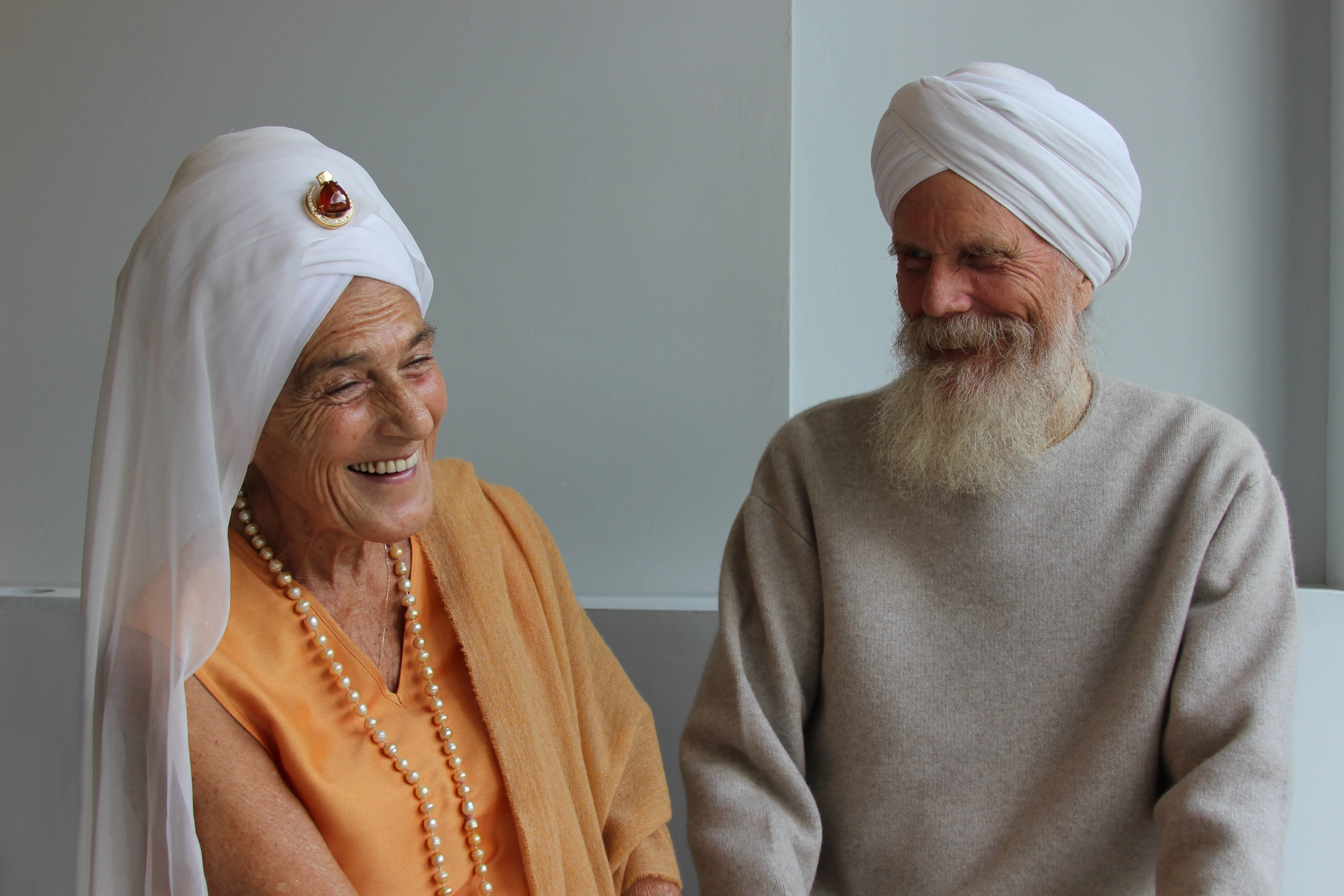
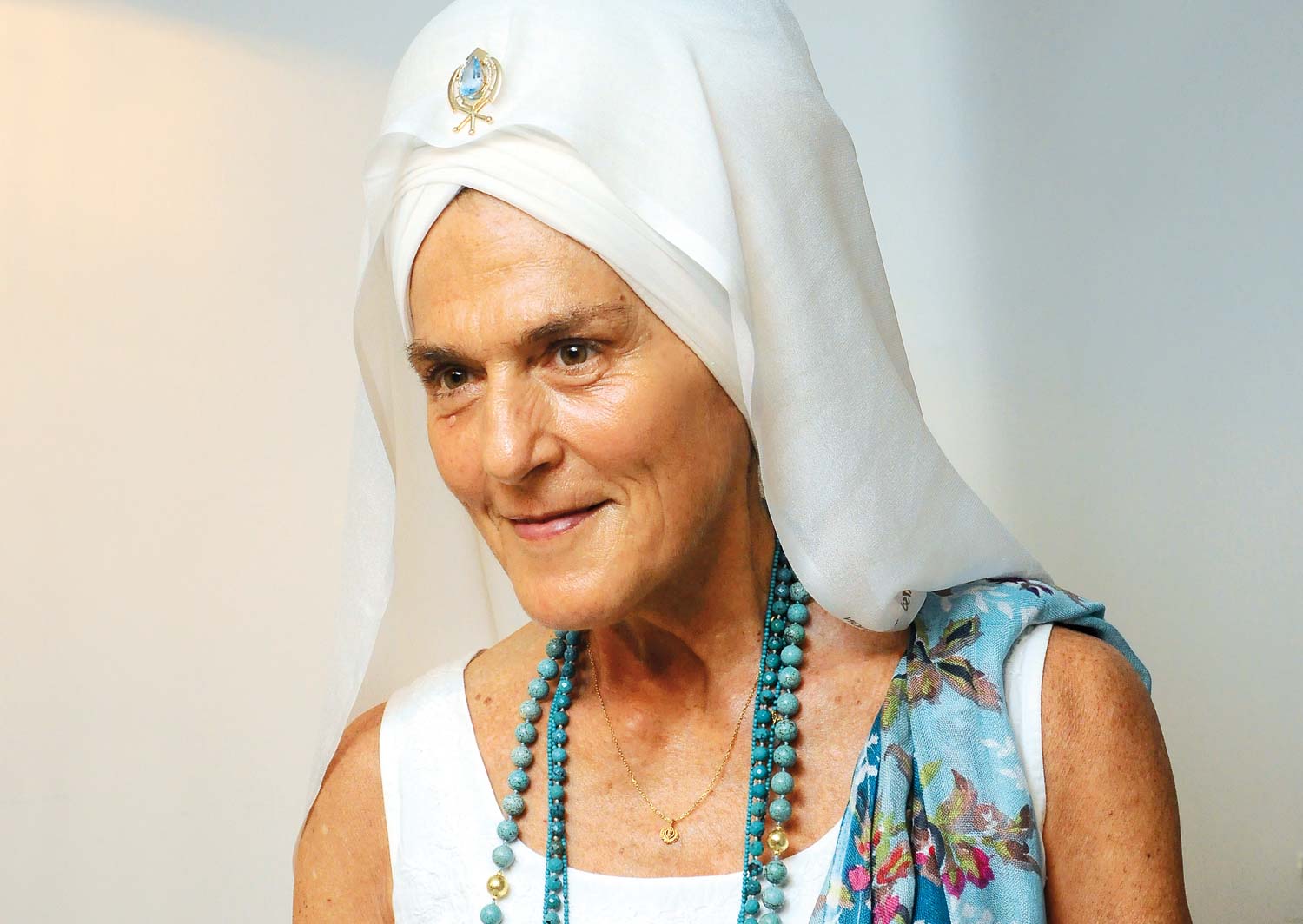
A class with Gurmukh Kaur Khalsa begins before you enter the room. White clothing, head coverings, a space cleared of shoes—the externals are non-negotiable markers of the Kundalini tradition as transmitted by Yogi Bhajan. The session itself unfolds in discrete phases: tuning in with the Adi Mantra, a kriya (prescribed sequence of postures, breath, and sometimes sound), deep relaxation, and closing meditation. There is no invitation to modify or personalize. The technology, as it's called in this lineage, is presented as complete.
What distinguishes Gurmukh's delivery is her combination of directness and warmth. She does not perform mysticism. Instructions are clear, sometimes blunt. "Your navel point is your power center—wake it up." The kriyas can be demanding: arms extended for eleven minutes, breath of fire sustained past the point of comfort, postures held in stillness while the body protests. She does not apologize for the difficulty. The implicit teaching is that transformation requires endurance, and endurance is cultivated through specific, repeatable practices rather than intuitive flow.
In longer formats—workshops, retreats, the immersive training programs—the structure remains intact but deepens. Days begin before dawn. There is chanting, there is silence, there is the gong. Participants are asked to keep a discipline that includes diet, sleep schedules, and abstention from intoxicants. The container is tight. For some, this is clarifying. For others, it feels rigid.
Recurring Themes and Central Questions
Gurmukh returns again and again to the concept of birthright happiness—not as a feeling to chase but as an underlying condition to uncover. The obstacle, in her framing, is the mind's chatter, the accumulation of trauma, the disconnection from breath. Kundalini practice is presented as a method to clear the subconscious, to "become your own healer," as she often says.
Pregnancy and birth occupy a central place in her teaching universe. The Khalsa Way Prenatal Yoga is not simply yoga adapted for pregnant bodies; it is a spiritual preparation for the threshold experience of bringing life into the world. She asks expectant mothers to sit with questions that are both practical and existential: What are you passing on to this child? What fears are you carrying? Can you trust your body's intelligence?
Courage surfaces frequently, not as heroism but as the willingness to face discomfort without numbing or fleeing. Her students are pushed to ask: Where do I quit on myself? What would change if I stayed five breaths longer? These are not rhetorical questions. The physical demand of the practice is designed to surface the answer in the body before the mind can rationalize it away.
Aesthetic and Delivery
Gurmukh's teaching voice is matter-of-fact, occasionally humorous, never precious. She tells stories—about Yogi Bhajan, about students who broke through, about her own struggles—but these are not confessional or meandering. They serve a pedagogical function, illustrating a point about ego, perseverance, or grace. There is no performative vulnerability.
Scripture enters through mantra, not exposition. The Mul Mantra, the Siri Gaitri Mantra—these are recited in Gurmukhi, often with no translation provided in the moment. The assumption is that the sound carries the teaching, that meaning is transmitted vibrationally. For practitioners versed in the tradition, this is familiar. For newcomers, it can feel exclusionary or opaque.
Silence is structural, not decorative. After a kriya, the room drops into stillness. Gurmukh does not fill it. The gong bath, a staple of her longer sessions, is an immersion in sound that paradoxically creates a deep quiet in the nervous system. It is not background music; it is the practice itself.
Who It Lands For, Who It Doesn't
This teaching finds its audience among those who want structure, who are willing to submit to a lineage with clear boundaries and non-negotiable elements. It appeals to people skeptical of eclecticism, to those who find comfort in repetition and established forms. Women navigating major life transitions—particularly pregnancy and motherhood—have found in Gurmukh's work a rare acknowledgment of the spiritual dimension of those passages.
It will not land for practitioners uncomfortable with the trappings of Sikh tradition, or for those who bristle at hierarchy and lineage claims. The specificity—the turbans, the Gurmukhi, the references to a single teacher as the source—can read as cultish to outsiders. And for students seeking a more somatic, exploratory, or trauma-informed approach, the prescribed nature of the kriyas may feel insufficiently responsive to individual nervous systems.
The Lineage She Carries
Gurmukh is a direct transmitter of Yogi Bhajan's Kundalini Yoga, a twentieth-century synthesis that blends Tantric techniques, Sikh devotional practice, and a distinctly Western emphasis on personal empowerment. This is not ancient, unbroken lineage; it is a modern religious movement with clear origins and a specific founder. Gurmukh has been one of its most visible ambassadors, particularly in bringing its methods to women and mothers. Whether that transmission remains vital or becomes calcified depends, in part, on students like hers who inherit both the technology and the questions it raises.