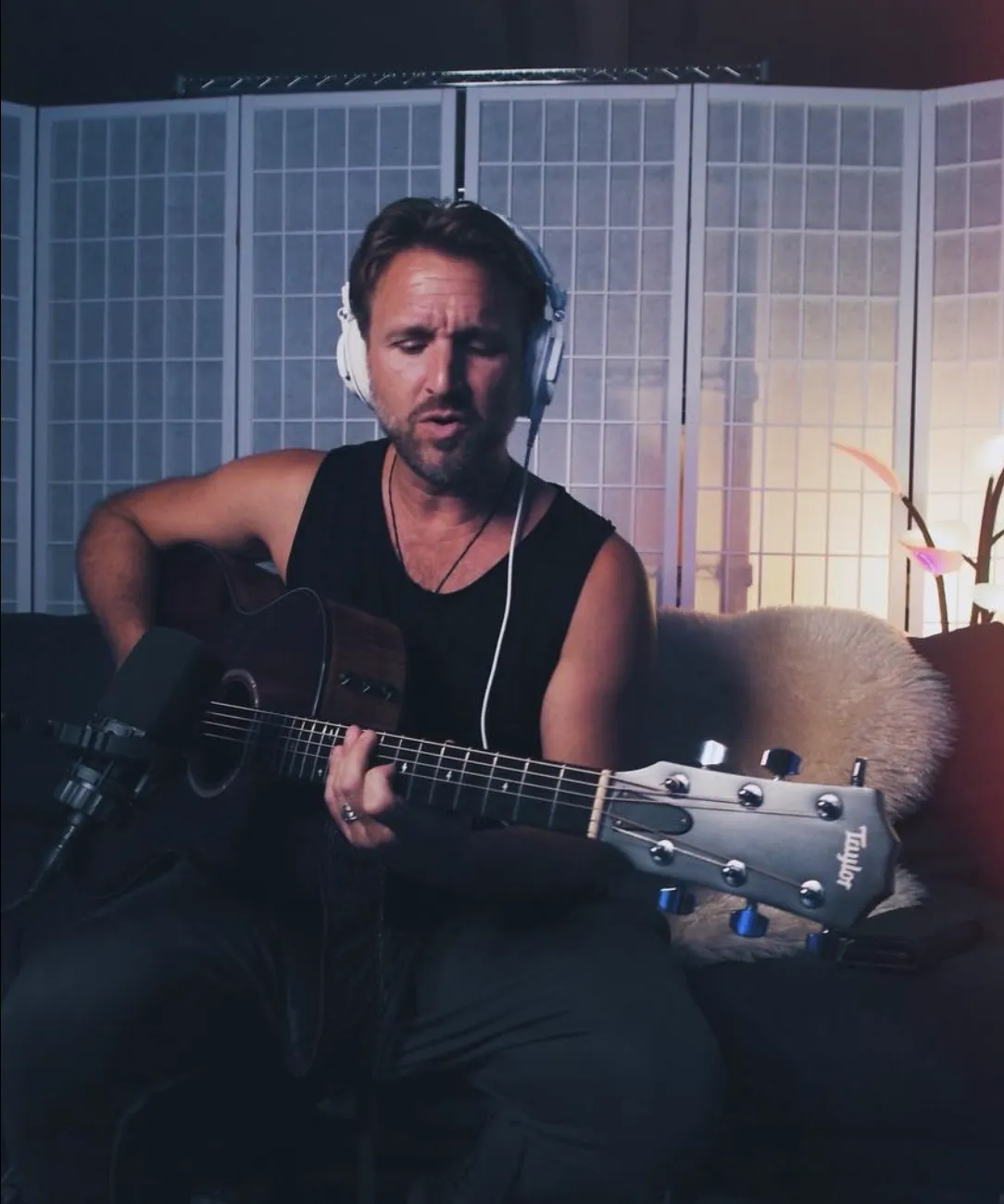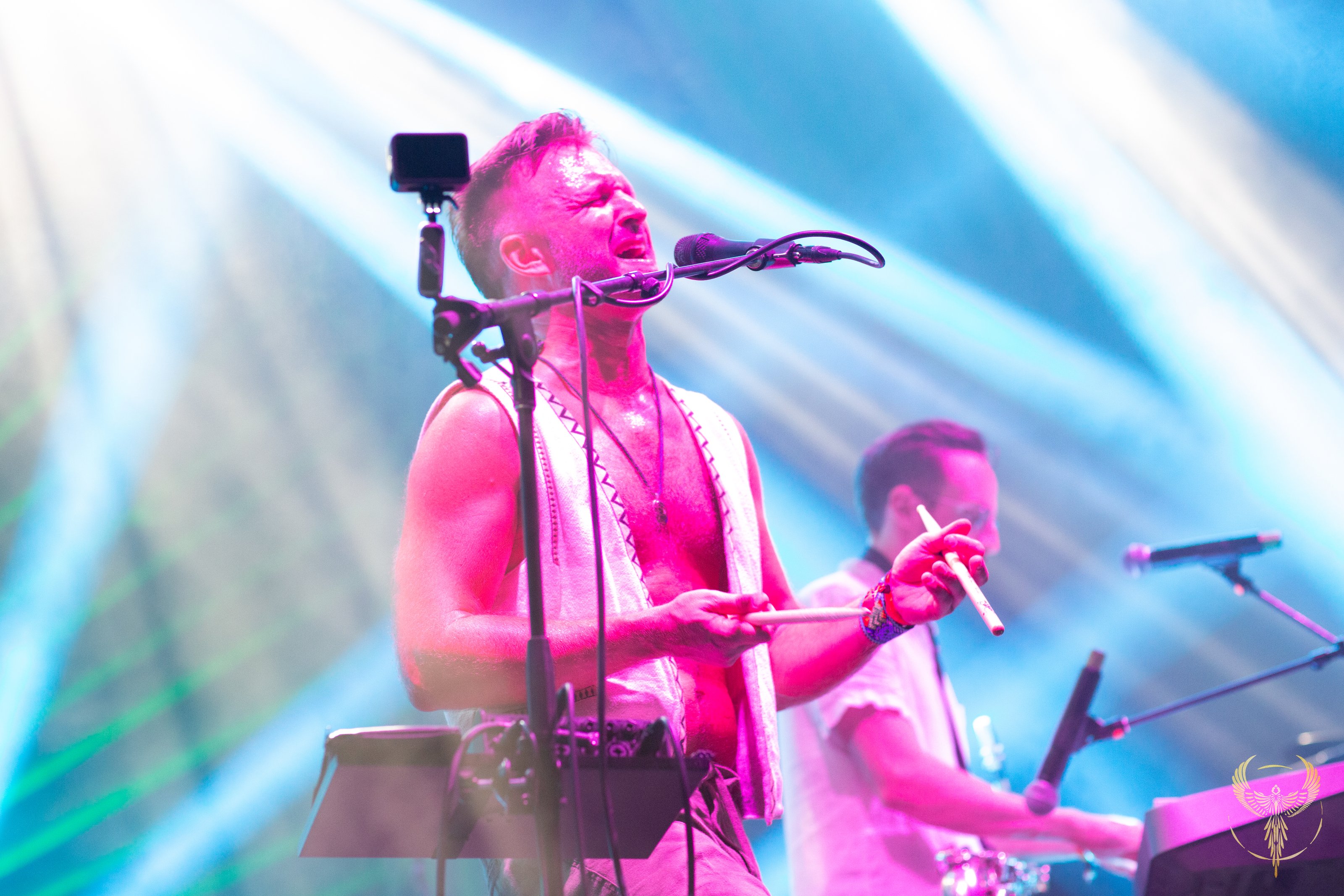

When Elijah Ray's voice enters a room, it arrives layered. Not as a solo instrument carving clean lines through silence, but as a choir unto itself—stacked, harmonized, woven into dense vertical tapestries that breathe and shift. His music is built on piano and vocal architecture: intimate ballads grounded in neo-soul's melodic vulnerability, expanded through what he calls "shamanic awareness," a framework where sound becomes less performance and more portal.
The piano anchors almost everything. Ray's harmonic language draws from gospel voicings and R&B's emotional grammar, but his arrangements resist verse-chorus predictability. Instead, compositions unfold in waves—slow builds, extended vamps, sections that circle rather than resolve. The tempo leans meditative: not the drone-based slowness of mantra kirtan, but the unhurried pulse of late-night soul sessions where space matters as much as melody. Over these foundations, Ray layers his voice in lush multi-tracked arrangements, creating choral densities that feel symphonic in ambition but handmade in execution.
This is not call-and-response kirtan. It's not ecstatic Sufi repetition or gospel's collective catharsis. Ray's lineage is harder to pin to a single tradition because he's working in the underexplored territory where neo-soul meets consciousness practice. If Donny Hathaway had pursued sound healing instead of commercial soul, the result might sit somewhere near Ray's corner of the map. His music carries the melodic sophistication and vocal vulnerability of that tradition—think D'Angelo's layered falsetto or Musiq Soulchild's harmonic richness—but reorients it toward interiority and what he describes as "consciousness exploration."
The shamanic element isn't theatrical. Ray doesn't employ drums, rattles, or overtly indigenous instrumentation. Instead, "shamanic awareness" seems to describe his compositional intent: sound as experiential technology, voice as vehicle for altered states. This manifests in extended sections where melody becomes mantra-like through repetition, where harmony thickens until it induces a kind of sonic immersion. It's closer to the textural ambient work of artists like Laraaji—who also bridges spiritual practice and musical innovation—than to traditional shamanic music. Ray's approach suggests that neo-soul's emotional depth can function as devotional practice when slowed down, opened up, and given room to resonate.
His signature contribution is precisely this hybridization: bringing the melodic and harmonic richness of Black American soul music into dialogue with contemplative listening practices, without abandoning either. Where kirtan artists might trade complexity for participatory simplicity, Ray maintains sophisticated chord progressions and jazz-influenced voicings. Where neo-soul often aims for the solar plexus, Ray aims a few inches lower and deeper—still emotional, but seeking visceral shifts in consciousness rather than cathartically expressing existing feelings.
The Band of Light, founded in 2004, functions as both ensemble and community structure around this vision. It's not a backing band in the conventional sense but a "collective and community-centered movement"—a crucial distinction. This positions Ray's work less as solo artistry and more as a collaborative field, though specific collaborator names remain largely internal to that community rather than prominently featured in public-facing materials. The group model echoes gospel tradition and Afrofuturism's collective impulse (Sun Ra's Arkestra, Earth, Wind & Fire's spiritual ensemble concept) while remaining intimate in scale and intent.
For the first-time listener, expect this: piano-centered compositions that begin simply and accumulate. Ray's voice will likely strike you before his words do—warm, multi-tracked, occupying the middle and upper registers with occasional falsetto flights. Lyrics, when present, favor invocation over narrative. Don't expect hooks in the pop sense; expect recurring melodic phrases that function more like sung meditation anchors. The production is clean but not clinical, polished but retaining the feel of someone building cathedrals from their living room studio.
What may surprise: the music's restraint. Given the "shamanic" framing, you might anticipate wildness, dissonance, or experimental edge. Instead, Ray's sound stays melodically generous and harmonically accessible. The experimentation lives in duration, layering, and intent rather than sonic disruption. This is consciousness work for people who love Stevie Wonder, not necessarily for drone purists or sound-bath seekers expecting Himalayan bowls.
In the wider landscape of conscious music, Ray occupies a needed niche. He's not devotional kirtan (Jai Uttal, Krishna Das), not Sufi ecstatic (Nusrat Fateh Ali Khan), not gospel praise (Kirk Franklin), not quite neo-soul mainstream (though closer to that root). He's what happens when a soul composer trained in melody and harmony decides the tradition's tools can serve transformative listening as powerfully as they've served heartbreak and celebration. His music asks: what if conscious music didn't have to sound "Eastern" or "ancient" to work? What if it could sound like home?