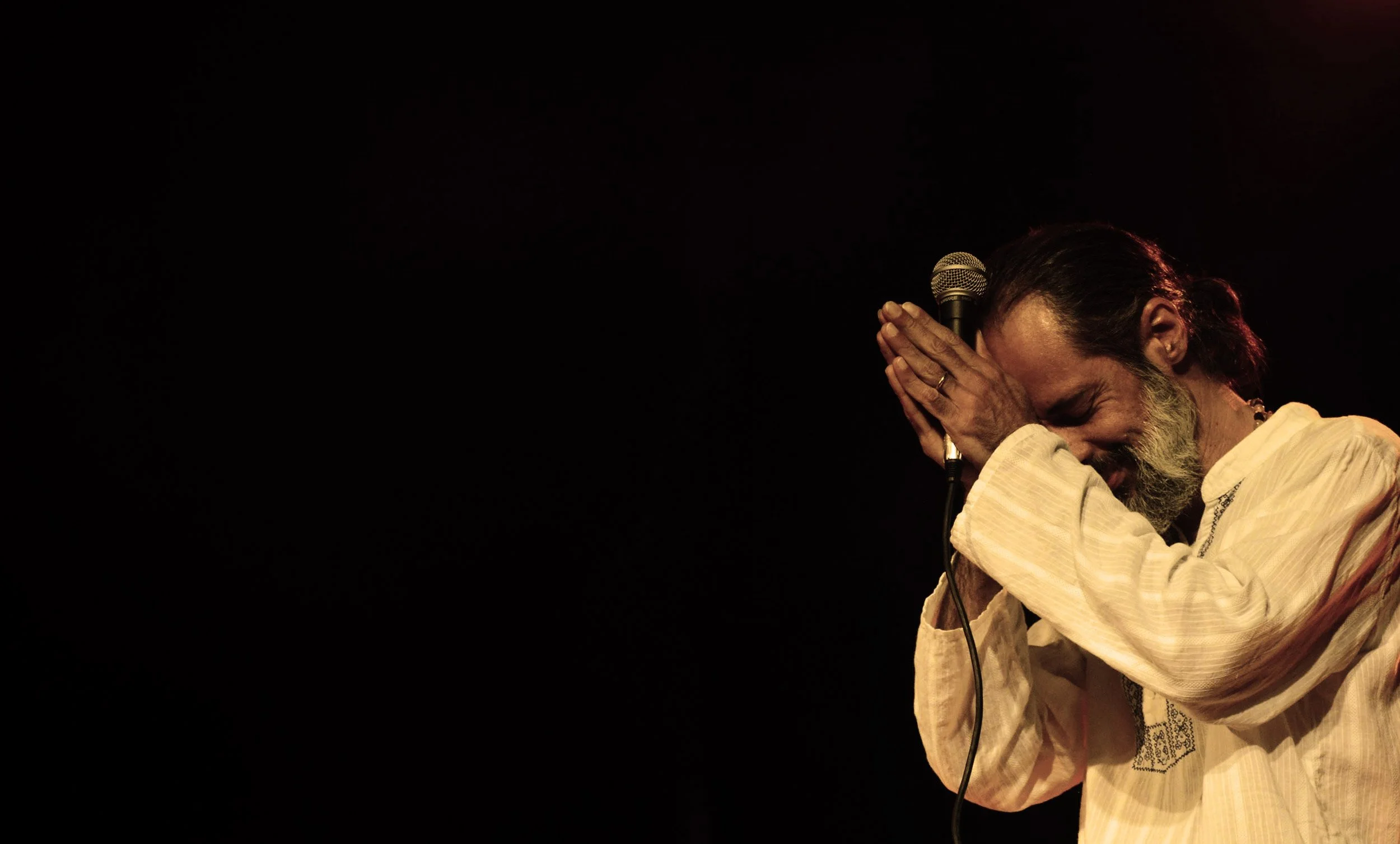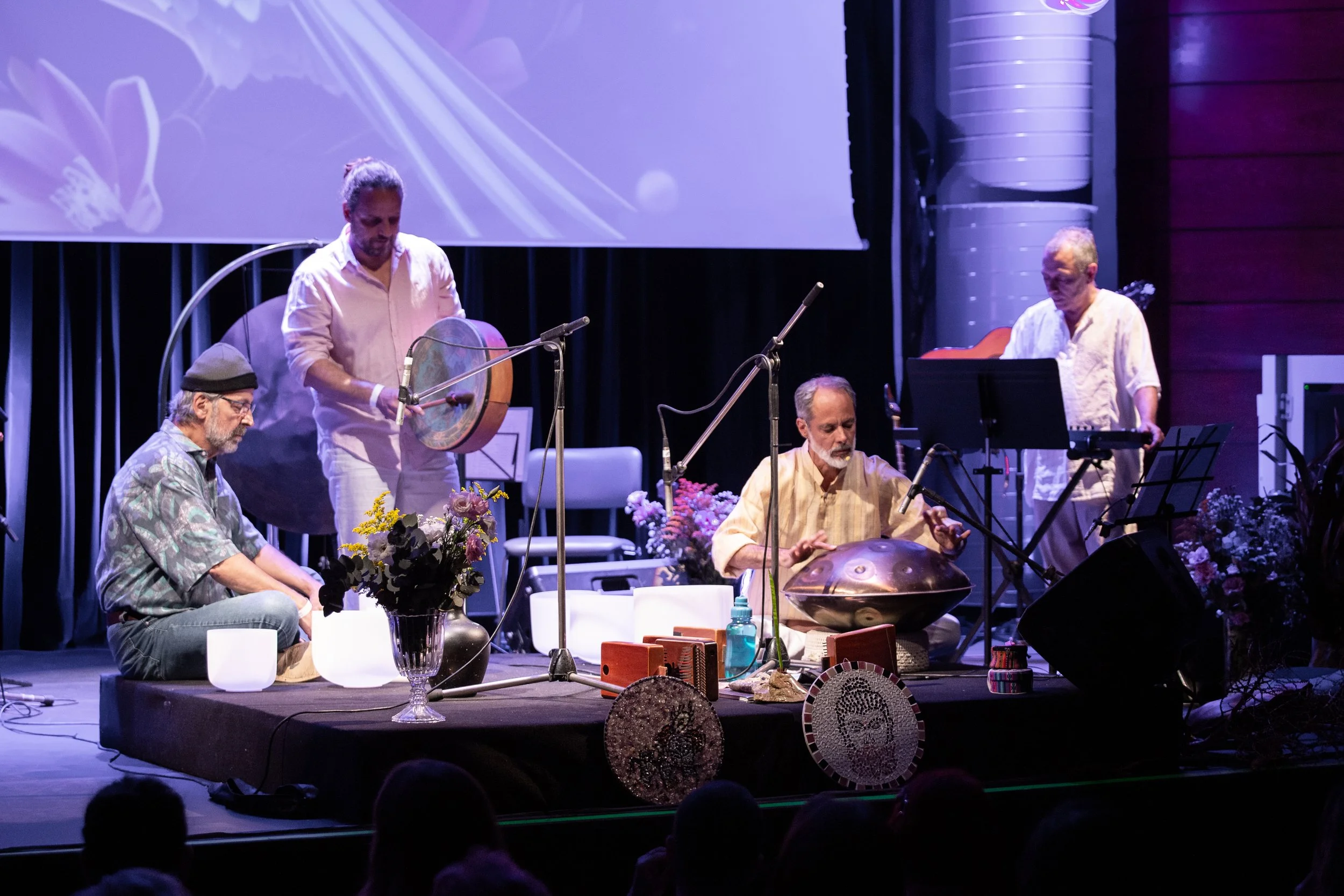

Chandra Lacombe's Teaching: Approach, Method, and Voice
Chandra Lacombe does not lecture. Her sessions—whether private musical oracle consultations or group sound experiences—unfold as guided sonic environments. A student or client arrives with a question, a tension, or simply uncertainty. Lacombe begins not with explanation but with sound: a sustained vowel tone, a mantra fragment, a wordless vocal spiral that fills the room before any conceptual framework is offered. The teaching, if it can be called that, emerges from vibration first and interpretation second.
This reversal of the typical pedagogical sequence is central to her method. In the Naad Yoga tradition she works within—a lineage connecting kundalini yoga and Sikh devotional practice—sound is not metaphor. It is mechanism. The voice becomes both the question and the answer, the inquiry and its resolution. Lacombe guides students to feel frequency in the body before attempting to name what it does, a practice that can feel alien to those accustomed to cognitive frameworks preceding experience.
The Architecture of a Session
A private musical oracle session with Lacombe typically lasts an hour. The client states an intention or concern, though sometimes they are invited to remain silent. Lacombe listens, then begins to vocalize—sometimes a recognizable mantra from the Sikh Naad tradition, sometimes pure toning that follows an intuitive architecture. Her voice moves through registers and vowel shapes with deliberate attention to resonance. Clients report physical sensations: warmth in the chest, tension release in the jaw, a sense of spaciousness or groundedness.
There is little verbal processing during the session itself. Lacombe may offer brief guidance—"breathe into that"—but the work is meant to happen pre-verbally. Afterward, she might name what she sensed or heard, but these interpretations are offered lightly, without insistence. The aesthetic is one of spaciousness and restraint. Silence is structural, not decorative.
Retreat formats extend this logic across days. Participants engage in sustained mantra practice, group toning, and periods of stillness. Lacombe introduces concepts sparingly: the role of specific syllables in activating particular energy centers, the relationship between breath control and emotional regulation. But the teaching remains experiential. Students are pushed to sit with discomfort, boredom, or the strange vulnerability of using one's own voice as a tool.
Recurring Themes and Central Questions
Lacombe returns again and again to the sovereignty of the body's intelligence. She questions the Western reflex to verbalize and categorize before feeling. Her work asks: What if the body already knows? What if the voice can bypass the interpretive mind and access something more direct?
Another persistent thread is the link between sound and memory. In her sessions pairing sonic work with custom scent creation, she explores how certain frequencies can anchor presence or unlock stored emotional material, much as smell does. This cross-modal practice suggests that healing is not purely psychological but sensory, requiring engagement with multiple channels simultaneously.
She is also interested in devotion as discipline. The mantras she uses come from traditions where repetition is not monotonous but cumulative, building charge over time. She asks students to consider what changes when a practice is sustained not for weeks but for years, when the voice becomes an unthinking instrument rather than a self-conscious performance.
Delivery and Aesthetic
Lacombe does not perform charisma. Her presence is calm, focused, and distinctly unsentimental. There is no storytelling for color, no humor to ease tension, no scripture cited for authority. The aesthetic is minimalist, almost clinical in its precision, though the content is anything but detached. This can read as cool to those expecting warmth or as refreshingly unburdened by spiritual theater to those fatigued by it.
Her voice itself—trained, flexible, capable of both piercing clarity and deep resonance—is the primary rhetorical tool. She does not explain why a particular tone matters; she demonstrates it, and the student's nervous system either registers the shift or it doesn't.
Who It Lands For
Lacombe's teaching finds traction with those already committed to somatic or contemplative practice, people who have done enough therapy or meditation to trust that meaning can emerge from non-cognitive processes. Musicians and vocalists sometimes seek her out to deepen their relationship to sound as practice rather than performance. Wellness practitioners exploring trauma-informed modalities appreciate her non-invasive yet potent approach.
It will likely bounce off those who need narrative scaffolding, doctrinal grounding, or immediate intellectual satisfaction. Her work requires patience and a tolerance for ambiguity. The results are subtle, cumulative, and resistant to tidy summation.
Lineage and Context
Lacombe operates within Naad Yoga, a tradition that treats sound as a current capable of altering consciousness and physiology. This places her in kinship with nada yoga practitioners, Sikh kirtan singers, and contemporary sound healers working with Tibetan bowls or gong baths. But her integration of oracle work and olfactory design marks a hybrid practice, one that borrows the rigor of devotional training while creating personalized ceremonial forms outside institutional structures.
She is part of a broader movement of practitioners translating ancient vocal technologies into contemporary therapeutic contexts—serious work that resists both New Age vagueness and rigid traditionalism.