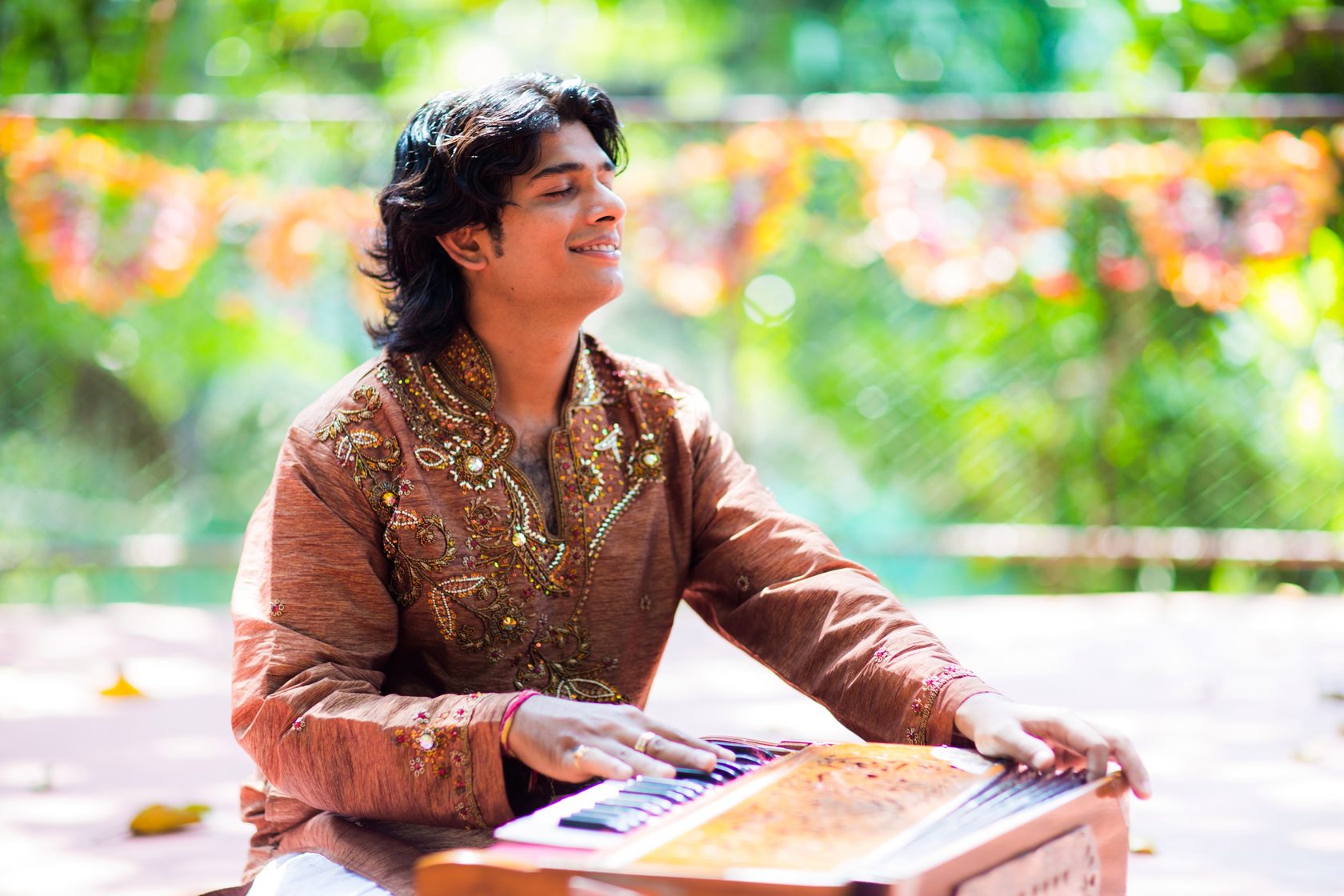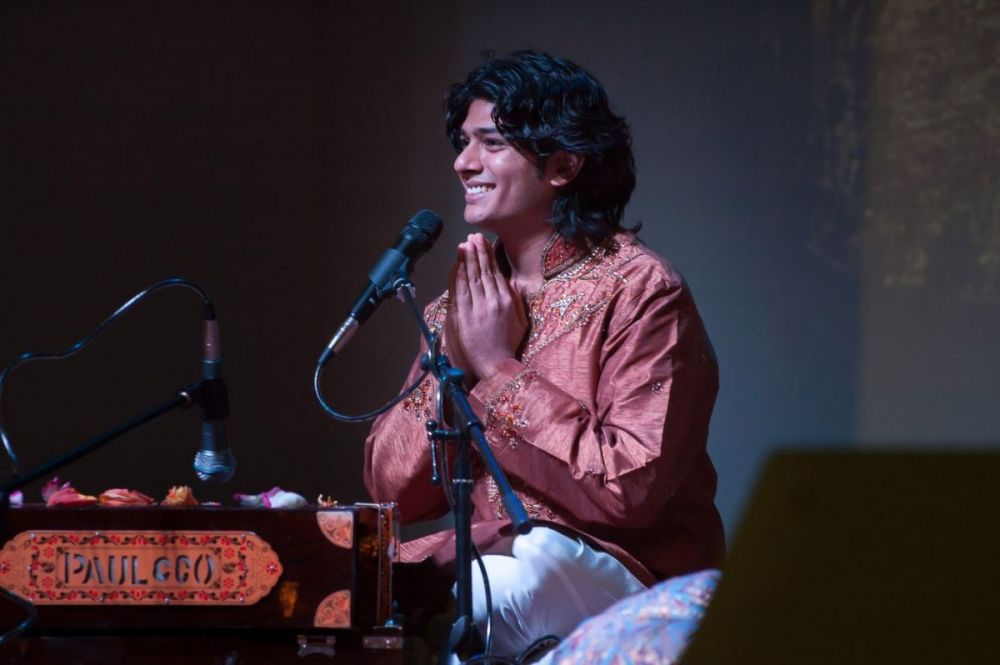

Bittu Mallick stands as a rare bridge between worlds: a thirteenth-generation hereditary musician whose training in Hindustani classical music meets the devotional fire of kirtan and the ecstatic surrender of Sufi qawwali. His practice is rooted in what he calls "the power of the awakened voice," a philosophy that positions vocal work not as performance but as spiritual technology. Unlike many contemporary kirtan artists who draw primarily from bhakti traditions, Mallick weaves Sanskrit mantras, Sufi poetry, and ethno-fusion textures into arrangements that honor both lineage and innovation. His sound carries the ornamental precision of classical raga singing adapted to the repetitive, trance-inducing structures of mantra recitation. Yet despite this rich artistic foundation and the depth of his hereditary musical lineage, Mallick's recorded catalog remains notably sparse. As of now, there are no widely documented studio albums, live recordings, or commercial releases available through conventional channels—a curious absence for an artist of such technical depth and spiritual intent.
For devotional immersion: Given the absence of documented recordings, seekers drawn to Mallick's work would benefit from exploring live kirtan sessions or workshops where his practice is transmitted in its intended context—as participatory spiritual technology rather than passive listening.
For contemplative study: Those interested in the intersection of Hindustani classical technique and mantra recitation may find resonance in Mallick's teaching work, which emphasizes the awakened voice as a path to presence and transformation.
For energetic uplift: Mallick's fusion of Sufi qawwali intensity with contemporary arrangements suggests an approach that builds toward ecstatic states, though without recorded material, these experiences remain accessible primarily through in-person attendance at his performances.
For healing work: The lineage transmission Mallick embodies—thirteen generations of music as spiritual practice—points toward sound as medicine, a concept best encountered through his workshops on vocal practice and the transformative potential of sustained mantra work.