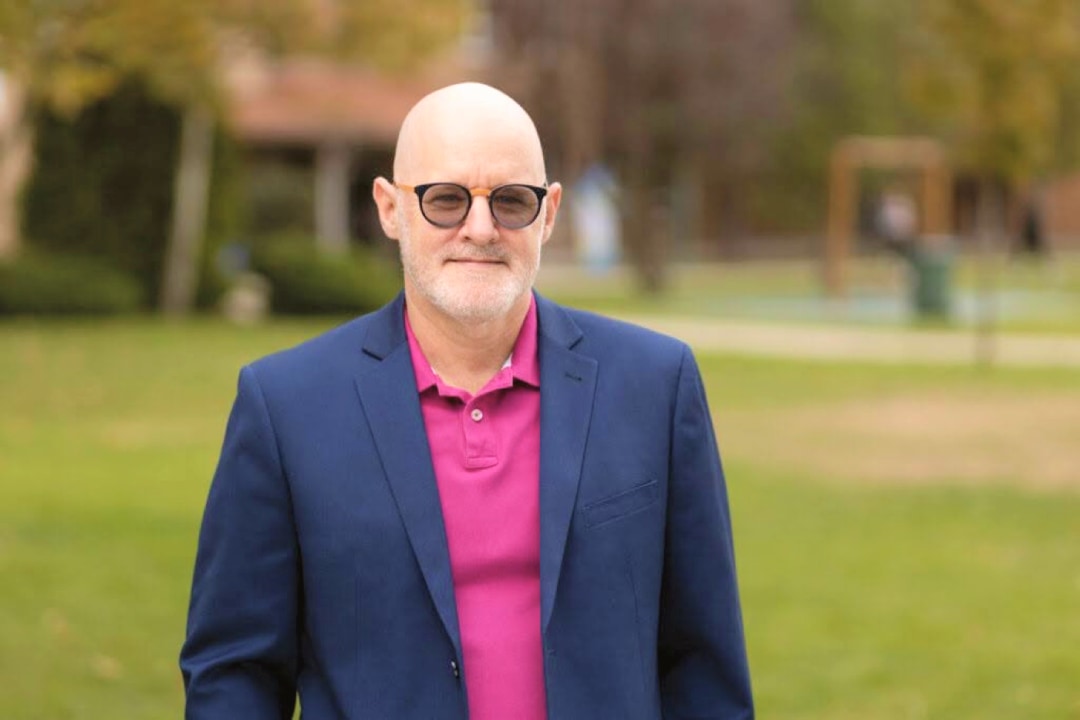

Scott Langston
Psychologist · Romania
紹介
Scott Langston is a psychologist and counsellor, and a fully qualified Cognitive Behavioural Therapist. Originally from the UK, he has worked as a school counsellor for over fifteen years, supporting teenagers, their parents, teachers and the wider community in Thailand, China, Switzerland, Angola and Romania. He lives in Romania with his family.
Scott Langston is a psychologist and counsellor, and a fully qualified Cognitive Behavioural Therapist. Originally from the UK, he has worked as a school counsellor for over fifteen years, supporting teenagers, their parents, teachers and the wider community in Thailand, China, Switzerland, Angola and Romania. He lives in Romania with his family.
He holds an M.Sc. in Psychology from the University of Derby and an M.A. in Philosophy from the University of Wales. His counselling training comes from The Counselling Institute in Scotland, where he earned a Post-Graduate Diploma in Counselling, including focused work on marriage guidance, bereavement, addiction and self-harm, and a Post-Graduate Diploma in Cognitive Behavioural Therapy. He is an Associate Fellow of the British Psychological Society. He has also completed Leiden University's "De-Mystifying Mindfulness" course.
Scott describes himself as an integrative therapist. He takes what works from a range of methods and adapts it to the person in front of him, drawing mainly on CBT, Internal Family Systems, Dialectical Behavioural Therapy, Solution Focussed Therapy, Mindfulness-based Cognitive Therapy and Acceptance and Commitment Therapy. He has attended many workshops in these approaches and stays committed to ongoing professional development.
He works with a range of mental health issues, from mild to severe, and supports individuals, families and couples. His aim is to help people heal, recognise their inner strengths and grow from their struggles. His particular interests include teenage anxiety, depression and self-harm, third culture kids, culture shock and moving between countries, bereavement, identity and purpose for non-working spouses, school counsellors' wellbeing, and kink-aware counselling.
よくある質問
Questions
Scott Langston is a UK-born psychologist and counsellor with over fifteen years of experience as a school counsellor across five continents—Thailand, China, Switzerland, Angola, and Romania, where he currently lives with his family. His reputation rests on a rare combination: formal credentials including an M.Sc. in Psychology from the University of Derby, an M.A. in Philosophy from the University of Wales, and post-graduate training in counselling and Cognitive Behavioural Therapy from the Counselling Institute Scotland, plus recognition as an Associate Fellow of the British Psychological Society. People follow his work because he brings precision to the messy reality of mental health support—he refuses transformation narratives in favor of drawing on multiple evidence-based approaches (CBT, Internal Family Systems, Dialectical Behavioural Therapy, Acceptance and Commitment Therapy, and mindfulness-based cognitive therapy) adapted to the individual in front of him. His particular focus on teenagers navigating anxiety, depression, and self-harm, combined with expertise in third culture kids and cultural transitions, signals his refusal to flatten psychological complexity into generic wellness advice. What distinguishes him is his insistence on integrating psychology with philosophical depth—his M.A. points to genuine engagement with questions of identity and meaning, not just symptom management.
Rather than a spiritual lineage, Scott Langston's work is grounded in Western integrative psychology and the evidence-based CBT and mindfulness tradition. He explicitly describes himself as an integrative therapist, drawing what works from multiple frameworks: Cognitive Behavioural Therapy for structured problem-solving, Internal Family Systems for working with internal conflict, Dialectical Behavioural Therapy for emotion regulation, Acceptance and Commitment Therapy for values-alignment, and mindfulness-based cognitive therapy for working with rumination and mood disorders. His training spanned the Counselling Institute in Scotland (with specialized focus on marriage guidance, bereavement, addiction, and self-harm) and completion of Leiden University's "De-Mystifying Mindfulness" course, grounding his practice in the secular mindfulness tradition rather than spiritual Buddhism. His M.A. in Philosophy suggests he brings conceptual rigor to questions of identity, authenticity, and meaning-making. For seekers, this means his work is rooted in evidence-based psychology and philosophical inquiry—not esoteric spirituality or guru-disciple relationships, but rigorous engagement with how to build resilient, authentic lives.
Begin at scottlangston.org, his professional website, which serves as the primary hub for understanding his practice, credentials, and current offerings. His YouTube channel (youtube.com/channel/UC8awRkQa0agCmQVuPUiCFag) likely contains recorded content—talks, interviews, or educational materials—though a comprehensive archive is not yet widely documented. Given his background as a school counsellor with particular expertise in working with teenagers, third culture kids, and individuals navigating major life transitions (bereavement, culture shock, identity questions), newcomers should approach his work with the expectation of finding rigorous, evidence-based support for psychological growth—not spiritual bypassing or vague wellness rhetoric. His specialization in kink-aware counselling also signals an approach that meets people without judgment in complex areas of identity and relationships. Start by considering whether his particular interests (teenage mental health, cultural transitions, identity work, resilience) align with what you're seeking, then explore his website for current services, and his YouTube channel for available recordings.
Scott Langston's distinctiveness rests on three interlocking factors: his rare combination of formal psychology (M.Sc.), philosophy (M.A.), and integrated therapeutic training that spans multiple schools rather than a single modality. While many counsellors claim to be "integrative," he names his exact toolkit with precision: CBT, Internal Family Systems, DBT, Solution Focussed Therapy, MBCT, and ACT—demonstrating sophisticated integration rather than eclectic vagueness. His fifteen years working as a school counsellor across five countries (Thailand, China, Switzerland, Angola, Romania) grounds him in institutional contexts and cross-cultural complexity, not just private Western practice. He is unusually public about kink-aware counselling, a specialization requiring both psychological sophistication and freedom from moral condemnation—it signals he meets people where they are, without judgment about identity or desire. Most distinctively, his M.A. in Philosophy separates him from practitioners focused solely on symptom reduction; his work engages with deeper questions of who people are, what their life means, and how they build authenticity. In the mindfulness and psychology space, he brings rigor without dilution, and cultural humility without exoticization.
Scott Langston's work is not suited to seekers looking for spiritual transformation, guru-disciple relationships, or the blending of psychology with esoteric philosophy—his framework is secular, evidence-based, and grounded in institutional psychology. Those seeking quick advice or symptom-suppression will find his integrative approach frustrating; he works toward deep understanding of patterns and inner resources, which requires time and genuine psychological engagement. People uncomfortable with psychological depth, particularly around identity, relationships, sexuality (given his kink-awareness), or cultural belonging, may find his specificity unsettling rather than reassuring. His work is grounded in counselling and psychotherapy, which means sessions involve real discomfort and change-work, not merely wellness coaching or affirmation. Additionally, given his base in Romania and the lack of documented upcoming international tours or retreat schedules, seekers in certain geographic locations or those needing immediate structured group programs may find limited access. Finally, those approaching mental health from a purely biomedical or psychiatric medication-focused lens (rather than psychological integration) won't find his therapeutic approach as a primary resource; he works best for people ready to examine and engage psychologically with their struggles.
For current information, visit scottlangston.org, his professional website, where you should find contact details, current services, and any workshops, consulting work, or retreat offerings. His YouTube channel (youtube.com/channel/UC8awRkQa0agCmQVuPUiCFag) may host new talks or educational resources and can serve as an additional touchpoint. Given his international background and fifteen years working across Thailand, China, Switzerland, Angola, and Romania, he may offer workshops, training, or consulting across international contexts, though specific upcoming tour dates and retreat schedules are not currently documented in public records. Because his primary work is as a practicing school counsellor and integrative therapist rather than as a full-time touring educator, his "events" may be more limited than those of dedicated spiritual teachers; however, his background suggests openness to international professional consulting and training work. For reliable updates on any workshops, retreats, speaking engagements, or publications, contacting him directly through his website or checking YouTube for announcements would be the most direct approach.
While specific retreat or session descriptions are not extensively documented, his teaching approach can be inferred from his therapeutic philosophy: pragmatic, client-centered, and drawing on whatever works rather than dogmatic adherence to a single method. An integrative therapist uses Cognitive Behavioural Therapy for concrete thinking patterns and behavioral experiments, Internal Family Systems for working with internal conflict and parts-work, Dialectical Behavioural Therapy for emotion regulation and distress tolerance, and mindfulness-based cognitive therapy for rumination and mood patterns—meaning he likely moves fluidly between approaches depending on what the person needs. His fifteen years with teenagers and families suggests comfort with directness and genuine engagement rather than distant professionalism or platitudes. His particular interests in third culture kids and cultural transitions mean he understands the nuance of belonging and displacement—not just individual pathology or deficits. His completion of Leiden University's "De-Mystifying Mindfulness" signals secular, research-grounded practice. Working with Scott likely feels like being met with both psychological sophistication and human understanding—someone willing to name what's actually happening, explore it with rigor, and help you develop your own inner resources rather than depend on him.
Based on his stated areas of expertise and focus, Scott Langston's work centers on identity—particularly the question of who people are when conventional markers (culture, nationality, social role, sexuality) shift or become complicated. His focus on third culture kids and culture shock points to themes of dislocation, code-switching, and meaning-making across multiple contexts; his interest in teenagers navigating anxiety, depression, and self-harm speaks to resilience and inner strength during vulnerable transitions. His emphasis on identity and purpose for non-working spouses suggests engagement with questions of self-worth independent of conventional productivity markers. His kink-aware specialization indicates engagement with authenticity, consent, and identity expression in relationships—the theme of being genuinely oneself. His interest in school counsellors' wellbeing points to meaning-preservation and burnout prevention in helping professions. His philosophical training and his inclusion of bereavement and existential questions (implied by his M.A. in Philosophy and his range of therapeutic interests) suggest he works with questions of purpose, legacy, and what makes life meaningful. Across all these, the through-line is: how do people build authentic, resilient, meaningful lives—particularly in conditions of cultural complexity, transition, or social invisibility?
Currently, documented published books or major recorded teaching series are not listed in publicly available records, though his YouTube channel (youtube.com/channel/UC8awRkQa0agCmQVuPUiCFag) likely hosts talks, interviews, or educational content worth exploring. Given his M.A. in Philosophy and his fifteen years of clinical experience, it's probable he has written or recorded material on psychology, counselling, mindfulness, or identity—but specifics are not yet indexed or widely distributed. His professional standing through the British Psychological Society and his training from established institutions (the Counselling Institute Scotland, Leiden University) suggest access to published professional work in institutional contexts, though these would typically be academic or professional publications rather than public teaching materials. For the most reliable information about independently available resources—whether recorded sessions, articles, or guides—his website (scottlangston.org) would be the authoritative source. Direct contact through that site may be necessary to ask about available recordings, published writing, or downloadable materials, particularly if you're seeking something specific to your interests (third culture work, identity, CBT and mindfulness integration, etc.).
No formal background in psychology or philosophy is required to work with Scott Langston, though such background may deepen the engagement and vocabulary you share. His fifteen years as a school counsellor indicates comfort working with teenagers and young adults without specialized prior knowledge—his role is to create the therapeutic framework and hold the space, not to assume expertise on your part. However, his integrative approach assumes willingness to engage psychologically: to notice thoughts, feelings, and patterns; to explore internal conflict through frameworks like Internal Family Systems; to practice new skills like DBT's emotion regulation techniques; to sit with discomfort rather than rush toward solutions. Those new to mindfulness-based cognitive therapy may benefit from basic meditation experience or familiarity with the secular mindfulness model, though Leiden University's "De-Mystifying Mindfulness" course (which he has completed) is specifically designed to introduce mindfulness to beginners without spiritual baggage. His particular expertise with third culture kids and cultural transitions means his work is especially accessible to those navigating cross-cultural identities, multiple countries, or major geographic moves. Fundamentally, the prerequisite is openness to psychological self-examination and genuine willingness to work with evidence-based methods, not prior knowledge.


ご本人ですか? このページを登録 ›
There's more where this came from.
BrightStar is the global directory of artists, teachers, and healers in the wellness and spiritual movement. Find your next experience — or add yourself.
Discover More Artists
Browse 14,000+ curated profiles across kirtan, yoga, meditation, and beyond.
Explore directory →Find an Event Near You
Kirtan, retreats, sound baths, breathwork, ceremonies — happening this week.
Browse events →Add Your Profile
Are you an artist, teacher, or healer? Get listed — free, AI-assisted, live in minutes.
Get started →