
FL

Francis Lucille
Spiritual Teacher
紹介
Francis Lucille is a spiritual teacher in the tradition of Advaita Vedanta, the ancient teaching of non-duality, who leads retreats and dialogues in English, French, Spanish, and German across North America and Europe.
Francis Lucille is a spiritual teacher in the tradition of Advaita Vedanta, the ancient teaching of non-duality, who leads retreats and dialogues in English, French, Spanish, and German across North America and Europe.
The lineage Lucille belongs to runs through a line of twentieth-century sages who taught what his website describes as the direct path: Ramana Maharshi, Krishna Menon, and Jean Klein. These teachers shared a distinctive approach — directly pointing students toward the experience of their own true nature rather than offering a philosophy or religion to adopt. Advaita, from the Sanskrit meaning "not two," rests on the recognition that there is only one reality, expressed across traditions as the shared ground of Advaita Vedanta, Ch'an Buddhism, Zen, Taoism, and Sufism.
Lucille's teaching centres on a single inquiry: awareness as our true nature, which he describes as the Absolute — present as absolute happiness, love, and beauty. His video lecture series *Eternity Now* sets out this understanding, leading viewers, in his own words, to "a deep understanding that what we are is love, the pure awareness behind and between all the activities of the mind." His dialogues, available as video recordings on YouTube and his website, take the form of open conversation with seekers at every stage of the path. He has also made his translations directly available: his renderings of Shankara's *Atma Bodha*, Parmenides's *On Reality*, and Meister Eckhart's *The Poor Man* each bring foundational non-dual texts into contemporary language and are offered as free PDF downloads.
His book *The Perfume of Silence* addresses enlightenment, spiritual awakening, self-realization, meditation, awareness, consciousness, happiness, love, relationships, and psychological suffering — a gathering of the principal themes that run through his teaching. The website also carries his audiovisual store and a student scholarship program, reflecting a commitment to access across economic circumstances.
In-person, Lucille gathers students in multi-week retreat formats in Temecula, California, where retreats are held at 49555 Via Vaquero Road, and in Paris at Enclos Rey on the Rue du Théâtre. Retreats in Madrid are held at Casa de Espiritualidad Rafaela María. Each retreat conveys what the site describes as "the ancient wisdom of non-duality, the common foundation of Advaita Vedanta, Chan Zen Buddhism, Taoism, and Sufism," and bilingual formats — English with French, Spanish, or German — allow participants from across the world to attend in their own language.
Lucille's teaching is addressed to anyone who, in his own words, "still believes that he is a person" and is ready to discover the truth of what they are. The path as he describes it moves from that initial seeking through enlightenment — the sudden recognition of non-duality — to self-realization, the subsequent stabilization in peace, happiness, and freedom. The relationship between teacher and student, as he frames it, is one of love, freedom, and friendship.
Lineage & Inspiration
Spiritual Influences
The teachers, lineages, and practices that shape Francis Lucille's path.
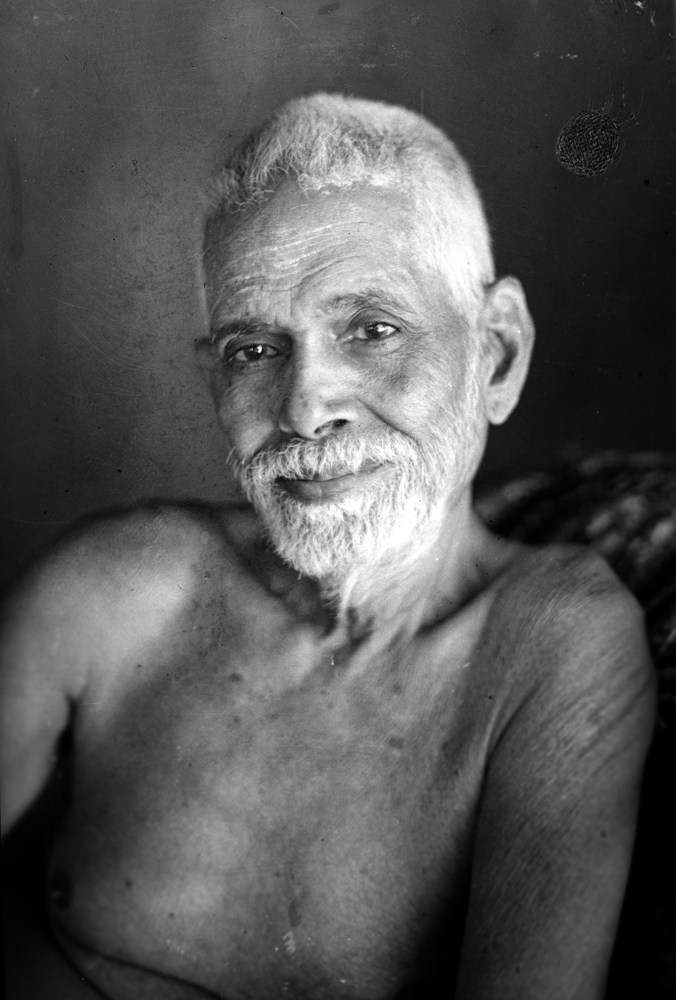
Ramana Maharshi
Hindu Sage
20th century sage Francis identifies as part of the direct path lineage
Advaita Vedanta
Tradition
The core non-dual tradition Francis teaches in; direct path to Self-realization
Kashmir Shaivism
Tradition
Tantric influence from Jean Klein; affirms world as expression of consciousness
Worth Knowing
Questions
Francis Lucille is a spiritual teacher in the Advaita Vedanta tradition, listed on BrightStar under Meditation Teacher. His own site explains that Advaita, a Sanskrit term meaning "not two," is the teaching that only one reality exists, and that it is not a philosophy or a religion but a direct experience of our true nature. Serious students tend to value the austerity of that claim. He does not sell a technique, a mood, or a self-improvement program, but keeps returning to awareness as the one thing present in all experience. His work reaches people through video dialogues, lectures, books, translations, and retreats, held in person and online in several languages. Newcomers arriving from modern self-help often find the register unfamiliar, because the teaching concerns recognizing what the self has always been rather than refining it. Anyone who wants the full context on his lineage and talks will find the profile's sections on those topics more detailed than this summary.
His work belongs to Advaita Vedanta, which he presents as non-duality and as a direct path passed from generation to generation by a line of sages. He names Ramana Maharshi, Krishna Menon, and Jean Klein as the 20th-century teachers who carried it forward. Beyond Advaita, his framing treats non-duality as the common ground shared by Ch'an Buddhism, Zen, Taoism, and Sufism, and as the core message left by the founders of the great religions. This is a comparative claim made from inside the teaching, so readers interested in academic Indology or religious history should treat it as his interpretation rather than neutral scholarship. The lineage's emphasis on a relationship of love, freedom, and friendship with a living teacher is central to how he describes stabilizing the recognition. Students who want the historical lines of transmission laid out in detail will need to read the sages' own texts alongside his commentary.
A newcomer can start with the Eternity Now talks, which are the most accessible entry point to his thinking about awareness, the Absolute, and our true nature. The talks are available through his YouTube channel and the media section of his website at francislucille.com/media/. Listeners often describe his tone as loving, open, and peaceful, which makes a single talk a reasonable first sitting before committing to more. For reading, The Perfume of Silence is the written work most clearly tied to his teaching. The hardest part for many first-time listeners is that the message is simple but resists being grasped as a concept, so it helps to stay with one talk and notice the recurring line about awareness being the background of thought. BrightStar does not have a verified sequence of recommended talks, so these suggestions reflect the material's published shape rather than an official curriculum.
The main distinction is that he frames recognition as something already true rather than a state to be constructed through practice. His teaching holds that non-duality is, and has always been, the reality of our experience, and that peace, happiness, and freedom follow from stabilizing that recognition rather than from achieving it. Many meditation teachers emphasize technique, progression, or cultivation, while his emphasis falls on awareness as the pure ground behind and between the activities of the mind. He describes that awareness in relational terms, as love, beauty, intelligence, and sweetness, which gives his language a warmth that is less clinical than much non-dual writing. His multilingual output across video, lecture, book, and retreat formats, together with direct translations of Shankara's Atma Bodha, Parmenides' On Reality, and Meister Eckhart's The Poor Man, sets him apart from teachers who work only within one tradition. Those who prefer method-based meditation may find his approach strikingly direct to the point of seeming sparse.
His work is not well suited to students who want a graded meditation method, a breath protocol, or a set of stages to complete. Because the teaching presents recognition as already present, it can frustrate those who expect to accumulate experiences or progress toward a certain state. Listeners looking for devotional chanting, ritual, or mantra-based sessions will also find little of that texture, since the focus is on the spoken and written word. Those who are uncomfortable with the idea of a teacher-student relationship may object to the emphasis the site places on friendship and love with a living teacher as the route to stability. Readers hoping for critical scholarship on Sanskrit sources should note that his translations and commentary are offered from within the teaching, not as philological analysis. Anyone in acute emotional distress should seek appropriate professional support alongside any spiritual reading.
The most reliable source is the media section of his official website, francislucille.com/media/, which gathers his video dialogues, lectures, books, and retreat information. His YouTube channel at youtube.com/@FrancisLucille is the main place where new spoken material appears for free viewing. BrightStar currently has no upcoming events crawled for him, so the profile does not yet list specific dates, cities, or online sessions. Because retreats run both in person and online and in several languages, listeners should check the site directly for language availability and format before planning travel. Following the YouTube channel is the simplest way to track new talks as they are published. BrightStar will update this section when verified event listings become available.
The central theme is awareness, which he describes as our true nature and as the pure awareness behind and between the activities of the mind. A second theme is the Absolute, the reality that the teaching says is one without a second, which he distinguishes from the changing content of experience. He repeatedly connects that awareness to love, presenting love as what we are rather than an emotion we generate, and his quoted line that "You are the love in everything you love" captures the pattern. Self-inquiry, listed among his topics, belongs to the same orientation, since it turns attention back toward the one who is aware. The teaching also insists that recognition is the starting point and that stabilizing peace and freedom comes afterward. Students who expect a list of doctrines will find the themes circle back on each other, which is characteristic of non-dual teaching rather than a flaw in exposition.
His style is conversational and dialogic, with much of his material appearing as video dialogues and lectures rather than formal sermons. The Eternity Now talks are described as leading listeners in a loving, open, and peaceful manner, so the tone tends to be patient and inviting rather than combative or dramatic. Retreats are offered in person and online, in several languages, which means the atmosphere will vary with the setting and the language of delivery. BrightStar does not have firsthand accounts of retreat schedules, group formats, or durations, so students should check the official site for those details. Newcomers often report that the most striking element is how little the teaching asks them to do, since the emphasis is on noticing awareness rather than building a practice. Those who need structured instruction with clear weekly exercises may find the format more open-ended than they expect.
Yes, the Eternity Now talks are the clearest example, gathering his spoken teaching on awareness, our true nature, and the Absolute into material listeners can return to on their own time. These are accessible through his YouTube channel and the media page of his official site, which means students can replay specific passages and compare how a point is developed across sessions. The Perfume of Silence is his written work and provides a text-based companion for the same themes. Independent study works best when a listener chooses a single talk, listens closely, and then rereads a passage from the book to test whether the description matches their own attention. BrightStar has not catalogued every talk or confirmed their full number or duration, so anyone planning a systematic study should verify the available material directly.
No formal background is stated as a prerequisite on his site, and the Eternity Now talks are framed for listeners who are coming to the subject for the first time. Still, the vocabulary moves quickly, with terms like Advaita, non-duality, awareness, and the Absolute used as working concepts rather than explained at length. A few minutes spent learning that Advaita means "not two" and that the teaching centers on one reality will make the early talks much easier to follow. Readers of his translations of Shankara's Atma Bodha or Parmenides' On Reality will benefit from some familiarity with classical philosophical texts, though the translations are not reserved for specialists. Students who already know Zen, Taoism, or Sufism may recognize the common ground he describes between them. Newcomers who find the abstractions dry should return to the spoken talks, where the teaching is most personal.
Discover More
Kindred Spirits


ご本人ですか? このページを登録 ›
Continue your journey
There's more where this came from.
BrightStar is the global directory of artists, teachers, and healers in the wellness and spiritual movement. Find your next experience — or add yourself.
Discover More Artists
Browse 14,000+ curated profiles across kirtan, yoga, meditation, and beyond.
Explore directory →Find an Event Near You
Kirtan, retreats, sound baths, breathwork, ceremonies — happening this week.
Browse events →Add Your Profile
Are you an artist, teacher, or healer? Get listed — free, AI-assisted, live in minutes.
Get started →