Findhorn Foundation — Findhorn, Scotland
Findhorn Foundation — spirit, nature & community in northeast Scotland
The Findhorn Foundation is a Scottish charitable organisation and spiritual learning centre located at the Park Ecovillage Findhorn in northeast Scotland, widely regarded as one of the pioneering intentional communities of the modern era. Founded in 1962 and formally registered as a charity in 1972, it has spent more than six decades offering transformative experiences rooted in inner listening, co-creation with nature, and what its founders called love in action. The community's origins are as unlikely as they are well-documented. Peter Caddy, Eileen Caddy, and Dorothy Maclean did not set out to build a spiritual centre. They arrived in northeast Scotland in 1957 to manage the Cluny Hill Hotel in Forres, running it according to Eileen's inner guidance — what she described as a still, small voice within — and Peter's intuition. When the hotel company ended their employment, the three adults and three young Caddy boys moved to a caravan park in the coastal village of Findhorn. There, on sandy, barren soil, they grew a garden that stunned visiting horticultural experts, most famously producing forty-pound cabbages. Dorothy Maclean attributed the results to intuitive contact with what she called the overlighting intelligence of plants — devas — who guided the garden's cultivation. Word spread, seekers arrived, and a community formed around them. Early supporters included English New Age pioneer Sir George Trevelyan, Scottish esotericist Robert Ogilvie Crombie, and Richard St Barbe Baker. In 1970, American spiritual teacher David Spangler arrived with his partner Myrtle Glines and helped establish a formal spiritual curriculum. By the 1970s and 80s the community had grown to approximately 300 members. In 1975 the Foundation purchased Cluny Hill Hotel; in 1983 it acquired the caravan park itself, now known as the Park Ecovillage. Today the Foundation offers signature residential programmes at the Park Ecovillage from April to November, each including accommodation and meals, with tiered pricing, payment plans, and bursaries available. A ten percent contribution to the Park Ecovillage Findhorn community is included in programme fees. Current offerings include Celtic Wisdom: Online, a nine-part teaching series with internationally acclaimed Celtic scholar John Philip Newell running from November 2026 to March 2027; and When We're 64: A Living Story, a heritage week programme held in November 2026 during the community's annual Birthday Week. Groups can join established signature programmes or work with the Foundation to co-create tailored retreats drawing on themes such as community building, inner development, ecological awareness, leadership, spirituality, nature connection, and regenerative living. Online, the Foundation hosts daily weekday meditations at 9am UK time via Zoom, with YouTube replays available, and Seeds of Light, a twice-monthly community call for connecting, sharing, and learning across its global network. The Foundation sits within the living Park Ecovillage Findhorn, a community on the northeast coast of Scotland. Its programmes are designed for anyone drawn to the intersection of spiritual practice, nature, and communal life — from first-time visitors seeking a week of stillness to long-term participants maintaining connection through the global Seeds of Light community. The Foundation also holds an association with the United Nations and maintains a network of Findhorn Fellows and affiliated groups around the world.
Traditions: Inner Listening, Co-creation with Nature, Celtic Wisdom, Meditation, Community Living, Ecological Awareness, Regenerative Living
Programs: Celtic Wisdom: Online with John Philip Newell, When We're 64: A Living Story (Heritage Week), Daily Online Meditations, Seeds of Light (Twice-Monthly Community Calls), Signature Residential Programmes at Park Ecovillage, Private Group Experiences, Tailored Group Retreats, Groups & Co-created Experiences
Amenities: Accommodation, Meals Included, Ecovillage Setting, Online Programme Access, Tiered Pricing, Bursaries Available, Payment Plans
Spiritual Influences
Theosophy (Philosophy): Dorothy Maclean's attunement to nature intelligences (devas) was influenced by Theosophical teachings, and David Spangler integrated Alice Bailey's theosophical framework into Findhorn's co-creative spirituality.
Moral Rearmament (Movement): Eileen Caddy's background in Moral Rearmament shaped her practice of inner listening and direct spiritual guidance that became core to Findhorn's mysticism.
Rosicrucian Order Crotona Fellowship (Lineage): Peter Caddy's training in the Rosicrucian Order Crotona Fellowship contributed to Findhorn's esoteric spiritual foundation and emphasis on inner development.
Co-creation with nature intelligence (Ethos): The practice of attuning to devas and collaborating with nature's intelligence defines Findhorn's eco-spiritual approach and its pioneering ecovillage model.
Work as Love in Action (Ethos): This principle transforms daily tasks into spiritual practice, making mundane work like dishwashing a form of meditation and devotion central to community life.
Intentional community living (Movement): Findhorn's six-decade experiment in consensus governance, shared attunement, and communal living models regenerative culture as inseparable from spiritual transformation.
Frequently Asked Questions
What makes Findhorn Foundation different from other spiritual retreat centers?
Findhorn isn't a retreat center that happens to have a garden—it's a working intentional community with sixty years of infrastructure that you temporarily join. You're not observing sustainable living from the sidelines; you're in the rhythm of it, working shifts in the organic gardens, attending morning attunements with long-term residents, eating vegetables grown in the same sand that produced those legendary forty-pound cabbages in 1962. The eco-village sprawl includes wind turbines, a bakery, a publishing house, and people living their actual lives, which means you'll encounter community tensions and repair schedules alongside spiritual inquiry. If you want curated serenity with staff who disappear when not leading sessions, go elsewhere—this is messy, alive, and unapologetically functional.
Who should absolutely not come to Findhorn?
If you need solitude or a break from group process, Findhorn will exhaust you—the Experience Week is built around shared reflection, communal meals, and attunement circles that require emotional availability. People seeking luxury or even basic comfort should reconsider: you might land in a shared caravan with thin walls and North Sea wind rattling the windows. The place runs on consensus and council meetings, so if you find intentional community culture—the check-ins, the processing, the listening circles—performative or slow, you'll be gritting your teeth by day three. Reviews mention that interpersonal dynamics can turn tense when the community is navigating internal conflicts, and staff don't always intervene to shield guests from that reality.
What does 'co-creation with nature' actually mean in practice at Findhorn?
It means you'll spend work periods in the gardens or kitchens with your hands in the soil or the dish water, preceded by a silent attunement where the group pauses to 'listen' to what the land or task requires. This isn't gardening as metaphor—it's permaculture design, compost management, and the literal method that produced improbable vegetables in sand and gale sixty years ago. Some find it grounding and humbling; others find the framing precious or the practice indistinguishable from regular farm work with extra pauses. The Nature Sanctuary, a stone circle in the pines, holds space for this listening work outside the structured programmes, but whether you experience attunement as spiritual depth or awkward silence depends entirely on your tolerance for group mysticism.
What's the typical rhythm of a day during the Experience Week?
Mornings begin early with meditation or attunement, often before the frost lifts off the caravan roofs, followed by communal breakfast in the Universal Hall. Work periods run mid-morning through early afternoon—expect to be assigned to the gardens, kitchen, or maintenance crew, not as optional service but as core programme. Afternoons hold workshops, group reflections, or free time to explore the Moray coast, though the North Sea wind usually drives you back indoors. Evening sharings pull the group back together to process the day, which can feel nourishing or interminable depending on your appetite for vulnerability and how tired you are. Meals anchor the day at set times, vegetarian buffet-style, and silence isn't enforced but the dining vibe tilts quieter than chatty.
What's the food situation really like at Findhorn?
The Universal Hall serves vegetarian and often vegan buffets using produce from the gardens—think root vegetables, hearty soups, grains, and baked goods from the on-site bakery. It's nourishing and competent rather than inventive, the kind of food that fuels work periods but won't be the highlight of your stay. The café gets praise in reviews for organic options and quality coffee, which matters because you'll want a break from communal dining rhythm. If you need animal protein to feel satisfied, bring nuts or eggs for your room, though kitchen access varies by accommodation. The dining hall itself is functional, buffet lines can bottleneck during peak times, and the whole operation has the efficiency of a place that's been feeding a community for decades rather than curating a guest experience.
What are the real differences between Findhorn's accommodation options?
Shared caravans are exactly what they sound like—mobile homes with thin walls, small windows, coin-meter heating, and the North Sea wind as your soundtrack, though long-term residents will tell you the intimacy builds connection faster than private rooms. Lodge houses offer single rooms with slightly more insulation and sometimes ensuite bathrooms, but you're still in a communal building with shared kitchens and living areas. The tradeoff isn't luxury versus budget—it's how much privacy and warmth you can function without, because even the 'nicer' options are basic by hotel standards. Reviews mention that which accommodation you're assigned significantly shapes your experience, especially in winter when the caravans are coldest. Book early if you want choice, and pack layers regardless of what you're promised.
What surprises first-timers most about Findhorn, for better or worse?
The sheer ordinariness of the infrastructure surprises people expecting a mystical enclave—it's wind turbines and compost bins, not Tibetan prayer flags and incense. First-timers also don't anticipate how much of the week involves logistical participation: you're not a guest being served but a temporary community member expected to show up for shifts and meetings. The cold is real and persistent; the Moray Firth wind cuts through layers people thought were sufficient. On the positive side, the organic gardens and the scrappy resilience of a place that's been experimenting with sustainable living since 1962 genuinely inspire, and the café's quality exceeds expectations. At least one review warns of encountering closed community meetings that spill tension into shared spaces, with staff declining to manage the discomfort—a reminder that you're stepping into a living community, not a controlled environment.
How much does Findhorn actually cost and what's included?
The Experience Week runs in the $$–range, covering accommodation, meals, and programme activities, but expect to spend more on café visits, books from the press, and anything beyond the core schedule. Findhorn is registered as a Scottish charitable trust so they offer work-exchange and sliding scale options, though availability isn't guaranteed and the application process requires advance planning. What's not included: heating in some caravans runs on coin meters, travel to Forres is your own problem (it's remote), and optional workshops beyond your main programme add fees. The value proposition depends on whether you see yourself paying for a retreat or subsidizing participation in an intentional community that happens to host guests—the latter framing makes the cost feel reasonable, the former makes it feel steep for shared caravan accommodation.
Do I need to be spiritual, silent, or a certain religion to participate?
Findhorn is non-denominational and frames its work as eco-spirituality, which in practice means you can participate fully as an atheist interested in permaculture or as a deeply mystical person—the language stays open enough for both. Silence isn't enforced except in specific spaces like the Nature Sanctuary stone circle, though morning attunements involve quiet reflection that some find meditative and others find awkward. The real requirement is tolerance for group process and a willingness to participate in communal work, not spiritual belief or practice. If you're allergic to words like 'attunement' or 'focaliser,' the vocabulary will grate, but the actual activities—gardening, meal prep, discussion circles—are accessible regardless of your belief system.
What's the land and built environment actually like to inhabit?
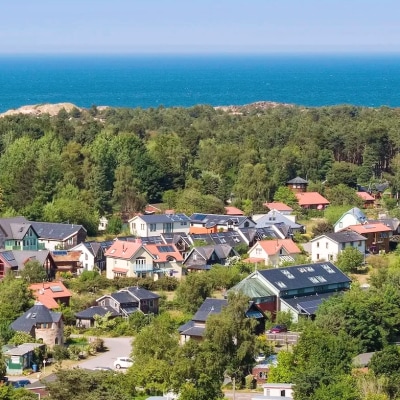
Findhorn occupies a windswept stretch where the Moray Firth meets the North Sea, and the environment shapes everything—salt air, constant wind, sand that somehow grows improbable vegetables, and grey skies more days than not. The eco-village is a functional sprawl of earth-bermed houses, caravans, solar panels, and wind turbines rather than a manicured campus, which means it reads as scrappy and lived-in rather than picturesque. The Nature Sanctuary offers a stone circle in the pines that holds genuine quiet, and the Community Centre and Universal Hall anchor gatherings, but there's no hiding from the weather or pretending you're somewhere Mediterranean. In summer the northern light stretches late into evening; in winter you'll understand why people who live here are tough. If you need beauty to be tidy or warm, this landscape will punish you—if you can meet it on its terms, it's powerful.
What are the unspoken etiquette rules at Findhorn?
Show up on time for work periods and attunements—this isn't a retreat where flexibility is charming, it's a community where other people's schedules depend on you. Phones aren't banned but using them during group sessions or at meals will mark you as disengaged; the culture tilts toward presence even when it's not mandated. Leaving a programme early or skipping components is technically allowed but socially uncomfortable—expect a check-in conversation about what's not working rather than a quiet exit. Dietary preferences beyond vegetarian/vegan need advance notice and aren't always accommodated day-of. The biggest unspoken rule: you're expected to engage with the community on its terms, which means if you're treating Findhorn as a hotel with programming, people will sense it and you'll feel the friction.
What should I actually pack and prepare for weather-wise?
The North Sea wind is relentless and cold even in summer—bring layers you can peel off during indoor work periods and a windproof outer shell that actually works, not the jacket that's usually enough. Rain gear is non-negotiable; the Moray coast sees drizzle more often than downpour but you'll be outside for work periods regardless. Visitors consistently forget warm sleepwear for the caravans, which don't retain heat well, and slippers or indoor shoes since you'll be taking outdoor shoes off constantly. A headlamp or small flashlight matters in winter when you're walking between buildings in darkness by mid-afternoon. If you're vegetarian or vegan at home, you're fine; if you're not, bring protein bars or shelf-stable foods to supplement meals because there's no animal protein in the dining hall and the nearest town is a trip.