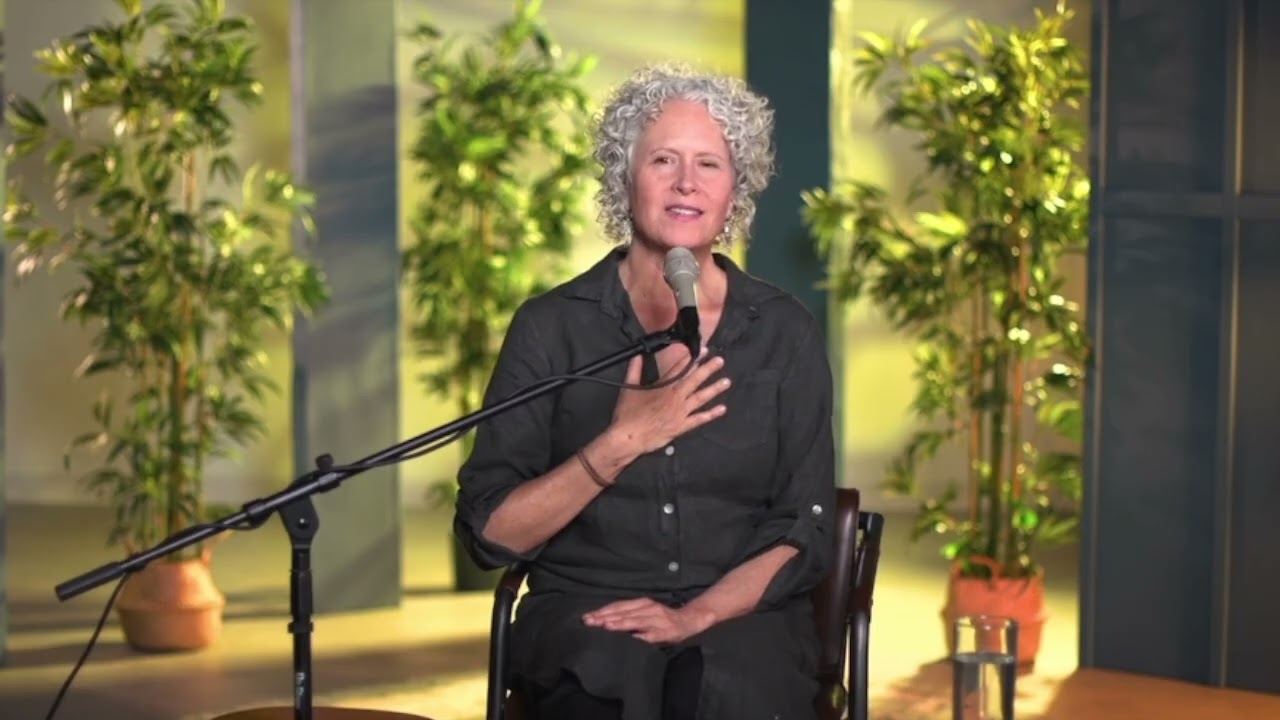
Sit comfortably, let the spine grow long, and let the breath set the pace. That is how Raissa Zoccal opens her guided gratitude meditation, published on her YouTube channel in October 2017, a little more than eleven minutes of spoken prompts over soft music. The practice does not ask you to feel thankful on command. It asks you to direct your attention, one object at a time, toward what already works in your body, what has been given to you, and what your own past has taught you, and to let that attention become a settled state rather than a passing thought. The video has been viewed nearly 5.9 million times, which suggests something about how many people are looking for a way to practice gratitude that does not feel like a to-do list.
The structure is simple enough to follow with eyes closed, and that simplicity is part of its design. After the opening instruction to sit upright, Zoccal introduces the premise: attention is the thing you direct, and gratitude is the state you cultivate by directing it. Early on she frames the practice around a choice between two objects of attention. As she puts it in the guided meditation:
"Attention is the food, it is an energy that you direct, observe attentively, focusing your attention. Object of complaint or reasons for gratitude."
(Raissa Zoccal, guided gratitude meditation, YouTube, 2017. English rendering from the video's auto-generated transcript, translated from Portuguese.)
That line, delivered around the 1:18 mark, is the spine of the whole session. Every human mind has a steady supply of complaints, and attention tends to feed whichever one is closest. The meditation proposes a deliberate swap: you still notice the complaint, but you hand the attention to a reason for thanks. The rest of the script is a series of invitations to make that swap in different domains of life.
Around the one-minute mark she makes a large claim. Cultivating gratitude, she says, changes you "at a psychological, biochemical, and quantum level," and at about 1:35 she adds that practiced daily, it produces "a profound change in the brain pattern at a vibrational level" that creates "the basis for a new reality to manifest." These are the speaker's own framings, and this article does not verify them. What is worth noticing is how she uses them. The language of neurons and quanta is there to give weight to a daily habit, not to replace the habit with a theory. The description beneath the video adds a more grounded note, stating that the benefits of yoga and meditation are scientifically supported but should work alongside medical and therapeutic care, and that people with hypertension, heart problems, or spine conditions should get medical clearance before practicing.
For a reader approaching this as a practical tool, the useful takeaway is the mechanism she describes at the level of experience: repeated attention shapes what you notice. If you rehearse noticing what is missing, you become fluent in lack. If you rehearse noticing what is present, the same mind starts returning to different material. Whatever one makes of the quantum language, that observation is easy to test over a week of practice.
The middle third of the session is a careful sequence of concrete invitations. It begins with the body, which is where most people can locate gratitude most quickly. Around the three-minute mark, she asks the listener to feel "a state of profound gratitude for being able to walk, to be able to hear, to be able to see the beauty of all things, looking at others with compassion, without judgment." The phrasing is almost clinical in its simplicity: it names ordinary faculties most people only notice when they are lost. That is an old contemplative move, and it works because the body is always present, unlike a promotion or a vacation.
From there, the script widens to people. At roughly 3:20 the prompt shifts to love received, then to "all the support and help you have received in your life, all the understanding." The listener is asked to receive that love rather than merely register it, a small but meaningful distinction. Gratitude here is not a debt the listener owes; it is an opening in which something arrives.
The sequence then turns to the harder material. Zoccal asks the listener to give thanks "for every incident experienced until today, for everyone who has been part of your life and taught you something." Shortly after, comes the instruction that most clearly separates this practice from a pleasant visualization:
"Don't sit on the body, don't dwell on something that didn't work out. It lasted long enough to become a lesson, transform it into learning."
(Raissa Zoccal, guided gratitude meditation, YouTube, 2017. English rendering from the auto-generated transcript, translated from Portuguese.)
This is where the practice does its real work. Gratitude for a good outcome is easy. Gratitude for a failed relationship, a lost job, or a wrong turn requires a reframe: the event is not being celebrated, but the learning it produced is being acknowledged. The instruction does not ask you to pretend the event was good. It asks you to stop re-living it long enough to extract what it taught.
One of the most useful passages comes around the six-minute mark, when Zoccal names a trap many people fall into without noticing. She says: "I don't expect to conquer something, arrive somewhere, or become different from who you are. It's just a project, happiness for a time that doesn't yet exist." Her instruction follows directly: add to the journey, and feel gratitude "for each step of the journey in fullness." Then comes the line that gives the session its emotional logic: "Happiness already lives within you; you only need to access it."
This is a distinction worth taking seriously. Many people practice a form of gratitude that is really deferred happiness, in which thanks is postponed until the goal is reached. The meditation proposes that gratitude be practiced at the stage of the process where you actually are. It is not a reward for arrival. It is a way of being present during the trip.
The second half of the session includes some of the more philosophically demanding statements. At around seven minutes, Zoccal says: "Nothing that happens in our lives should have happened any other way. Everything is exactly as it should be." She follows it with an instruction to accept what comes "with confidence, surrender to the light, and strive to transmute difficulty." Later she asks the listener to be grateful "for the obstacles that contributed to your evolution."
These statements are not logically neutral, and a reader should hold them with care. The claim that everything happened exactly as it should have is a metaphysical position, and many people will not share it, especially after a loss or injury. The practice is more persuasive when read as an invitation to a provisional stance rather than a verdict: for the length of the meditation, see whether the event can be held without resentment, and whether something of value can be found in it. Acceptance here is a practice, not a judgment about the universe.
Equally notable is the request to hold future dreams "as if they were already real, with greater detail and sensations." This is the visualization element of the practice. It is an emotional rehearsal: picture the desired outcome vividly enough that the body registers gratitude for it in advance. Whether that changes outcomes is outside what this video can show. What it does is convert longing into present-tense feeling, which is the same move the session makes with past pain.
The final minutes shift from prompts to a more sustained, almost incantatory mode. Zoccal speaks of the vibration of gratitude filling "every cell, every molecule," of gratitude and fullness "enveloping and filling your whole being." The rhythm slows, the pauses lengthen, and the listener is asked to reflect daily on the reasons that generate deep and sincere gratitude. The meditation closes with a reminder that gratitude is a state to return to, not an event to have once.
This is the part of the video most likely to feel either moving or overwrought, depending on the listener. The practical value is in the repetition. A closing like this works best when it is used as a template: after a few sessions, you can take the same sequence of body, love, lessons, and present moment and run it on your own, in silence, during a commute or before sleep.
The meditation is pitched at beginners. It requires no prior training, no special posture beyond sitting comfortably, and no vocabulary beyond ordinary gratitude. That accessibility likely explains a good deal of its reach. The Portuguese original is spoken, and the English transcript used here is auto-generated and translated, so some phrases above reflect that translation rather than the speaker's exact wording. Readers who want the precise language should listen to the original.
A reasonable way to approach it is to practice it daily for a short stretch and notice what changes in your attention: which objects come up first, which ones you resist, and whether the reframing of past events starts to feel less forced. Take the safety guidance seriously. The description advises listening to your body, going only as far as is comfortable, and seeking medical assessment before practice if you have hypertension, heart issues, or spine conditions. A meditation is a tool to be used alongside, not in place of, any care you are already receiving.
If this practice resonates, the most direct next step is to sit with the full 11-minute recording and follow it once without taking notes. Then try a shorter version on your own, using the same sequence: breath, body, the people who have helped you, the difficulties that taught you something, and the present moment as the only place gratitude can actually be felt. The creator's channel also offers a series of guided meditations, and her description points to a playlist for building a daily practice. Begin with one session, and let the attention you give it do the rest.