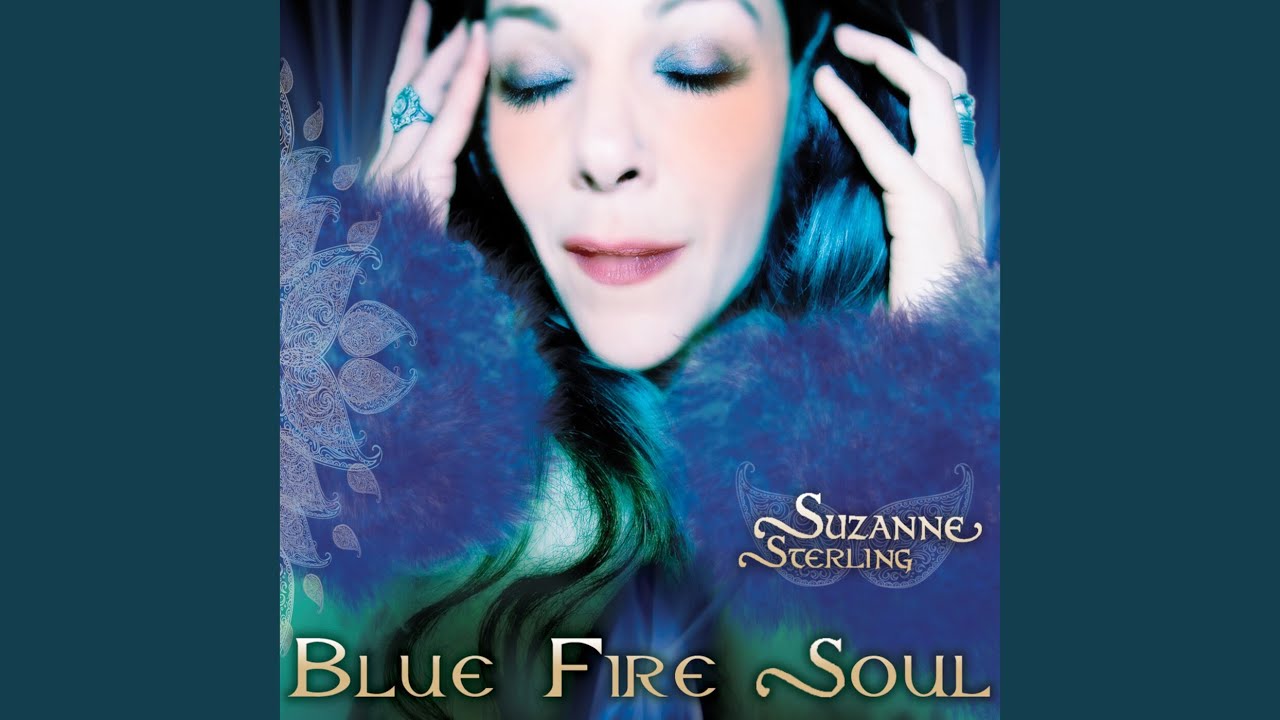
Applause rises and settles, and a teacher's voice cuts through it with a physical cue: "Extend the left leg along the floor. Flex both feet. Square off the hips." Then, without a pause for the room to catch up, the same speaker names the thing her work is built on. In a two-minute, forty-five-second video released in April 2015 under the title "Voice for Change," Suzanne Sterling makes a compact case that sound healing and self-expression are not decorative extras to spiritual practice but medicine, and that people who learn to speak their own truth become able to change the world around them. The video is brief and it does not walk through methods or history, but its ideas are dense: that healing the wounding of the voice is the final frontier of personal power, that self-expression is "hardwired" into humans who live in community, and that yoga practitioners, numerous and awakening, can become "artists for social change." This article unpacks those claims so that someone who has never seen the clip can still weigh them.
The opening lines of the video set the frame. Sterling says her "personal work is around the medicinal quality of sound and sound healing," and then goes further: "For so many of us, the final frontier in terms of stepping into our power is around healing the wounding of our voices." That phrasing matters. She is not describing vocal technique or singing lessons. She is describing a wound, something that accumulates and must be tended before a person can act with authority.
She breaks the process into two steps. The first is interior: "understanding what is my truth." The second is exterior: "being able to speak that truth in the world and being able to step into leadership in that truth." In her telling, the difficulty is rarely that people lack something to say. It is that they have not yet recognized their own truth, or have learned to hold it back once they have. Healing the voice means closing that gap, first in private recognition and then in public speech.
Sterling also suggests that this work has a bodily and sonic dimension, though the clip is too short to show it. Her language returns repeatedly to sound and vibration. She describes "this sort of vibrational soup" that connects all beings, and she argues that when a person lives and speaks their truth, "we are affecting all beings." Whether one takes that as literal or as metaphor, the logic is consistent: voice is the instrument through which an inner state becomes a shared one.
The most striking claim in the video comes around the 1:00 mark, when Sterling says that "it's powerful medicine. It's very ancient medicine. It's medicine that many many cultures in the past have said this is the key to healing." She is placing her work inside a long human lineage rather than presenting it as a modern invention. She does not name specific cultures or traditions in this clip, so the appeal is to a broad historical intuition: that ritual expression of inner life has been understood as healing across many societies.
She sharpens the point later. "The biggest thing that I stand for," she says at about 1:57, "is absolute joy and absolute self-expression." Then she names the obstacle: "we've kind of civilized ourselves away from self-expression." This is a cultural diagnosis. It suggests that modern life, with its norms of politeness, productivity, and restraint, trains people out of the spontaneous voice they were born with. Self-expression, in this view, is not an indulgence. It is a recovery of something that was taken.
Her sequence matters here too. She says: "We have to give voice to what's inside us. And then once we move all that pain and suffering and trauma out, then we can actually begin to create something new." The order is deliberate. Expression comes first as a release, and creation follows as a result. A reader can test this against their own experience: many people report that saying a hard thing aloud, even to a room of strangers, changes how they feel about it afterward. Sterling is asking for that release to be treated as a serious practice rather than a private accident.
Sterling frames her work as "around ritual and creating opportunities for us to remember that we're hardwired for self-expression in communities." Two words carry weight there. "Remember" implies that the capacity was never lost, only forgotten. "Communities" implies that the capacity is social by design. Humans, on this account, do not find their voices in isolation; they find them in relation to others who listen.
The transcript's texture reinforces this. Applause interrupts the speech at roughly 0:54. A call of "Joy. Joy." comes just before it. Later comes the instruction "Bring your hands to your heart," delivered in the same easy voice as the yoga cues. The clip seems to have been recorded in a live gathering where speaking, moving, and responding happened together. That fits her argument: ritual is the container in which personal expression becomes collective experience.
She also builds in a sense of plurality. Describing the people she is addressing, she says: "we are standing in our power and we're standing in our compassion and we're standing in our connection and we're standing in our community and we are many." The repeated "we" is not incidental. It positions the individual voice as one among many, and suggests that the force of a movement comes from aggregation as much as from any single speaker.
The title of the video is its thesis. Sterling argues that people have the privilege, built over "the last 10 20 years," of doing awakening work: "this work of releasing ourselves from the trance of consumption, this work of becoming aware of the more powerful issues of our time." From that awareness, she says, "we can become a voice for change, but only if we step into our power."
The conditional is important. Sterling does not claim that awareness alone produces change. She says it must be followed by stepping into power, which in her framing means truth, leadership, and speech. This is a useful corrective to a common assumption in contemplative circles, that inner peace will naturally ripple outward. Sterling's argument is that the ripple has to be given a voice.
She states her own ambition plainly: "I'm excited about becoming and helping the yoga community become artists for social change." The phrase "artists for social change" is worth taking seriously. An artist works with materials, attention, and form, and produces something that did not exist before. Sterling is proposing that yoga practitioners think of themselves in that role: not only as people who relax or stretch, but as makers of new cultural expression that addresses public problems.
She backs the ambition with a figure, though the clip gives no source beyond her own knowledge. She says, "The statistic that I know is that there's 20 million yogis doing yoga in the United States alone." Taken as she offers it, the number is the scale of her audience. If that many people are practicing, the question becomes what they do with what they have learned on the mat. This is the most concrete claim in the video, and readers who want to use it in their own work should verify it against current national surveys before repeating it.
Sterling's address is directed at yoga practitioners and teachers, and it asks them to move from private benefit toward public voice. The argument is not that yoga is insufficient; she repeatedly credits the decade or two of work that brought people to this point. The argument is that the next step requires something different: honest self-expression, the courage to name one's truth, and a willingness to lead from it.
This framing has practical implications, even if the video does not spell them out. A teacher who takes it seriously might ask students not only how their bodies feel but what they are carrying that needs to be voiced. A community might build gatherings where speaking and listening are as deliberate as breathing and posture. The clip gives no program or method, so these are extrapolations, but they follow directly from the terms Sterling uses.
What the video does not do is as instructive as what it does. It does not describe specific sound healing techniques, offer case studies, or define "social change" in policy terms. It leaves those to be filled in. That openness is both its limitation and its invitation.
The fastest way to deepen this material is to watch the full clip with a specific question in mind. Listen for the two steps Sterling names, understanding your truth and then speaking it in the world, and notice where you feel resistance. Her claim that modern culture has "civilized ourselves away from self-expression" is worth testing in ordinary moments: a meeting, a family dinner, a class where you could ask a question. The idea is less a doctrine than a set of prompts.
Readers interested in the wider conversation about sound, voice, and collective ritual can look for other teachers who work at that intersection, and compare how each defines healing and what they consider the endpoint of practice. Sterling's own framing is short on detail and long on orientation, which makes it a good starting point rather than a finished map. Her closing words, "That's my life's work. That's my biggest passion," are a reminder that this is an invitation from one practitioner to others, not a set of rules.
As Sterling puts it in the video, the aim is to become "artists for social change." Whether the yoga community takes that role will depend on what its members choose to say, and to whom, once they have found their voices.