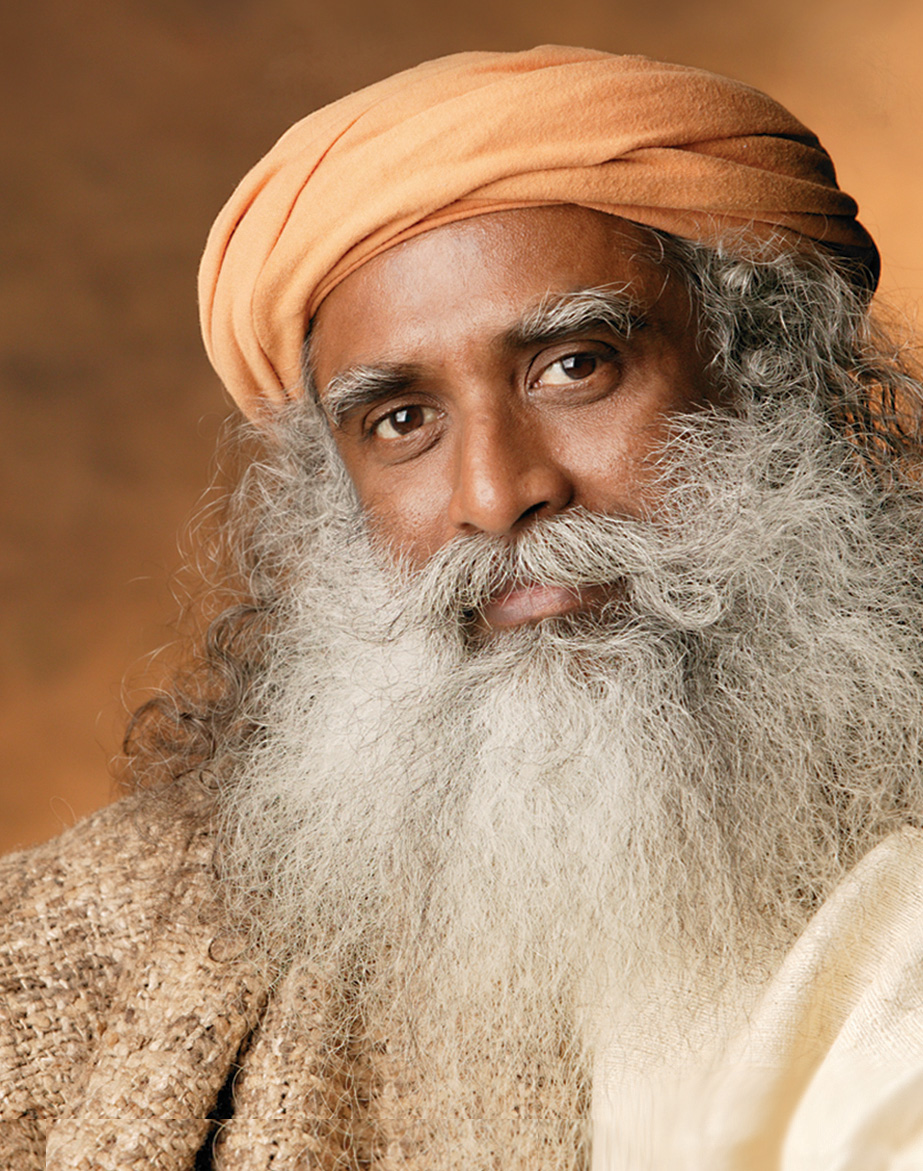
We don't lie because we're dishonest. We lie because we're identified with something we've convinced ourselves we must protect. The moment you say "I am a woman" or "I am American" or "I am a banker," your entire operating system shifts. Your mind—which Sadhguru describes as "created in such such a way"—becomes committed to defending that label with an almost obsessive loyalty. What feels like simple identity becomes a compulsive engine, consuming your intelligence and your energy to keep that version of yourself intact.
This is the hidden machinery behind human deception. Not moral failure, but a structural consequence of how we've woven ourselves into layers of identification. When you identify with something—a nationality, a gender, a family lineage, a community—your mind treats it like territory to defend. Every threat to that identity becomes a threat to you. And when you're backed into a corner, defending that identity becomes more important than telling the truth. The lie emerges not from malice but from desperation, a reflexive act to protect what you've already committed yourself to being.
The architecture of self-identification is deceptively simple. You claim a label. Your mind accepts it as real. From that point forward, your intelligence—your capacity to think clearly and act wisely—becomes yoked to the project of maintaining that identity. Sadhguru illustrates this using the metaphor of vortexes: small, contained spins of energy and intelligence. As long as conditions remain stable, these vortexes are manageable. They're just part of how you move through life. You navigate them; they don't consume you.
But the moment a genuine crisis arrives, something shifts. "When a crisis touches it, these vortexes will become whirlpools which can suck you down." The spin that was once contained becomes violent. Your entire being is pulled into the undertow of defending that identity. In that moment—when the whirlpool is strongest—lies become inevitable. You will distort the truth, reframe the situation, blame others, anything to keep the identity intact. It's not a choice in any conscious sense. It's a reflex, as automatic as bracing yourself when you slip.
The tragedy isn't that we lie. The tragedy is that we've constructed a self so fragile, so dependent on external validation and consistency, that lies become the only available tool to keep it standing. We are constantly weaving complexity where simplicity would serve us better. Each identity we adopt adds another layer, another vortex, another point where we must work to maintain coherence.
There's a thermodynamic truth operating here: maintaining false structures costs energy. Every identity you defend requires vigilance. Every lie you tell to protect it requires you to track, monitor, and adjust. Your intelligence—the clarity you could bring to actual problems—gets absorbed into the maintenance of illusion. Your life energies, which could flow toward growth and creation, instead circle endlessly around the project of self-protection.
Sadhguru points to this directly: "your intelligence and behind that your life energies will start going around that." The mechanics are exact. You commit to an identity. Your mind coordinates your entire being to protect it. Your energy stops being available for anything else. You become less capable of genuine response and more trapped in reactive defense. This isn't a moral problem; it's a systems problem. You've installed yourself into a machinery that runs on self-deception.
And once you're installed, the machinery has its own logic. The more layers of identity you adopt, the more complex your protective structure becomes. The more complex the structure, the more energy it consumes. The more energy consumed, the less available for actual living. You become so busy maintaining the story of who you are that you never discover who you might actually be.
Sadhguru's final statement cuts to the root: "these are all the impediments that you have created to ensure that you are not ecstatic in life." This isn't poetic exaggeration. Ecstasy—the state of unbounded aliveness, of energy flowing without constraint—is incompatible with identification. It requires a self that isn't defending anything, that isn't trying to maintain a image, that isn't compulsively protecting a story.
Identity and ecstasy are structurally opposed. To be identified is to be bound. To be ecstatic is to be free. You cannot simultaneously defend who you think you are and dissolve into pure experience. The two states are mutually exclusive. Every investment you make in reinforcing your identity is an investment in staying separate from ecstasy.
This is why lying matters spiritually, not just ethically. The lies we tell—to others and especially to ourselves—aren't incidental to the process of maintaining identity. They're essential to it. They're the glue that holds the structure together. Every dishonesty is a small act of staying trapped. Every commitment to protection is a commitment to limitation.
If the problem is identification, the solution isn't to adopt a different, better identity. It's to notice the whole mechanism at work. The next time you feel compelled to lie, to protect your image, to defend your version of who you are, pause. See if you can detect the vortex—the small spin of identification that's become threatened. See if you can sense the energy being pulled into that defense. And consider: what would it be like to let that identity relax, just for a moment? Not to replace it with something else, but to stop feeding it your intelligence and your life force?
The path forward isn't about becoming a "better" version of yourself. It's about releasing the compulsion to maintain any fixed version at all. That release is where freedom begins. That's where the whirlpool can settle back into a simple vortex. And that's where ecstasy—unbounded, undefended aliveness—becomes possible.